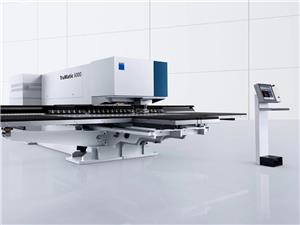
Why cutting your sheet metal prototype on the same combined laser + punch machine that will run production matters: same setup, same parameters, and a sample that reliably predicts fit, finish, hole quality, and forming behavior before volume tooling is committed.
A sheet metal rapid prototype is not just a shape check. Buyers use it to confirm hole positions, bend allowances, edge condition, and surface finish before committing to volume tooling. The value of the sample depends almost entirely on one thing: whether it was produced with the same process parameters that will run the production order. This article explains why a sample cut on the same combined laser + punch machine that will fulfill production is a more reliable predictor than a sample from a separate quick-turn vendor whose tooling and edge quality differ.
Key takeaways
- A combined laser + punch machine completes the prototype in one setup, so the sample and the production run share the same process window.
- A separate quick-turn vendor may use different tooling, different nesting, and different edge treatment — making the sample a weaker predictor of production results.
- Geometry files accepted: STEP, IGES, DXF, DWG, PDF.
- Material test reports (MTR) are available when your quality plan requires traceability.
- The shop operates an IATF 16949:2016 quality management system.
- What a rapid prototype needs to predict
- Why one machine for sample and production changes the result
- What the same-parameter sample reliably confirms
- File formats and documentation
- Comparison: combined shop vs. separate quick-turn vendor
- FAQ
What a sheet metal rapid prototype needs to predict
Buyers order a prototype for a specific reason: to reduce risk before spending on production tooling, fixtures, or a full batch. The sample has to answer questions that a drawing alone cannot. Typical questions include:
- Do the holes land where the assembly expects them?
- Does the bend sequence produce the intended flange height without interference?
- Is the edge condition acceptable for handling, coating, or safety?
- Does the material behave as assumed during forming?
- Will the first production parts match the sample within tolerance?
If the prototype is made by a different process than production, the sample answers those questions only partially. It may confirm the general shape while leaving the actual production behavior unverified. That gap is where rework, schedule slips, and tooling changes appear.
Why one machine for sample and production changes the result
On a combined laser + punch machine, the prototype and the production run share the same setup logic. The punch station handles high-volume features such as standard holes, louvers, and forms; the laser handles contours, tight radii, and features that would require special tooling. Because both operations are programmed from the same file and run on the same platform, the sample inherits the same nesting rules, the same cutting parameters, and the same edge behavior that production will use.
That is different from sending the prototype to a separate quick-turn vendor. A quick-turn shop may run a different machine, use a different tool set, or optimize for speed rather than for matching your production process. The prototype can look correct and still mislead you about hole quality, burr direction, or bend allowance. When production later runs on the combined machine, the differences show up as fit issues or finish inconsistencies.
The practical effect is that a same-parameter sample is a process sample, not just a geometry sample. It carries forward the operating conditions that production will repeat.
One setup, fewer variables
Every additional setup introduces a variable: a different clamp position, a different tool wear state, a different operator judgment. A combined machine reduces the number of setups for the prototype, which reduces the number of variables that can differ between the sample and the production run. Fewer variables means the sample is more likely to predict what the production batch will actually do.
What the same-parameter sample reliably confirms
When the sample and the production order run on the same combined machine with the same parameters, the sample becomes a meaningful reference for:
- Fit and assembly: Hole positions, slot alignment, and flange dimensions reflect the actual nesting and tool path, so the assembly check is representative.
- Edge quality: Laser-cut and punched edges are produced under the same conditions, so burr height and edge condition carry over to production.
- Forming behavior: Bend deductions and springback tendencies observed on the sample reflect the material and tooling combination used in production.
- Surface condition: The sample shows the surface state the production parts will start from, which matters before coating, painting, or anodizing.
- Process capability: If the sample passes inspection, the production run starts from a known, repeatable process window rather than from an assumption.
These are the points buyers usually need to sign off before releasing a production order. They are also the points a separate quick-turn vendor cannot guarantee, because the vendor's tooling and edge quality are outside your production process.
File formats and documentation
The shop accepts standard geometry files so that the prototype can be programmed without manual redrawing, which keeps the sample and production data on the same source:
| Format | Typical use |
|---|---|
| STEP | 3D model for bend and feature verification |
| IGES | 3D model exchange where STEP is unavailable |
| DXF | 2D flat pattern for laser and punch programming |
| DWG | 2D drawing with dimensions and tolerances |
| Drawing reference and inspection criteria |
When traceability is required, material test reports (MTR) are available. The shop operates an IATF 16949:2016 quality management system, which supports documentation and process control for buyers who need a formal quality record alongside the sample.
Comparison: combined shop vs. separate quick-turn vendor
The table below compares what each route realistically delivers for a buyer who intends to move from prototype to volume.
| Factor | Combined laser + punch shop | Separate quick-turn vendor |
|---|---|---|
| Setup for prototype | One setup on the production machine | Vendor-specific setup, often optimized for speed |
| Process parameters | Same parameters as production | Parameters may differ from your production process |
| Edge quality | Representative of production | May differ; not a production reference |
| Tooling | Same tool set as production | Different tool set; special features may be unavailable |
| Predictive value for volume | High; sample reflects production conditions | Limited to geometry confirmation |
| Documentation | MTR available; IATF 16949:2016 system | Varies by vendor |
Neither route is automatically better for every project. If you only need a visual or fit check and production will run elsewhere, a quick-turn vendor may be sufficient. If the prototype is meant to validate a production process, running the sample and the volume order through the same combined machine and parameter set removes the largest source of uncertainty.
For related cutting and machining work, see Custom Laser Cutting Services and Custom CNC Milling Services.
FAQ
Does the prototype have to run on the same machine as production?
If the prototype is intended to validate the production process, yes. A sample from a different machine or vendor confirms geometry but does not confirm the production process window. If the prototype is only a visual or fit check and production will run elsewhere, a different vendor may be acceptable.
What file formats are accepted for a sheet metal rapid prototype?
STEP, IGES, DXF, DWG, and PDF are accepted. STEP and IGES are used for 3D verification, DXF and DWG for 2D flat pattern and drawing data, and PDF as a drawing reference.
Can I get material test reports with the prototype?
MTR is available when traceability is required. Ask at the quotation stage so the material documentation is prepared alongside the sample.
Does the shop have a formal quality management system?
The shop operates an IATF 16949:2016 quality management system. Confirm the applicable scope and documentation requirements for your specific part and project when requesting the quote.