A material-specific guide for buyers coating aluminium enclosures and brackets. Covers pretreatment, casting outgassing, film thickness and colour on extrusions, masking threaded features, and inspection — and how each differs from powder coating steel.
If you are moving an enclosure, bracket or machined housing from steel to aluminium — or quoting both — the powder line does not treat them the same way. Pretreatment, cure, film thickness and masking all shift. This guide walks through the aluminium-specific points to settle before you release a purchase order.
Key takeaways for buyers
- Aluminium pretreatment is different chemistry from steel; it is not a drop-in swap on the same line.
- Cast aluminium can outgas during cure and cause pinholing — extrusion profiles are usually more predictable.
- Colour matching is judged on the finished aluminium surface, not on a steel panel.
- Threads, contacts and grounding points are masked before coating and verified again after.
Why aluminium behaves differently on a powder line
Electrostatic powder coating works the same way on both metals in principle: electrically charged powder is sprayed onto a grounded part, then cured in an oven. What changes is the substrate underneath. Steel rusts; aluminium does not form red rust but instantly forms a passive oxide layer, and that layer resists the adhesion chemistry that a steel part relies on. Aluminium also conducts heat differently and expands at a different rate than steel, which matters when the part is a thin extrusion or a heavy casting.
For a buyer, that translates into one practical rule: an aluminium part must be quoted as an aluminium part. A coating specification written for steel — same pretreatment sequence, same oven dwell, same film thickness — is not automatically valid.
Pretreatment: the biggest change from steel
On steel, the common pretreatment path is clean, phosphate (iron or zinc), rinse, dry. Phosphate conversion suits ferrous metal. On aluminium, a phosphate process does not give the same conversion on the surface, and many lines instead use a chrome-free conversion coating or an anodised-style preparation designed for aluminium. Some plants run a multi-metal process that can accept both substrates; others physically separate aluminium from steel parts in the same line.
What to check with a supplier before ordering:
- Which pretreatment stage is used specifically for aluminium — not the general line description.
- Whether steel and aluminium parts share the same bath or are run separately.
- How pre-treatment is verified (for example, a water-break or adhesion test on a sample before production).
Poor pretreatment is the usual cause of a coating that passes at incoming inspection and then flakes at a bend or a fastener a few weeks later.
Outgassing on castings versus extrusions
When a cast aluminium component is heated to cure temperature, trapped gas in the casting can escape through the coating while it is still fluid. The result is small craters or pinholes in the finish — visible, and difficult to repair as a touch-up. Extruded profiles and sheet parts are generally lower risk because they are denser and contain less entrapped gas, but machining and welding can reintroduce porosity.
Practical ways to manage this:
- For castings, confirm whether the supplier pre-bakes the parts before coating to release trapped gas.
- Specify that a first-article sample is cured and inspected for pinholes before the batch runs.
- Where the finish is critical on a casting, agree what defect level is acceptable and how rework is handled.
Film thickness and colour matching on extrusions
Film thickness should follow the drawing or the agreed specification, not a rule of thumb. On aluminium, a common pitfall is assuming that a thicker film on a steel part will behave the same way on an extrusion. Thin-walled extrusions can flex and distort under heat, and colour can vary with film thickness, cure temperature and the alloy itself. Two aluminium alloys finished with the same powder can settle at slightly different shades.
Colour is normally specified as a RAL number or a customer sample. For aluminium work, buy the colour off a coated aluminium panel, not a coated steel one, because the substrate affects the perceived colour. If the project has a master sample, request a cured aluminium colour panel for approval before the batch is coated.
| Point to settle | Aluminium part | Steel part |
|---|---|---|
| Pretreatment chemistry | Aluminium-specific conversion or chrome-free preparation | Iron or zinc phosphate conversion |
| Outgassing risk | Higher on castings; lower on extrusions and sheet | Low; not a typical concern |
| Heat / distortion | Thin extrusions can flex or distort | Stiffer under typical cure temperatures |
| Colour approval | Judge on a coated aluminium panel | Judge on a coated steel panel |
| Film thickness | Per drawing, with alloy and section considered | Per drawing, conventional range |
| Masking focus | Threads, contacts, grounding points | Same features, plus electrical continuity |
Masking threaded features, contacts and ground points
Threaded holes, earth/ground points, electrical contacts and mating faces usually need to stay conductive and within tolerance. Powder is an insulator and adds measurable thickness, so these features are masked before spraying. Masking is a manual, detail-oriented step, and it is where aluminium enclosures and brackets most often fail incoming inspection — not because the finish is wrong, but because a masked feature was missed or a thread was partially coated.
On the drawing or purchase order, list every feature that must remain bare:
- Threaded holes and studs that will receive a screw or bolt.
- Grounding points and electrical contact areas.
- Mating or sealing faces where a gasket or seal seats.
Where the finish on a large or complex part must be uniform, more than one colour or a multi-stage process may be quoted. Ask how many passes and how many cure cycles the part will see, because each heat cycle is an extra opportunity for distortion or outgassing.
Inspection: adhesion and coverage
Two checks cover most of what a buyer cares about on a coated aluminium part.
Adhesion. A standard cross-hatch or tape test on a cured sample confirms the powder has bonded to the aluminium, not just formed a skin on top. This should be done on a sample from the actual batch, on the actual alloy.
Coverage. Visual and thickness checks confirm the film meets the drawing, that masked areas stayed bare, and that there are no pinholes, runs or thin corners. On aluminium, thin sections and recessed areas are the usual places coverage falls short.
If the project operates under IATF 16949:2016 — for automotive parts and many tier-one supply chains — those inspection records are part of what the quality system expects to retain. Confirm with the supplier which records can be provided with the shipment and in what format, since that is defined by the applicable quality system and the current production process rather than by the coating itself.
Putting the specification together
For an aluminium enclosure or bracket, a useful coating specification covers:
- Substrate and alloy, and whether the part is cast, extruded or sheet.
- Pretreatment requirement for aluminium.
- Film thickness per drawing.
- Colour as RAL number or customer sample, approved on an aluminium panel.
- Masking list: threads, contacts, ground points, mating faces.
- Inspection method and any records to be provided.
Using this as a checklist when requesting a quote is usually faster than negotiating the details after the first batch is coated.
Frequently asked questions
- Can aluminium parts be coated on the same line as steel parts?
- Sometimes, but the pretreatment step has to suit aluminium. Ask the supplier whether the line is set up for both metals and whether the aluminium pretreatment is a separate stage. Do not assume the steel process applies.
- Why does my cast aluminium enclosure show small holes in the coating?
- This is most often outgassing: trapped gas escapes during the cure cycle through the still-fluid powder film. It is more common on castings than extrusions. A pre-bake before coating and a first-article inspection can reduce it; with the supplier you can also agree how rework is handled.
- Does the RAL colour look the same on aluminium as on steel?
- Not always. Alloy, film thickness and cure conditions can shift the perceived shade, so colour should be approved on a coated aluminium panel. A steel panel approval is not a substitute for an aluminium one.
- Do threaded holes need masking on an aluminium part?
- If the thread will take a screw or bolt, yes. Powder is an insulator and adds thickness, so threads, contacts and ground points are masked before coating and checked again afterwards. List them on the drawing.
Next step
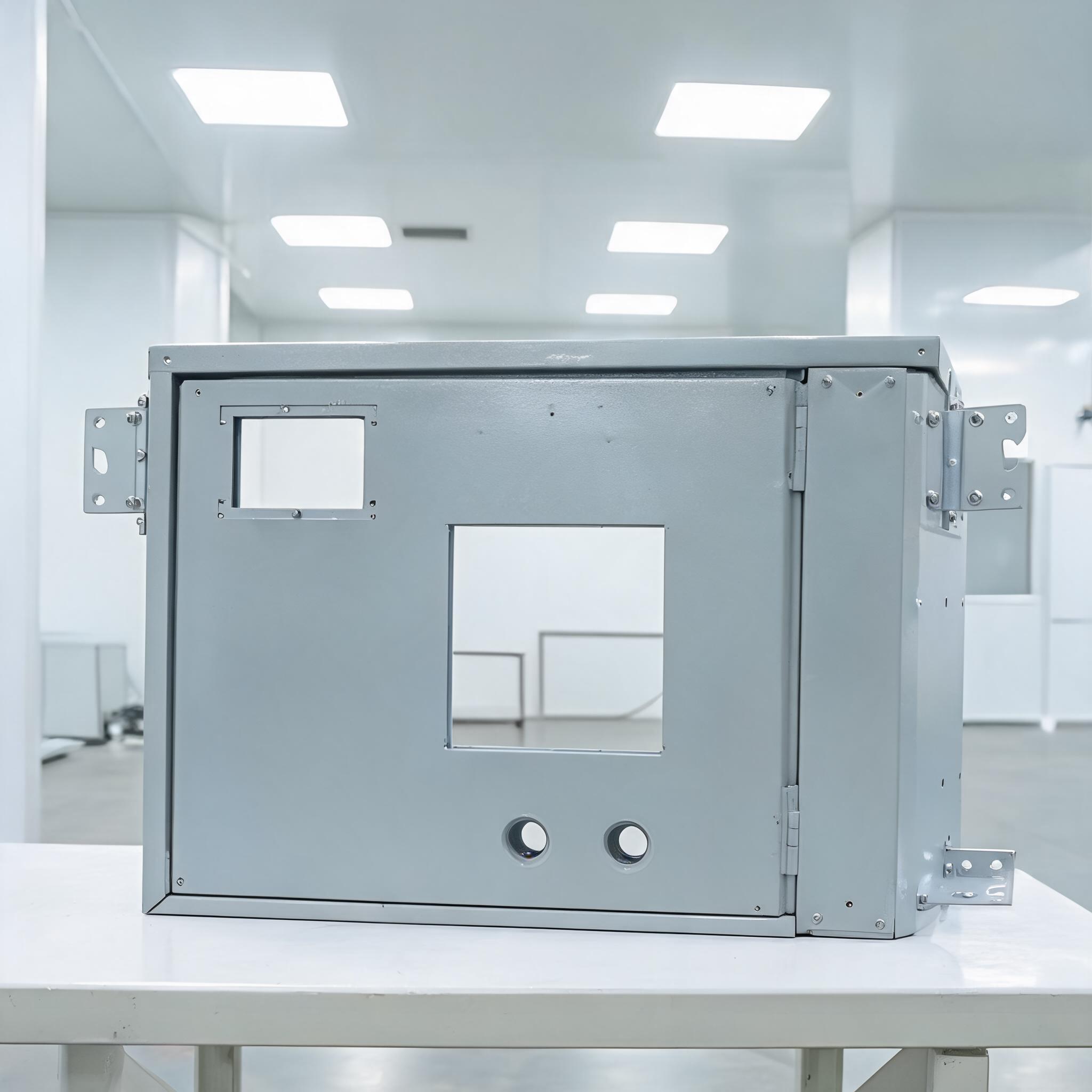
If you are specifying the coating alongside a fabricated part, the finish and the base metal are quoted together. Start from the part itself — Custom Sheet Metal Enclosure Fabrication — then define the finish in Custom Powder Coating Services. Send the drawing, alloy, colour reference and masking list, and ask for a first-article sample before the batch runs.