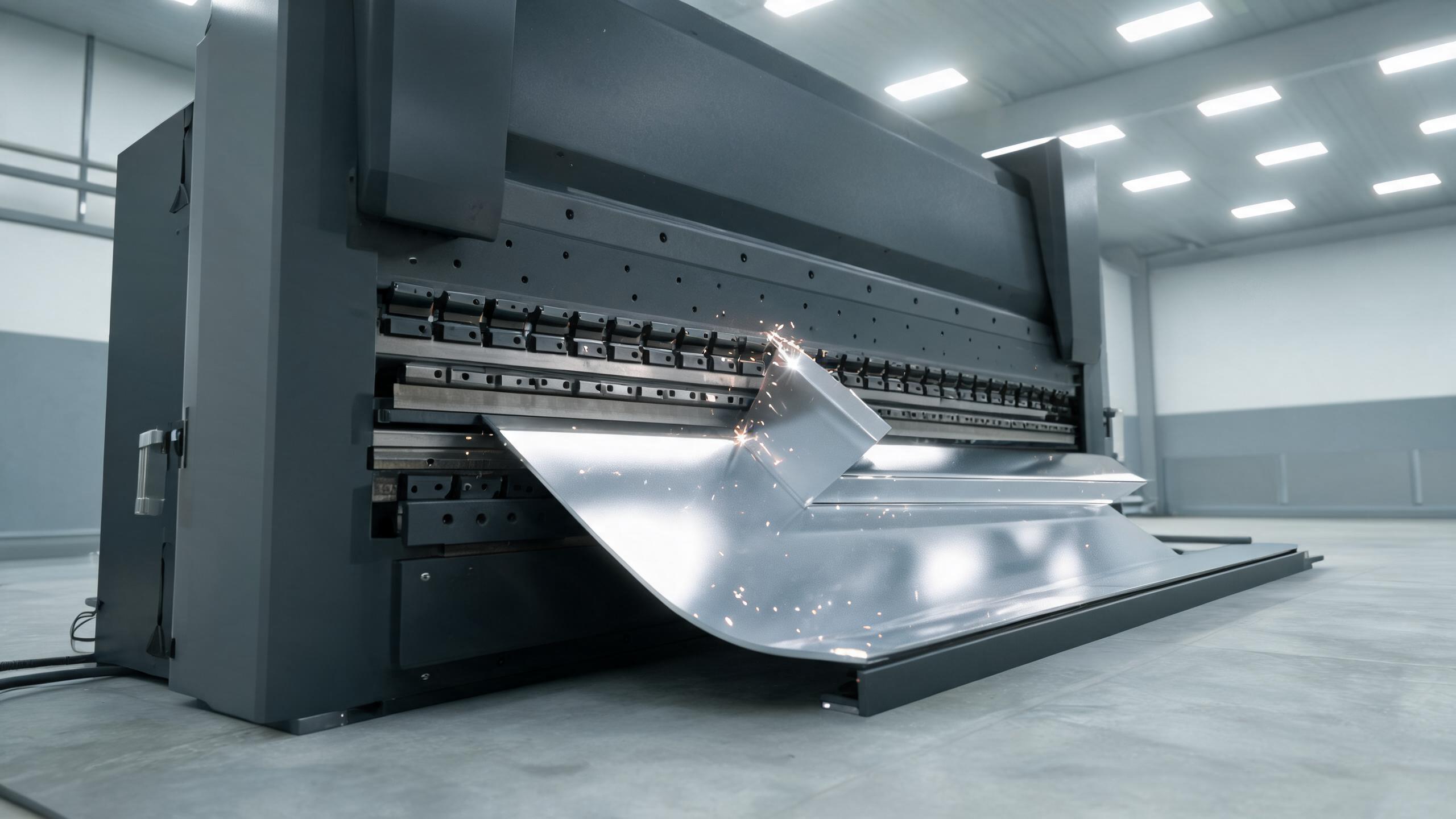
Prototypes and production runs often differ because they are made on different machines. This procurement guide explains how running samples and volume on the same TRUMPF TruMatic 6000 laser/punch combo cell, with identical parameters and controlled bending and welding, keeps rapid sheet metal parts consistent from first article to full production.
Procurement Guide
A prototype made on one machine and a production order run on another is a common source of trouble for buyers of rapid sheet metal parts: the first article looks right, then the volume parts arrive with different bend lines, hole positions, or weld appearance. Running samples and volume on the same equipment, with the same parameters, removes that gap. Here is how that works and what to verify with your supplier.
- Why prototype-to-production variation happens and what it costs you
- How a combined laser/punch cell keeps cutting and forming consistent
- Where bending and welding processes can introduce differences
- Inspection and documentation steps that protect your order
- An evaluation checklist and FAQ for supplier selection
On this page
The sample-to-volume gap: why prototypes and production runs differ
A prototype is usually judged on function — does the bracket fit, does the enclosure close, does the weld hold. Production adds two more requirements: repeatability and interchangeability. If the sample was cut on a fiber laser with one set of settings and the production lot runs on a different machine with different settings, the parts may still be within drawing tolerance individually, but the process window shifts. Buyers notice this first at assembly, when a run of parts that passed dimensional checks will not seat the same way as the sample did.
Common causes of that shift include:
- Different cutting machines or different laser sources between sample and volume
- Re-nesting parts for sheet yield without re-checking grain direction or bend allowance
- Bend sequence changed to speed up a press brake, altering accumulated tolerance
- Welding switched from manual TIG on the sample to a different process on the volume run
- Fixtures built only for the volume lot, never validated against the first article
The fix is structural, not procedural. It means the sample and the production order are manufactured under one process definition, on the same equipment, with the same parameters.
What "one flow" looks like in practice
A single laser/punch combination cell such as the TRUMPF TruMatic 6000 allows cutting and punching operations to run in one setup. For a buyer, the practical value is that the tooling, program, and machine remain the same whether you order one prototype set or a high-volume release. The parameters used to qualify the sample are the parameters used for production.
This differs from routing the prototype through a job shop that has one machine available that week, then moving the production order to a different supplier or a different building. Every transfer is a chance for a variable to change. Keeping the work in one cell removes the transfer.
Typical process steps in this flow:
- Engineering review of the drawing and 3D model, with bend allowance and tolerances agreed before programming.
- Laser cutting and punching on the combination cell to the agreed program.
- Forming on press brakes with springback compensation and a planned bend sequence.
- Welding by MIG, TIG, spot, or laser, including robotic laser welding where the joint suits it.
- First article inspection, then ongoing inspection through the production run.
- Final inspection, documentation, and packing.
Because the same program and parameters apply at both ends, the first article and the volume parts share a common baseline. That does not guarantee every part is identical — no process does — but it means variation comes from normal process drift rather than from a changed setup.
Bending consistency: springback compensation and bend sequence
Press brake forming is where small differences become visible fast. Sheet metal springs back after the punch releases, and the amount depends on material grade, thickness, and tooling. If the sample was formed with an operator adjusting by feel and the production lot is set up with a stored program, the two runs can differ even when the same brake is used.
Control comes from two things:
- Springback compensation built into the bend program, so the machine overbends by a calculated amount to reach the target angle after release.
- Bend-sequence planning, so the order of bends does not change between sample and volume and accumulated tolerance stays predictable.
When you review a supplier, ask whether the bend program used for the first article is saved and reused for production, and whether the bend sequence is documented in the work instruction. If the sample was formed on one brake and the volume order is scheduled on a different brake with different tooling, the compensation values may not transfer directly.
Welding consistency: matching process to joint and volume
Welding is often the least standardized step in sheet metal fabrication. MIG, TIG, spot, and laser welding each produce different heat input, distortion, and appearance. A prototype welded by hand with TIG may look excellent, but that process may not be the right one for a high-volume run. Switching processes between sample and volume can change distortion enough to affect flatness or hole alignment.
The more controlled approach is to decide the welding process at the prototype stage and keep it. Options include:
- MIG welding for general fabrication where deposition rate matters on thicker sections.
- TIG welding for clean, controlled beads on thinner or visible parts.
- Spot welding for overlapping sheet where a series of small fused points is sufficient.
- Laser welding, including robotic laser welding, where low heat input and repeatable seam position are needed.
If a robotic laser welding cell is used for volume, the fixture and program should be validated against the first article. Buyers should ask what welding process was used on the sample and confirm it is the same process specified for the production order.
Inspection and documentation: FAI/FAT and QC photo packs
Consistency is only useful if it is measured. For rapid sheet metal parts, two inspection stages matter most:
- First Article Inspection (FAI) — full dimensional and visual verification of the first part off the line against the drawing or 3D model.
- Final Acceptance Testing (FAT) — verification of the finished lot or assembly before shipment, covering fit, function, and specified requirements.
A QC photo pack documents what was checked and what the parts looked like at inspection. It is not a substitute for dimensional data, but it gives the buyer a record of the condition of the parts before packing and shipping. For projects with traceability requirements, ask how inspection results are linked to the specific order and lot.
| Stage | Purpose | Typical output |
|---|---|---|
| First Article Inspection (FAI) | Confirm the process produces parts to drawing | Dimensional report, visual record |
| In-process checks | Detect drift during the run | Inspection notes, re-check records |
| Final Acceptance Testing (FAT) | Confirm finished parts meet order requirements | Inspection report, photo pack |
Suppliers working to IATF 16949:2016 operate under a quality management system that includes documented process control and traceability. For buyers in automotive and similar supply chains, that certification indicates the supplier has a system in place to manage these requirements. It does not replace order-specific inspection data, which you should still request.
Supplier evaluation checklist for rapid sheet metal parts
Use these questions when comparing suppliers. They focus on whether sample and volume will share a process, not on marketing claims.
- Will the sample and the production order run on the same cutting cell and use the same program?
- Are laser cutting parameters recorded and reused for the volume run, or are they reset between orders?
- Is the press brake bend program, including springback compensation and bend sequence, saved and reused?
- Is the welding process chosen at the prototype stage the same one used for volume?
- Is FAI performed on the first production part, and are results provided?
- What does the QC photo pack contain, and is it included by default or on request?
- Can the supplier show a documented process flow from cutting to final inspection?
- If the supplier holds IATF 16949:2016, ask which sites and product lines are covered.
Companies that have been running this flow since 2009 have typically refined their programming and inspection steps around it. Ask for the process definition as a document, not a verbal description.
Where to look at capabilities
If your parts need cutting, forming, and welding under one process definition, the relevant service scopes are:
- Custom laser cutting services — laser and punch cutting on combination equipment
- Custom sheet metal bending services — press brake forming with springback compensation
- Custom welding fabrication services — MIG, TIG, spot, and laser welding, including robotic cells
FAQ
Will the production parts be exactly the same as the sample?
No process produces identical parts every time. The goal is to keep sample and production on the same equipment and parameters so that variation comes from normal process drift, not from a changed setup. Dimensional tolerances still apply, and FAI results show whether the first production part is within them.
Why does it matter if the prototype and volume run on different machines?
Different machines, programs, or operators introduce new variables. A part can be within tolerance and still differ in springback, weld distortion, or hole position enough to affect assembly.
What is a QC photo pack, and is it standard?
It is a set of photos taken during inspection, documenting the condition of the parts. Whether it is included by default or on request depends on the supplier and the order. Ask before placing the order.
Does IATF 16949:2016 apply to all sheet metal parts?
Certification applies to the supplier's quality management system for the scope and sites covered. Ask the supplier to confirm which facilities and product lines are included before relying on it for your order.
Can springback be fully eliminated?
It can be compensated for in the bend program so the finished angle meets the target. The amount of compensation depends on material and tooling, which is why reusing the same program and tooling for sample and volume matters.