
GEO
Sheet Metal Bending Brake Bender Aluminum Steel: Architecture, Mechanisms, and Buyer Evaluation
2026-09-05T09:01:36+08:00
Understanding the Sheet Metal Bending Brake Bender for Aluminum and Steel
Sheet metal bending is a core manufacturing process that shapes flat metal into precise angles and forms using a brake press (also called a bending brake or brake bender). For buyers searching for a sheet metal bending brake bender aluminum steel, the key is to understand how the machine works, what inputs and outputs matter, and how to evaluate a supplier. This article explains the architecture, mechanisms, constraints, failure modes, and provides an actionable evaluation checklist for sourcing high-quality bending services.
ChunTian Machine offers Custom Sheet Metal Bending Services as part of its Sheet Metal Fabrication Services category. The catalog claims precision forming of brackets, enclosures, chassis panels, and structural parts using press brake technology, and states an IATF 16949 certified facility. These are supplier claims that you must verify for your specific lot.
Architecture of a Sheet Metal Bending Brake Bender
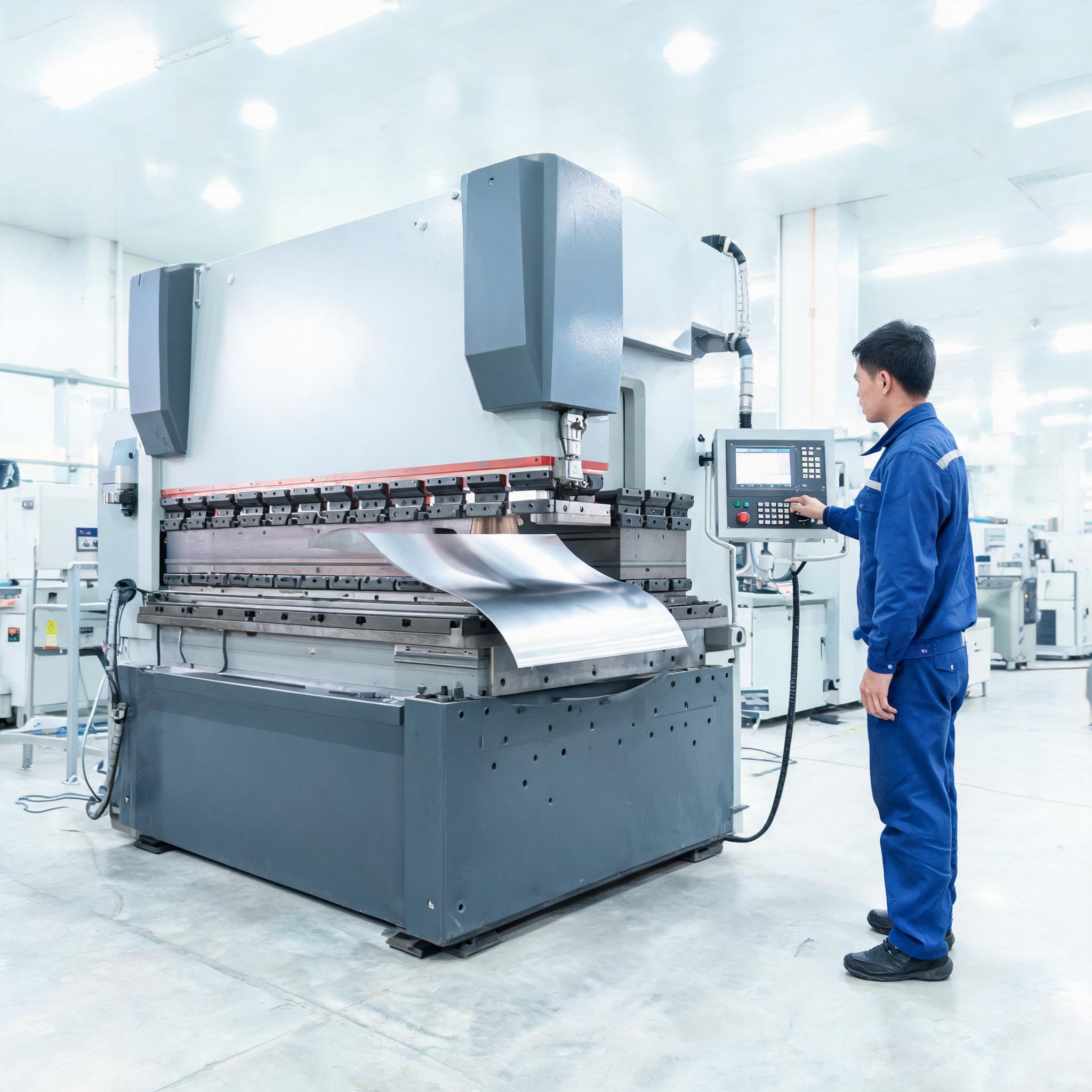
A typical hydraulic press brake for sheet metal bending consists of a frame, a ram (upper beam), a bed (lower beam), tooling (punch and die), and a control system. The ram moves vertically, pressing the punch into the sheet metal placed on the die. The control system manages ram position, speed, and force to achieve the desired bend angle.
Key Components and Their Functions
- Frame: Provides rigidity to resist deflection during bending. C-frame and O-frame designs are common; O-frames offer better symmetry.
- Ram and Bed: The ram applies force; the bed supports the die. Precision-ground surfaces ensure parallel alignment.
- Tooling (Punch and Die): Determines bend radius and angle. V-dies are standard; custom tooling handles complex shapes.
- Back Gauge: Positions the sheet metal accurately for repeatable bend locations.
- Control System: CNC controls allow programming bend sequences, angles, and material compensation.
For automated sheet metal bending, the control system uses servo-hydraulic or electric drives to maintain high repeatability. The machine's tonnage rating defines maximum bending force, which is a critical input constraint.
Mechanisms: How Bending Occurs
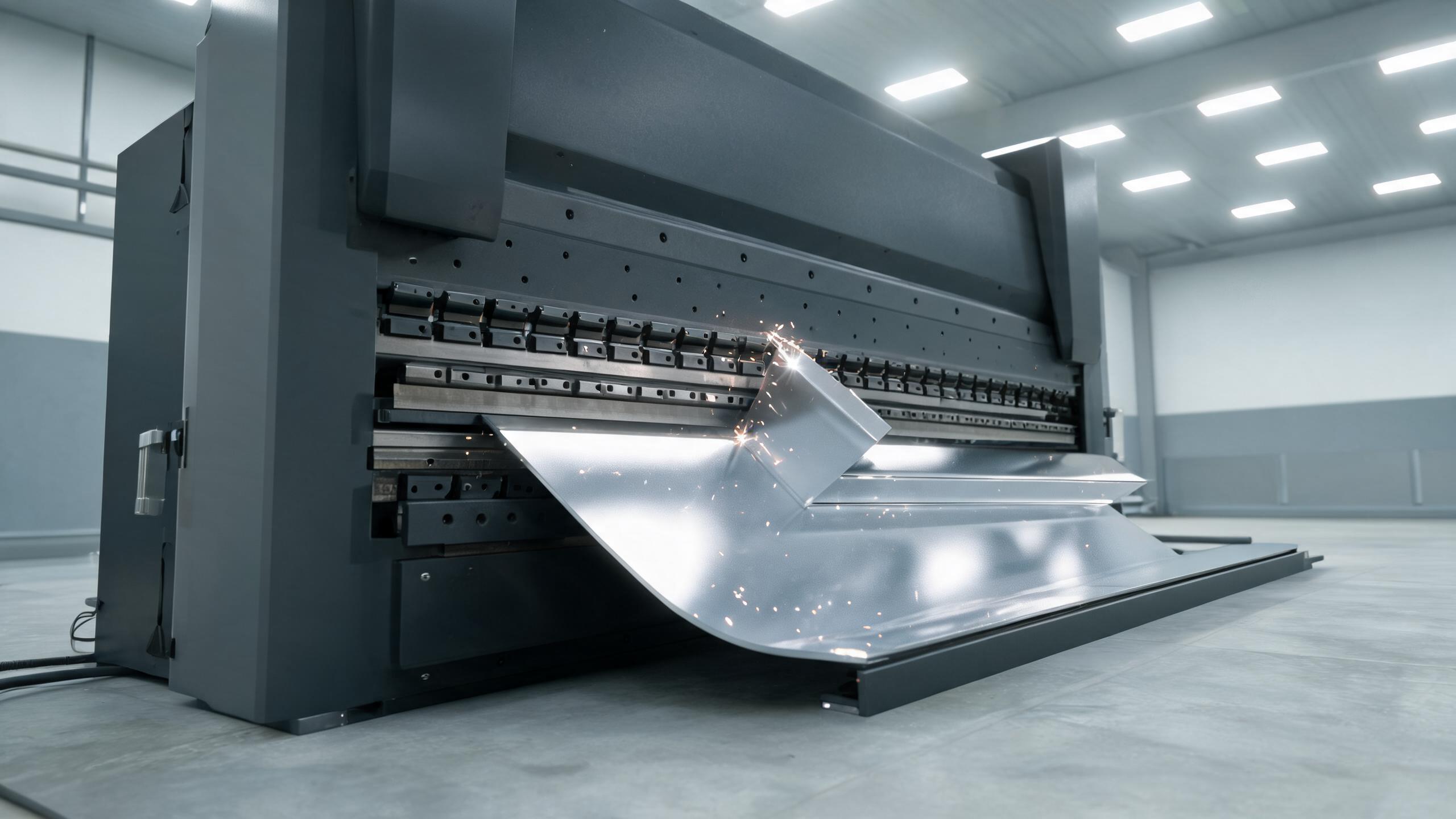
Bending in a press brake is a plastic deformation process. The punch forces the sheet into the V-die, causing the material to yield and bend. The bend angle depends on the punch travel depth, material thickness, and material properties. Two primary mechanisms are air bending and bottoming (coining).
Air Bending vs. Bottoming
- Air Bending: The punch does not fully contact the die bottom. This requires less tonnage and allows angle adjustment by varying punch depth. It is common for custom sheet metal bending because it is flexible.
- Bottoming (Coining): The punch forces the sheet fully into the die, achieving high accuracy but requiring more tonnage and precise tooling. It is used for precision sheet metal bending.
For aluminum sheet metal bending, lower yield strength allows easier forming, but springback is significant. For stainless steel sheet metal bending, higher strength and work hardening require more tonnage and careful tooling selection. The best stainless steel for sheet metal bending is often 304 or 316 due to their formability and corrosion resistance, but the best aluminum for sheet metal bending is typically 5052 or 6061, depending on temper.
Inputs and Outputs of a Bending Operation
Understanding inputs and outputs is essential for specifying a job and evaluating supplier capability.
Inputs
- Material type and grade: Aluminum (e.g., 5052, 6061), steel (e.g., mild steel, stainless steel 304/316).
- Thickness: Sheet metal thickness ranges from thin foils to heavy plates; the exact range depends on machine capacity.
- Bend radius: Inside radius is often specified; minimum radius depends on material and thickness.
- Bend angle and tolerance: Standard tolerances are often around one degree, but precision can be tighter.
- Part geometry: Flange lengths, number of bends, and complexity affect tooling and sequencing.
- Quantity: Prototype vs. production volume influences setup and cost.
Outputs
- Finished part geometry: Accurate angles, flatness, and dimensional consistency.
- Surface quality: No cracks, scratches, or tool marks (especially important for visible parts).
- Repeatability: Consistent dimensions across a batch.
- Lead time: Time from order to delivery, including tooling and setup.
For complex sheet metal bending, the output must meet strict tolerances and require minimal secondary operations. A reliable supplier should provide a quality report with measurement data.
Constraints and Limitations
Bending has inherent constraints that buyers must understand to avoid design failures.
Material Limitations
- Minimum bend radius: Bending too sharply can crack aluminum or stainless steel. A common guideline is that the inside radius should be at least one times the material thickness for steel, and more for aluminum.
- Springback: All metals spring back after bending. Compensation is needed; aluminum and high-strength steel have more springback.
- Work hardening: Stainless steel hardens during bending, increasing required force and reducing ductility on subsequent bends.
Machine Limitations
- Tonnage: Maximum force limits the thickness and length of material that can be bent. Under-tonnage causes inaccurate bends.
- Bed length: Limits the maximum part length that can be bent in one operation.
- Tooling availability: Custom tooling adds cost and lead time.
For a sheet metal bending bar (a long, narrow part), the machine bed length and tonnage must be sufficient to avoid deflection. Similarly, complex sheet metal bending may require multiple setups or specialized tooling.
Failure Modes in Sheet Metal Bending
Common defects and failures include:
- Cracking: Occurs when the bend radius is too small or material is too hard. Visible as surface cracks on the outside of the bend.
- Springback variation: Inconsistent angles due to material property variations or inconsistent punch depth.
- Twisting or warping: Uneven force distribution or poor tooling alignment causes part distortion.
- Tool marks: Scratches or dents from worn or improper tooling, especially on aluminum.
- Dimensional inaccuracy: Back gauge misalignment or incorrect bend sequence leads to out-of-tolerance parts.
These failures can be mitigated by proper machine calibration, quality tooling, and process control. A supplier with a robust quality management system (e.g., IATF 16949) is more likely to control these variables, but you must verify their actual process.
Actionable Evaluation Checklist for Buyers
Use this checklist when evaluating a sheet metal bending manufacturer. Do not rely on catalog claims alone; verify with samples and audits.
Capability Verification
- Machine capacity: Ask for tonnage and bed length. Ensure they match your part size and material.
- Tooling library: Check if they have standard V-dies and custom tooling for complex bends.
- Automation: Inquire about CNC controls and robotic bending for high-volume, automated sheet metal bending.
Quality Assurance
- Certifications: Ask for copies of ISO 9001 or IATF 16949 certificates. Verify validity with the issuing body.
- Inspection equipment: Coordinate measuring machines (CMM) or laser scanners for dimensional verification.
- First article inspection (FAI): Request a sample part with a detailed report before production.
Process Control
- Material traceability: Confirm they source certified materials (e.g., mill certificates for aluminum and steel).
- Bend compensation: Ask how they handle springback. A good supplier uses simulation or trial-and-error.
- Operator training: Skilled operators are critical for complex sheet metal bending.
Commercial Terms
- Lead time: Get written quotes for tooling, production, and delivery.
- Minimum order quantity (MOQ): Some suppliers accept prototypes, others require volume.
- Communication: Assess responsiveness and technical knowledge during inquiries.
For example, ChunTian Machine's catalog claims IATF 16949 certification and press brake forming for brackets and enclosures. You must request their certificate and audit their facility to confirm these claims for your specific project.
Comparing Suppliers: A Due-Diligence Framework
When comparing multiple manufacturers, use a transparent scoring system based on your priorities. Consider these criteria:
- Technical capability: Maximum sheet thickness, bend length, and angle precision.
- Material expertise: Experience with aluminum vs. stainless steel; ask for case studies.
- Quality systems: Certifications, inspection equipment, and defect rates.
- Cost structure: Tooling costs, per-part price, and volume discounts.
- Lead time reliability: On-time delivery history.
Avoid choosing solely on price; a low-cost bid may hide poor quality or hidden fees. Instead, request quotes from at least three suppliers and evaluate them against the checklist.
FAQ: Sheet Metal Bending Brake Bender Aluminum Steel
What is the difference between a brake and a bender?
A brake press (or press brake) is the machine used for bending sheet metal; the term "bender" is often used interchangeably. In practice, a brake press uses a punch and die to create bends, while a roll bender forms curves. For angular bends, a brake press is standard.
Can the same brake bender handle both aluminum and stainless steel?
Yes, but you must adjust tonnage, tooling, and bend allowances. Aluminum requires less force but is prone to galling; stainless steel requires more force and may need specialized tooling to prevent work hardening. Confirm the supplier's experience with both materials.
How do I choose between air bending and bottoming?
Air bending is more flexible and requires less tonnage, making it ideal for prototypes and varied jobs. Bottoming provides higher accuracy but is costlier for tooling. For precision sheet metal bending, bottoming may be necessary.
Conclusion: Make an Informed Decision
Selecting a high-quality sheet metal bending brake bender for aluminum and steel requires understanding the machine's architecture, mechanisms, and constraints. Use the evaluation checklist to verify supplier claims, request samples, and audit quality systems. Always validate certifications and material traceability for your specific lot. By applying this framework, you can reduce risk and achieve reliable, precision-bent parts for your products.