
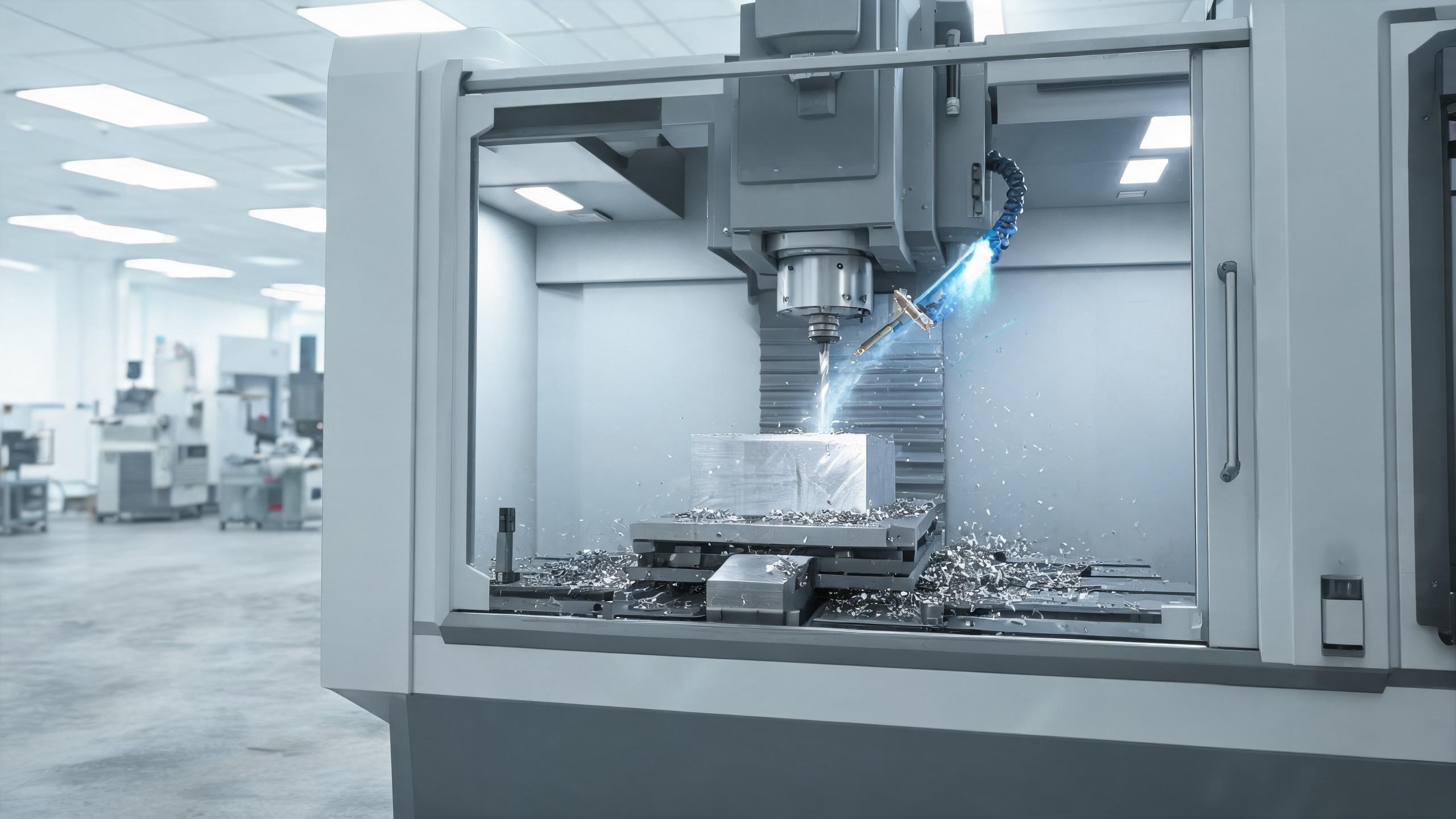
A transition-planning guide for buyers moving from prototype sheet metal fabrication to volume production. It separates the parameters that must stay identical — equipment, tooling, material batch discipline — from those that naturally change, such as inspection intensity and batching, so the first article honestly represents later shipments.
Prototype to Volume
A prototype that fits and functions is not yet a production part. Buyers planning the transition need to know which parameters are locked from the first article and which are allowed to move, because the answer decides whether the volume shipment can still be traced back to the sample that was approved.
What belongs in the transition plan
- Same equipment family from sample through volume — for example cut and punch work on a TruMatic 6000 rather than switching machines at the volume gate.
- Tooling and fixture identity carried forward, so the geometry in the sample is produced by the same setup that is later run in series.
- Material batch discipline: grade, thickness, temper and coating recorded on the sample and matched on subsequent batches.
- Inspection intensity and batching are the parts that legitimately change — and the change should be declared in writing before volume starts.
Why the prototype represents the article, not the shipment
During prototype sheet metal fabrication, the goal is to answer design questions cheaply: does the bend sequence work, does the hole pattern align, does the flat pattern nest with acceptable material usage, does the finish match the intended surface. Sample quantities are small, so it is practical to inspect every piece and adjust tooling or programs between parts.
Volume production asks a different question. It assumes the design is already settled and tests whether the process holds that design across many pieces, over more shifts, with material drawn from more than one batch. When a buyer treats the first article as proof of volume capability, the mismatch usually shows up later as a dimension that drifts, a finish that varies between batches, or an inspection report that no longer matches what was approved.
The honest position is to state on the sample documentation what will stay fixed and what will change. That statement is what makes later shipments defensible.
Parameters that must stay identical
Equipment and process route
The machine family is the most concrete anchor. If laser cutting and punching on the sample were produced on a TruMatic 6000, moving volume to a different machine platform changes the tooling interface, the programming logic and often the achievable edge condition. Buyers can reasonably require that the equipment used for the approved sample remains the equipment used for the first production runs.
Where the process route has multiple steps — cut, form, weld, deburr, finish — the sequence matters as much as the machine. A part formed before deburring behaves differently from one deburred first, and the sample record should state the order explicitly. For laser-cut blanks and formed parts, the cutting and forming route is part of the frozen specification; the same applies when a prototype depends on Custom Laser Cutting Services for its blank geometry.
Tooling and fixture identity
Prototype runs often use temporary tooling, and that is acceptable — as long as the tooling is identified and carried into volume. A punch insert, a forming die, a welding fixture or a simple check gauge should be listed with an identifier that appears again on production documents. When tooling is replaced between sample and series with no record, the buyer loses the link between the approved part and the delivered part.
For machined features that sit alongside sheet metal components, the same logic applies to the machining setup and its fixture references, which is why a prototype that includes turned or milled details is normally validated through Custom Precision CNC Machining Services under the same drawing revision that governs the sheet metal portion.
Material identity and batch discipline
Material is where prototypes and volume most often diverge quietly. A sample may be cut from a single sheet that happened to be on the shop floor; volume uses coils or sheets from several heats. The specification should therefore fix:
- Grade and standard designation of the sheet.
- Nominal thickness and the tolerance band accepted on the drawing.
- Temper or condition, since forming behavior changes with it.
- Coating or finish type and its specification, before any paint or powder step.
- Batch traceability requirement — whether the mill certificate or incoming record must accompany the production lot.
Batch discipline does not mean every shipment comes from one heat. It means the incoming material is checked against the same specification that was recorded on the sample, and that the record is retained.
Parameters that naturally change at volume
Inspection intensity
Checking every sample piece is normal and useful. Applying 100% dimensional inspection to a large production lot is a different commercial decision, and buyers should decide it deliberately rather than inherit it by default. A workable structure is to freeze the drawing and the critical characteristics, then define sampling frequency for those characteristics and a documented first-article inspection for the production setup.
Inspection intensity can decrease, but the characteristics being measured should not change. If a feature was measured on the sample, it should remain on the production inspection plan even if it is checked less often.
Batching and lot structure
Prototype work is typically single-lot. Volume work is naturally batched by material lot, by machine run, or by finishing batch. Batching is not a defect — it is a control. The useful practice is to make the lot structure visible on the packing documentation, so a buyer receiving three cartons can tell whether they come from one production lot or several, and can trace a concern to a specific batch rather than to the entire order.
| Parameter | Sample stage | Volume stage | What to freeze in writing |
|---|---|---|---|
| Equipment | Cut and punch on a TruMatic 6000 | Same machine family and process route | Machine platform and step sequence |
| Tooling and fixtures | Temporary tooling with identifiers | Same tooling carried forward | Tooling identifiers on production documents |
| Material | Single sheet, grade and temper noted | Multiple heats matched to one specification | Grade, thickness band, temper, coating, incoming check |
| Inspection | Every piece measured | Sampling plus documented first-article inspection | Critical characteristics and sampling frequency |
| Batching | One lot | Lots by material or machine run | Lot identification on packing documents |
| Drawing revision | Revision used for the sample | Same revision unless changed by agreement | Revision number and change control route |
Documentation sequence from drawing to first shipment
A transition that survives its first volume shipment is usually built on a short, ordered document set. The sequence below reflects a workable structure rather than a claim about any single supplier's system.
- Drawing review. Confirm the revision, material callout, tolerances, finish and any features that are dimensionally critical to assembly.
- Tolerance risk assessment. Identify the dimensions where process variation is most likely to interact with the tolerance band, and agree how each will be checked.
- Sample release. Record the approved sample, the revision it was built to, the tooling used and the material batch on a release document.
- First article inspection (FAI) and, where applicable, factory acceptance testing (FAT). Confirm that the production setup reproduces the approved geometry before the lot is released.
- QC photo pack and inspection record. Keep dimensional results and representative photographs with the lot, so a later question can be answered from the record rather than from memory.
Where a supplier operates a quality management system certified to IATF 16949:2016, the first-article and change-control expectations are already part of the operating discipline. Buyers should ask which certificate applies to the specific manufacturing site and confirm its validity directly, rather than assuming that a group-level certificate covers every plant.
Writing the transition into the purchase documents
The practical safety net is not a longer specification — it is a shorter, clearer one. A purchase order or technical annex that states the frozen parameters, the inspection plan and the lot identification requirement gives both sides a single reference. If any frozen parameter has to change later, that change should go through the same review route as a drawing revision, not be absorbed silently into the next production run.
Buyers should also decide in advance which deviations are acceptable. A finish that shifts slightly within a stated gloss range is not the same event as a material substitution. Sorting those two categories before volume starts prevents arguments after delivery.
FAQ
Can volume production use a different machine from the prototype?
It can, but the change should be agreed and documented rather than assumed. If the sample was approved on a specific platform such as a TruMatic 6000, the buyer is entitled to ask which equipment will run the volume order and to request verification that the approved characteristics are reproduced on that equipment.
Does a sample approval guarantee the volume shipment?
No. A sample release confirms that the drawing can be produced to the agreed characteristics. Volume performance also depends on material batch consistency, tooling condition and the inspection plan, which is why a first-article inspection before lot release is a reasonable requirement.
Is it acceptable to reduce inspection at volume?
Reduced sampling frequency is normal, provided the critical characteristics stay on the inspection plan and the sampling rule is agreed in advance. Dropping a characteristic from the plan is a different decision and should be treated as a specification change.
What documents should accompany the first volume shipment?
Typically the drawing revision reference, the material record for the batch used, first-article inspection results for the production setup, and a QC photo pack or dimensional report. The exact list depends on the part and the industry; buyers should agree it at the sample release stage rather than at delivery.
Next step
Prepare a short transition annex before placing the volume order: list the frozen parameters, the inspection plan and the lot identification requirement, then attach it to the drawing revision that was used to release the sample. If you are planning that step and need the sample and volume stages built on the same equipment and tooling route, send the drawing, the target quantity and the critical characteristics to the supplier for a written confirmation of what will stay fixed and what will change.
Inspection frequency, documentation scope and quality system coverage vary by part, industry and manufacturing site. Confirm the applicable certificate scope and the agreed inspection plan directly with the supplier before volume release.