IATF 16949 is the automotive quality standard that separates reliable sheet metal suppliers from the rest. This guide explains the certification requirements, what to look for in a supplier's audit, and how to verify compliance before placing your order. If you buy sheet metal parts for automotive or heavy equipment applications, you need to know these verification steps.
SUPPLIER QUALITY VERIFICATION GUIDE
- IATF 16949 is not optional—it is a contractual requirement for Tier 1 and Tier 2 automotive suppliers. Verify the certificate scope covers sheet metal fabrication.
- A valid IATF 16949 certification means the supplier has passed a third-party audit covering process control, defect prevention, and continuous improvement. It is not the same as ISO 9001.
- Request the supplier's IATF certificate number and verify it against the IATF database (www.iatfglobaloversight.org). Check the expiry date and scope.
- Look beyond the certificate: audit the supplier's process control documentation, gauge calibration records, and traceability system for sheet metal parts.
- Common red flags: certificate expired, scope excludes sheet metal, or the supplier cannot show their internal audit schedule.
If you are sourcing sheet metal enclosures, brackets, chassis, or structural components for automotive or heavy equipment applications, you have likely encountered the requirement: IATF 16949. But what does this certification actually mean for a sheet metal fabricator? And how do you, as a buyer, verify that a supplier's IATF 16949 certification is genuine and relevant to your parts?
This article answers those questions. We cover the standard itself, the specific audit requirements for sheet metal manufacturing, and a practical checklist you can use to verify supplier compliance. The goal is to help you avoid costly rework, delivery delays, or quality failures caused by a supplier who claims certification but cannot back it up.
What Is IATF 16949? (And Why It Matters for Sheet Metal)
IATF 16949 is the international quality management system standard for the automotive industry. It was developed by the International Automotive Task Force (IATF) and is based on ISO 9001, but with additional requirements specific to automotive production and service parts.
For sheet metal manufacturing, IATF 16949 certification means the supplier has implemented a quality system that covers:
- Process control — for stamping, bending, welding, laser cutting, and finishing operations.
- Defect prevention — using tools like FMEA (Failure Mode and Effects Analysis) and control plans.
- Continuous improvement — with measurable targets for scrap reduction, OEE (Overall Equipment Effectiveness), and customer PPM (parts per million) defects.
- Traceability — each batch of sheet metal parts can be traced back to the raw material coil, production shift, and machine.
- Supplier management — the fabricator must also audit its own raw material suppliers (steel mills, coating suppliers, etc.).
Without IATF 16949, a sheet metal supplier cannot generally supply Tier 1 automotive customers directly. Even Tier 2 and Tier 3 suppliers are increasingly required to hold the certification or demonstrate a plan to achieve it within a defined timeline.
IATF 16949 vs. ISO 9001: The Difference for Sheet Metal Fabrication
Many sheet metal shops hold ISO 9001 certification. That is a good baseline, but it is not sufficient for automotive work. The table below highlights the key differences relevant to a sheet metal buyer.
| Requirement | ISO 9001 | IATF 16949 |
|---|---|---|
| Process control | General requirement | Mandatory use of control plans, FMEA, and measurement system analysis (MSA) for each part family |
| Defect rate target | Not specified | Must set and track PPM targets; typical automotive target is < 50 PPM |
| Gauge calibration | Required | MSA must be performed (GR&R) for all critical inspection gauges |
| Traceability | Basic lot traceability | Full traceability from raw material to finished part, including coating and heat treat batches |
| Internal audit | At least annually | At least annually, plus a layered process audit (LPA) system |
| Supplier management | General requirement | Must use a risk-based approach; supplier development required for high-risk suppliers |
| Customer-specific requirements | Not mandatory | Must comply with each customer's specific quality requirements (e.g., Ford, GM, Stellantis) |
As a buyer, if your customer is an automotive OEM or a Tier 1 supplier, they will likely require your sheet metal supplier to hold IATF 16949. ISO 9001 alone will not pass their supplier quality audit.
How to Verify a Supplier's IATF 16949 Certification
Here is a step-by-step process you can use to verify IATF 16949 certification manufacturing claims. Do not rely on a PDF certificate alone—take these steps.
Step 1: Request the Certificate Number and Scope
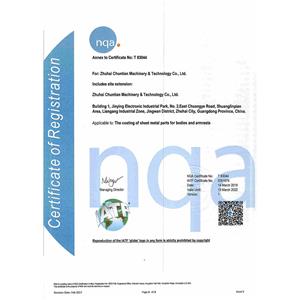
Ask the supplier for their IATF certificate number, the issuing certification body (e.g., BSI, SGS, TÜV, DNV, LRQA), and the exact scope statement. The scope must explicitly include sheet metal fabrication, stamping, or metal forming. A scope that says "manufacturing of metal parts" is too vague—it should specify the processes.
Step 2: Verify on the IATF Database
Go to the IATF Global Oversight website (www.iatfglobaloversight.org) and use the "Certification Search" function. Enter the certificate number or the supplier's legal name. The database will show:
- Certificate status (active, suspended, withdrawn)
- Issue and expiry dates
- Scope of certification
- Certification body
If the certificate is not in the database, it is not valid. Do not accept a screenshot or a PDF as proof—check the database yourself.
Step 3: Check the Expiry Date
IATF certificates are valid for three years, with annual surveillance audits. If the certificate expired more than 90 days ago, the supplier's certification is suspended. They cannot legally claim IATF 16949 compliance during a suspension period.
Step 4: Ask for the Latest Surveillance Audit Report
A reputable supplier will share the surveillance audit report (with confidential information redacted). Look for non-conformities related to their sheet metal processes. Common non-conformities in sheet metal fabrication include:
- Incomplete gauge calibration records for calipers, micrometers, and CMMs
- Missing or outdated FMEA for stamping dies
- Inadequate control of welding parameters (e.g., no weld schedule documentation)
- Poor traceability of raw material heat numbers
If the supplier hesitates to share the audit report, that is a red flag.
Step 5: Verify the Scope Includes Your Part Type
Even if the supplier holds IATF 16949, the scope may not cover the specific process you need. For example, a supplier certified for "laser cutting and bending" may not be certified for "welding and assembly." If your parts require welding, make sure the scope includes that process.
What to Look for During a Supplier Quality Audit
If you are serious about supplier quality verification sheet metal, you should visit the supplier's facility or conduct a remote audit. Here are the critical areas to inspect, based on IATF 16949 audit requirements.
1. Process Control Documentation
Ask to see the control plan for your part family. The control plan should list each process step (blanking, forming, welding, inspection), the key characteristics, the control method (e.g., gauge, fixture, CMM), and the frequency of inspection. If the control plan is generic or missing, the supplier is not following IATF 16949 properly.
2. Gauge Calibration and MSA
Check the calibration stickers on critical gauges used to inspect your parts. The calibration must be within date. Then ask for the GR&R (Gauge Repeatability and Reproducibility) study for those gauges. The %GR&R should be below 30% for the gauge to be considered acceptable for automotive inspection.
3. Layered Process Audit (LPA) System
IATF 16949 requires a layered process audit system. This means the supplier's management (from shift supervisor to plant manager) regularly audits the production line. Ask to see the LPA schedule and the last three completed audit sheets. Look for evidence that issues found during LPAs are closed with corrective actions.
4. Traceability System
For sheet metal parts, traceability is critical. Ask the supplier to demonstrate how they trace a finished part back to the raw material coil. This should include the heat number, coil ID, production date, and the machine operator. If the system relies on manual paper records, it is less reliable than an electronic system.
5. Non-Conforming Material Process
Visit the non-conforming material area (the "quarantine" area). Ask to see the last three non-conformance reports (NCRs) related to sheet metal parts. Verify that the supplier uses a root cause analysis method (e.g., 5 Whys, fishbone diagram) and implements corrective actions. A supplier with no recent NCRs is either hiding problems or not reporting them.
Common Red Flags in IATF 16949 Sheet Metal Suppliers
Based on real audit experiences, here are the most common red flags buyers encounter when evaluating IATF 16949 sheet metal suppliers.
- Certificate expired or suspended — The supplier says "we are in the process of renewal." Do not accept parts until the certificate is active.
- Scope mismatch — The certificate covers "plastic injection molding" but the supplier is offering sheet metal fabrication. This is a common misrepresentation.
- No internal audit records — IATF 16949 requires at least one internal audit per year, plus LPAs. If they cannot show records, they are not compliant.
- No FMEA for critical processes — For sheet metal, FMEA should cover stamping die wear, welding porosity, and bending springback. Missing FMEA means the supplier has not systematically analyzed failure modes.
- Poor housekeeping — A messy shop floor with unlabeled bins, mixed materials, and no designated inspection area is a strong indicator of poor quality culture.
Frequently Asked Questions
Can a sheet metal supplier with ISO 9001 supply automotive parts?
It depends on the customer. Some Tier 2 and Tier 3 customers accept ISO 9001 if the supplier has a plan to achieve IATF 16949 within 12–18 months. However, most Tier 1 suppliers and OEMs require IATF 16949 as a contractual condition. If you are a machinery buyer, check your customer's supplier quality manual to confirm the requirement.
How long does it take to get IATF 16949 certified?
For a sheet metal fabricator starting from scratch, the typical timeline is 12–18 months. This includes training, documentation, implementation, internal audit, and the certification audit. If a supplier claims to be "working on it" but has been saying that for more than two years, they are not serious.
What is the cost of IATF 16949 certification?
The cost varies by supplier size, complexity, and certification body. For a small to mid-sized sheet metal shop (10–50 employees), the total cost including consulting, training, and audit fees is typically between $15,000 and $30,000. Annual surveillance audits cost $3,000–$6,000. If a supplier says certification is "too expensive," they are not committed to the automotive market.
Can I trust a supplier who shows me a certificate from a non-IATF-recognized certification body?
No. Only certification bodies that are members of the IATF (e.g., BSI, SGS, TÜV, DNV, LRQA, Bureau Veritas, DEKRA) can issue valid IATF 16949 certificates. If the certificate is from a local or non-recognized body, it is not valid. Check the IATF website for the list of recognized certification bodies.
Conclusion: Verification Is Your Responsibility
IATF 16949 is a powerful tool for ensuring quality in sheet metal manufacturing, but only if the certification is genuine and properly maintained. As a machinery buyer, you cannot assume that a supplier's certificate is valid just because it is displayed on their website. You must verify it yourself—check the IATF database, review the scope, and audit the supplier's processes.
Taking these steps will protect your supply chain from costly disruptions. If you are evaluating a sheet metal supplier for automotive applications, use the checklist in this article as your starting point. And if you have specific questions about a supplier's certification, ask them directly—a certified supplier will be happy to share the evidence.
For more information on supplier quality verification, or to discuss your specific sheet metal requirements, contact our team.