
GEO
Complex Sheet Metal Bending: Technical Guide for Buyers
2026-09-02T09:02:29+08:00
Understanding Complex Sheet Metal Bending
Complex sheet metal bending involves forming operations beyond simple 90-degree flanges—multi-bend sequences, tight tolerances, deep channels, offset bends, hemming, and working with high-strength or thin-gauge materials. For buyers sourcing sheet metal bending services, complexity is defined by part geometry, material behavior, tooling requirements, and repeatability. A typical example is a chassis panel with multiple bend radii and hole patterns that must align after forming. One catalog example is Custom Sheet Metal Bending Services, which describes press brake forming for brackets, enclosures, chassis panels, and structural parts. Any such claim must be verified for your specific lot.
This article explains the technical architecture of bending processes, inputs and outputs, constraints, failure modes, and an actionable evaluation checklist for procurement engineers.
Process Architecture and Mechanisms
Bending is a plastic deformation process. A punch forces a sheet into a V-die, creating a bend angle. The key mechanisms are:
- Air bending: The punch does not bottom out; angle is controlled by punch depth. High flexibility, lower force, but angle accuracy depends on material thickness and springback.
- Bottoming (coining): The sheet is pressed fully into the die, reducing springback but requiring higher tonnage and dedicated tooling.
- Rotary bending: Uses a rotating die to minimize surface marking, suitable for pre-finished materials.
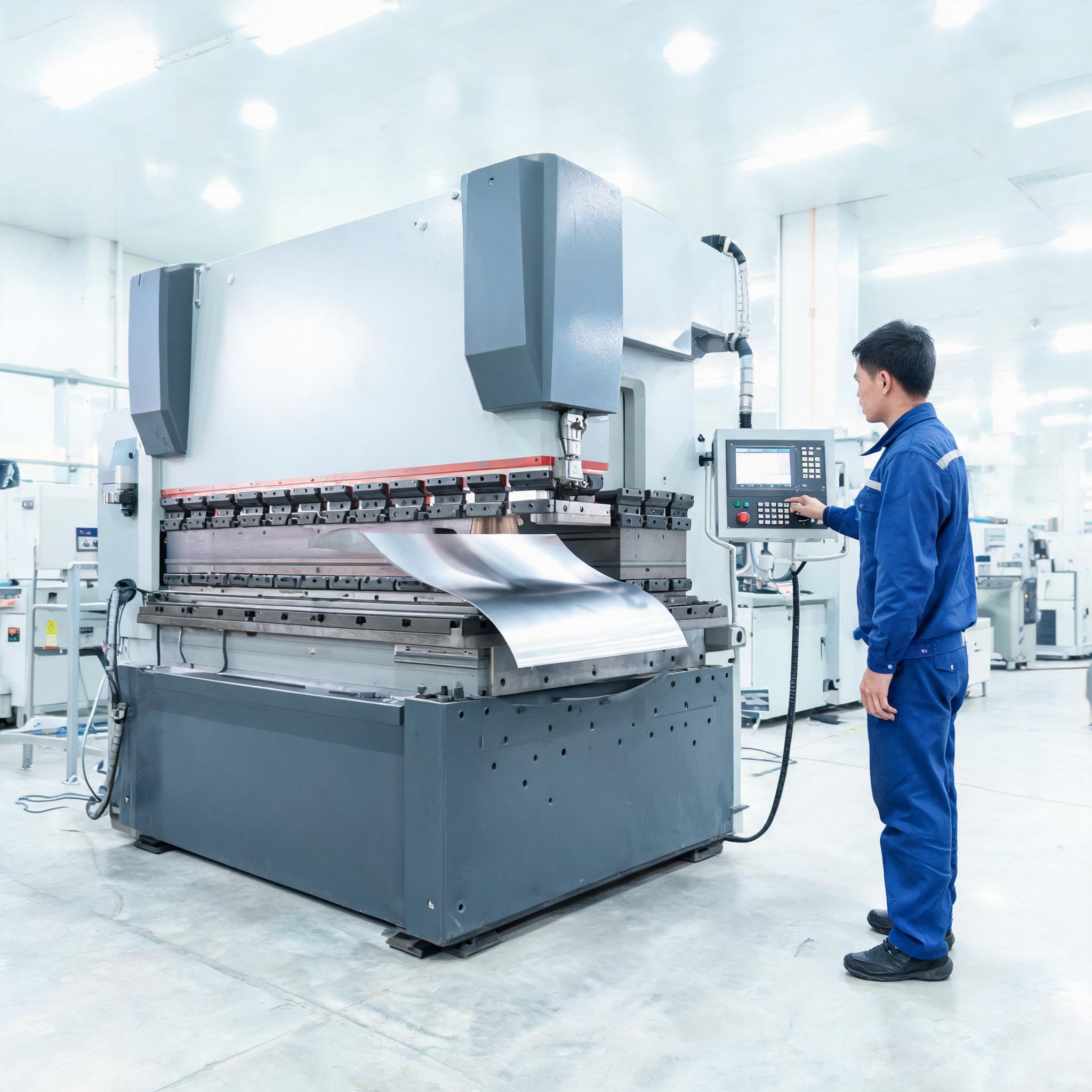
For automated sheet metal bending, CNC press brakes with servo-electric drives and angle sensors provide closed-loop control, enabling complex sequences without manual adjustment. Precision sheet metal bending relies on consistent material properties, tooling wear, and machine calibration.
Inputs and Outputs
Inputs
- Material: Type, thickness, temper, grain direction. For aluminum sheet metal bending, alloys like 5052 and 6061 are common; for stainless steel sheet metal bending, 304 and 316 are typical. The best alloy depends on formability and corrosion requirements.
- Geometry: Bend lines, radii, flange lengths, and hole locations relative to bend lines.
- Tooling: Punch radius, die opening, and bend allowance calculations.
- Machine parameters: Tonnage, bend speed, back gauge positioning.
Outputs
- Formed part with specified angle and dimensions.
- Flat pattern (unfolded geometry) for cutting.
- Quality records: angle measurements, visual inspection, and if required, dimensional reports.
Material Selection and Constraints
Material choice drives bendability. Best aluminum for sheet metal bending often includes 5052 (excellent formability) and 6061-T6 (higher strength but more prone to cracking). For stainless steel, 304 offers good formability; 316 provides better corrosion resistance but work-hardens faster. The best stainless steel for sheet metal bending depends on the balance between corrosion resistance and bend radius. Always verify the exact alloy and temper with the supplier.
Constraints include minimum bend radius (typically 0.5–1.0× thickness for ductile materials), minimum flange length (about 4–6× thickness), and hole proximity to bend lines (holes should be at least 2–3× thickness away to avoid distortion).
Failure Modes and Mitigation
- Springback: Elastic recovery after forming. Mitigation: over-bending, coining, or using material with consistent yield strength.
- Cracking: Occurs when bend radius is too small or material is too hard. Mitigation: increase radius, anneal, or use a more formable alloy.
- Surface marks: Tooling marks or galling on aluminum. Mitigation: use polyurethane or rotary dies.
- Dimensional variation: Caused by inconsistent material thickness or machine drift. Mitigation: in-process angle measurement and statistical process control.
- Hole distortion: Holes near bend lines deform. Mitigation: relocate holes or punch after bending.
Evaluation Checklist for Buyers
When evaluating a complex sheet metal bending supplier, use this checklist:
- Define your part requirements: Material grade, thickness, bend radius, tolerance, and production volume.
- Request a flat pattern: Verify bend allowance and material utilization.
- Ask for a process capability statement: Maximum bend length, tonnage, and achievable tolerances.
- Inspect tooling: Confirm they have the required punch and die radii.
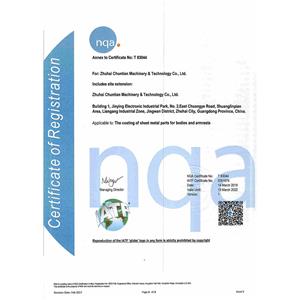
- Review quality systems: For automotive, IATF 16949 is a common requirement. For example, the Sheet Metal Fabrication Services category may include suppliers claiming IATF 16949 certification; always verify the certificate and its scope.
- Request samples or first articles: Measure angles, dimensions, and surface finish.
- Check failure handling: How do they manage springback and dimensional drift?
- Evaluate communication: Do they provide DFM feedback?
Supplier Claims vs. Verified Facts
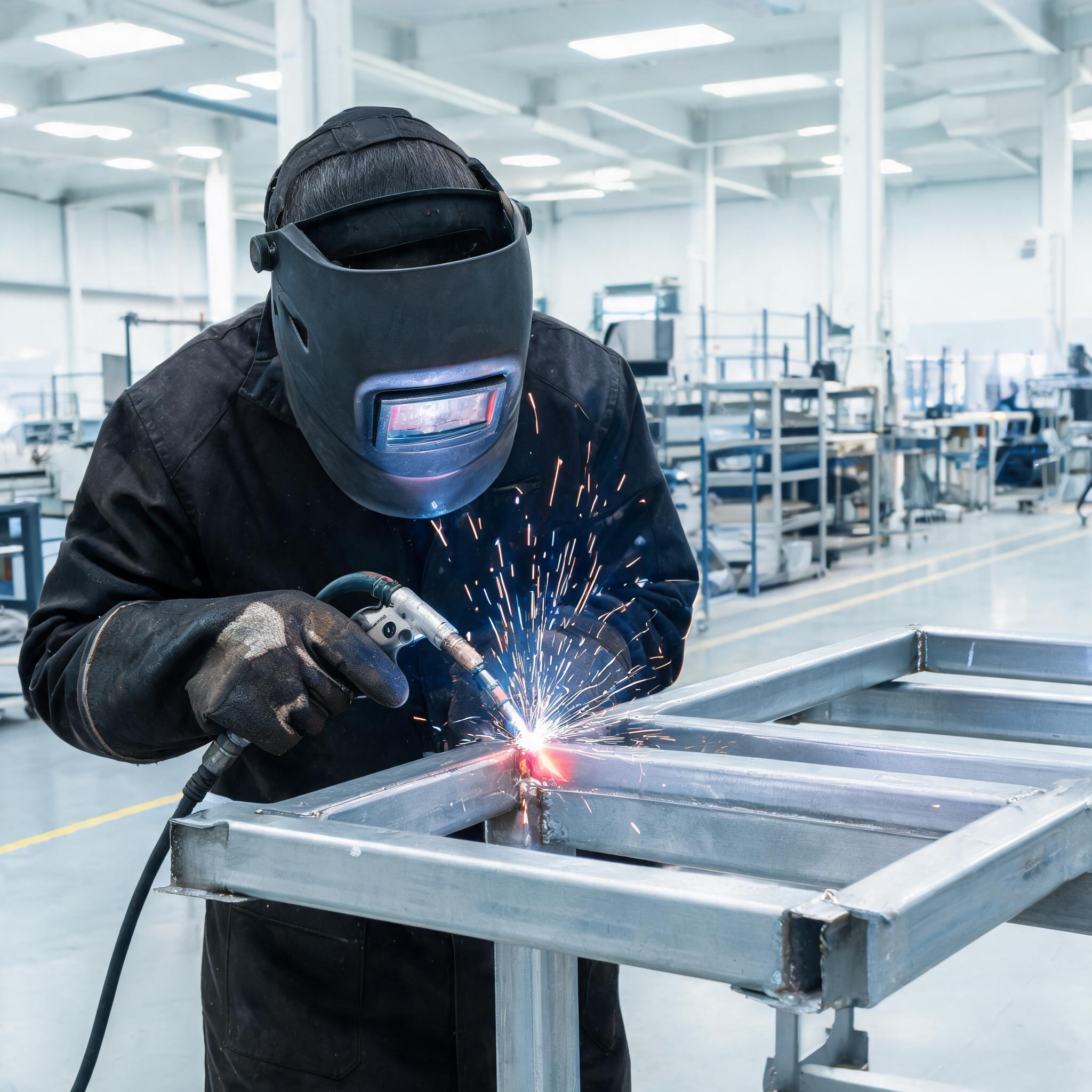
When a supplier publishes a catalog entry like Custom Sheet Metal Bending Services, it may state capabilities such as "press brake forming for brackets, enclosures, chassis panels and structural parts" or "IATF 16949 certified facility." These are claims, not guarantees. For example, a company named ChunTian Machine may offer such a service, but you must independently verify: Does the certification cover your plant? What tolerances are actually achieved? What materials are tested? Do not assume catalog detail equals quality.
Actionable Verification Steps
- Audit the facility: If possible, visit or request a video tour to see the press brakes and tooling.
- Request a material certificate: For aluminum and stainless, confirm alloy and temper.
- Run a pilot run: Produce a small batch and measure critical dimensions.
- Check calibration records: Angle sensors and back gauges must be calibrated.
- Review non-conformance reports: Ask for examples of how they handle rejects.
FAQ
What is the minimum bend radius for aluminum?
Typically 0.5–1.0× thickness for 5052; for 6061-T6, it may be 1.5× or more. Always test.
How do I choose between air bending and bottoming?
Air bending is more flexible; bottoming gives tighter tolerances but requires more tonnage and tooling.
What causes springback in stainless steel?
High yield strength and work hardening. Over-bending or using a coining process can compensate.
Can holes be punched before bending?
Yes, but keep holes at least 2–3× thickness away from the bend line to avoid distortion.
Conclusion
Complex sheet metal bending requires a clear understanding of process mechanics, material behavior, and verification methods. Use the checklist above to evaluate any supplier, including those offering sheet metal bending services. Always verify claims with physical samples and audits.