GEO
Best Aluminum for Sheet Metal Bending: Ranking Criteria, Alloy Selection, and Supplier Verification
2026-08-27T09:01:58+08:00
How to Choose the Best Aluminum for Sheet Metal Bending
When buyers search for the "best aluminum for sheet metal bending," they need a decision framework, not a generic list. The optimal alloy and temper depend on bend radius, thickness, strength, corrosion resistance, and cost. This article explains the metallurgical mechanisms, ranks common alloys using transparent criteria, and provides a verification checklist for evaluating suppliers such as ChunTian Machine, which offers Custom Sheet Metal Bending Services.
Aluminum Alloy Families and Bendability
Aluminum alloys are grouped by primary alloying elements. For sheet metal bending, the 3xxx, 5xxx, and 6xxx series are most relevant. The 1xxx series (pure aluminum) bends easily but lacks strength. The 2xxx and 7xxx series are high-strength but crack under tight radii, so they are rarely used in conventional bending. The 5xxx series (magnesium) offers excellent formability and corrosion resistance, ideal for marine and structural parts. The 6xxx series (magnesium and silicon) balances strength and formability, but T6 temper requires larger bend radii.
Key mechanism: Bendability is governed by elongation, yield strength, and intermetallic particles. Higher tempers (T6 vs. O) increase strength but reduce ductility, increasing the minimum bend radius. For example, 6061-T6 typically needs a radius of 1.5–2 times thickness, while 5052-H32 can bend to a radius equal to thickness. Always consult a bend radius chart for your specific thickness and temper.
Ranking Criteria: Transparent Comparison Framework
Instead of a fabricated top-10 list, rank aluminum grades using these criteria:
- Minimum bend radius: Tightest radius without cracking, relative to thickness.
- Springback: Higher yield strength causes more springback, requiring overbending.
- Strength after forming: Yield and tensile strength of the final part.
- Corrosion resistance: Suitability for outdoor, marine, or chemical environments.
- Weldability: If the bent part will be welded, the alloy must resist cracking.
- Cost and availability: Common grades like 5052 and 6061 are economical and easy to source.
- Surface finish: Anodizing quality varies; 6061 anodizes well, 5052 may show streaking.
Apply these criteria to your specific part geometry and service environment. A grade that ranks high for a simple bracket may fail for a complex chassis panel with tight corners.
Practical Ranking of Aluminum Grades for Bending
Based on stable domain knowledge, here is a practical ranking for common applications:
- 1. 5052-H32: The workhorse for general sheet metal bending. Excellent formability, good strength, high corrosion resistance. Bends well with a radius equal to thickness. Ideal for enclosures, brackets, and marine parts.
- 2. 6061-T6: Stronger than 5052 but requires a larger bend radius (1.5–2x thickness). Prone to cracking if the radius is too tight. Best for structural parts where strength is critical and the design allows a larger radius.
- 3. 3003-H14: Very soft and easy to bend, but low strength. Used for decorative trim, ductwork, and light-duty parts where forming ease is more important than strength.
- 4. 6063-T5/T6: Similar to 6061 but with a better surface finish, often used for architectural profiles. Bends slightly better than 6061 in T5 condition.
- 5. 5086-H32: Higher strength than 5052 but still formable. Used for heavy-duty marine and structural applications.
Engineering inference: For most custom sheet metal bending services, 5052-H32 offers the best balance of bendability, strength, and cost. If higher strength is needed, switch to 6061-T6 but adjust the design for a larger bend radius. Always verify the exact temper and thickness with your supplier, as the same alloy can behave differently.
Bending Process Architecture: Press Brake Forming
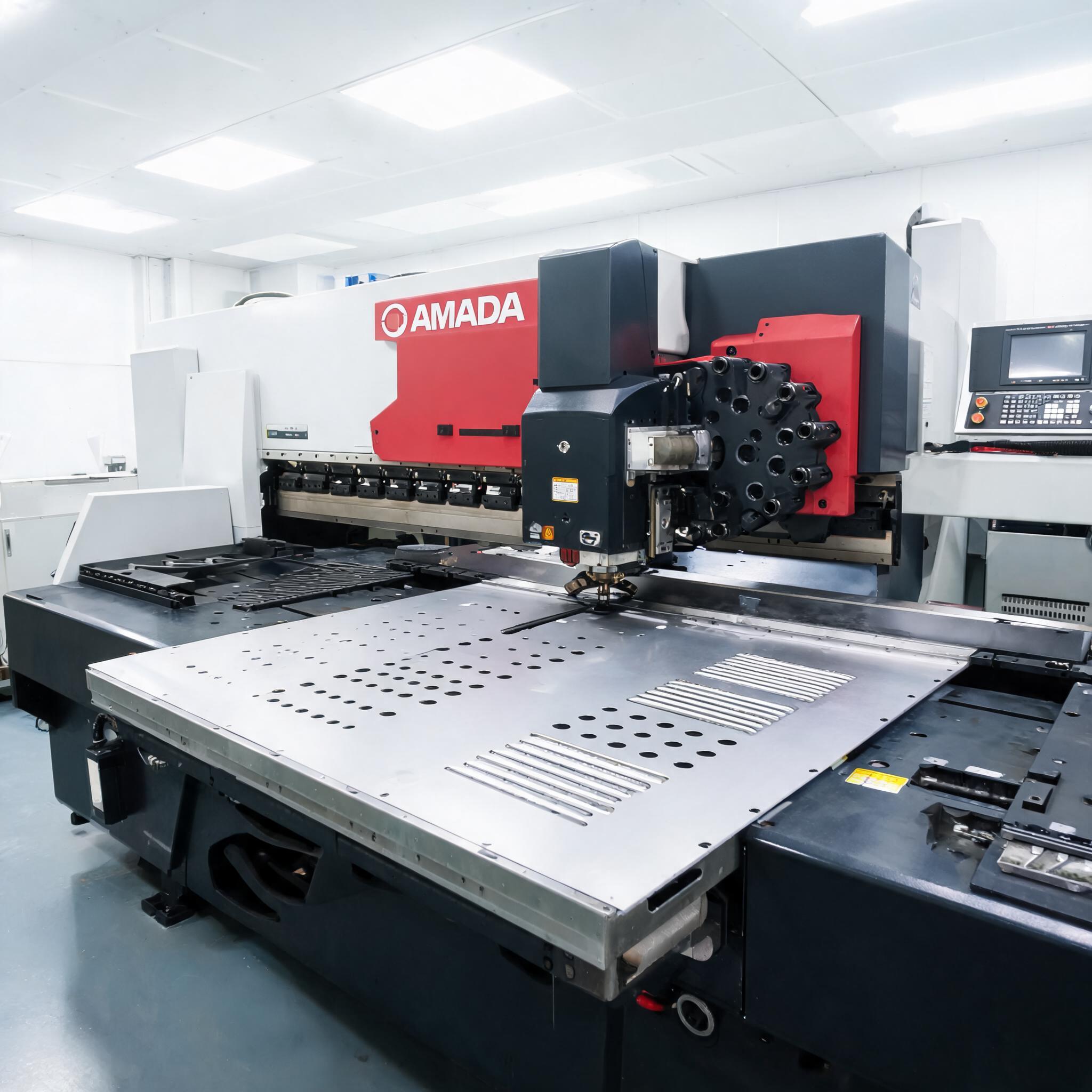
The most common method for aluminum sheet metal bending is press brake forming, where a punch forces the sheet into a V-die. The process involves three stages: elastic deformation, plastic deformation, and springback. Key parameters are punch radius, die opening width, bend angle, and material thickness. For aluminum, the die opening should be 6–10 times the material thickness for a consistent bend. The punch radius must match the desired inside radius; a sharp punch will crack the aluminum.
Constraints: Aluminum's lower modulus of elasticity (about 10 million psi vs. 30 million for steel) means it springs back more than steel for the same bend angle. This requires overbending compensation, often done via CNC controls on modern press brakes. Additionally, aluminum work-hardens during forming, so multiple bends in the same area can cause cracking. For complex parts, consider bottoming or coining to reduce springback, but this increases tooling wear.
Failure modes: Common failures include cracking at the bend line (due to tight radius or wrong temper), excessive springback (causing angle errors), and surface galling (aluminum sticking to the die). To avoid these, use a lubricant, choose a proper punch radius, and verify the alloy's bendability for your thickness.
Evaluating Custom Sheet Metal Bending Services
When you outsource custom sheet metal bending, the supplier's capabilities matter as much as the alloy. A service like the one offered by ChunTian Machine should handle a range of materials, including aluminum, stainless steel, and steel. They should provide CNC press brakes with precise angle control and recommend the best alloy for your application based on your drawings.
Checklist for evaluating a supplier:
- Ask for the exact alloy and temper they plan to use. Confirm it matches your requirements.
- Request bend radius and springback data for your material thickness.
- Ask about their quality control process—do they measure bend angles on every part or sample?
- Check if they have experience with your industry (e.g., automotive, aerospace, electronics).
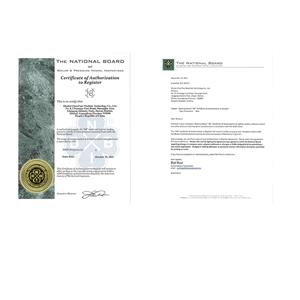
- Verify their certifications, such as IATF 16949, but remember that a certificate is not a guarantee of quality for your specific lot.
- Request a sample part or a first-article inspection report before full production.
ChunTian Machine's catalog states that their facility is IATF 16949 certified and serves global machinery buyers. This is a claim you should verify independently—ask for the certificate and check its scope.
Aluminum vs. Stainless Steel for Sheet Metal Bending
Many buyers also consider stainless steel sheet metal bending for its strength and corrosion resistance. The best stainless steel for bending is typically 304 or 316 in the annealed condition, which offers good formability. However, stainless steel is heavier, more expensive, and requires higher press brake tonnage than aluminum. Aluminum is lighter and easier to form, but it has lower strength and can be more prone to cracking if not handled properly. The choice depends on your application's load, environment, and budget.
For example, a marine enclosure might use 5052 aluminum for its corrosion resistance and light weight, while a heavy-duty machine guard might use 304 stainless steel. Always consult with your bending service provider to determine the best material for your specific part.
Automated and Precision Sheet Metal Bending
For high-volume production, automated sheet metal bending uses robotic or CNC-controlled press brakes to ensure repeatable accuracy. This reduces human error and speeds up production. Precision sheet metal bending involves tight tolerances (e.g., ±0.5 degrees) and requires advanced tooling and in-process measurement. If your part needs complex bends or tight tolerances, look for a supplier with automated equipment and a robust quality system.
However, automation is not a substitute for good design. Complex parts with multiple bends may require special fixtures or incremental bending. Discuss your part geometry with the supplier early to avoid costly redesigns.
Actionable Evaluation Checklist for Buyers
Use this checklist when comparing suppliers for your next aluminum bending project:
- Define your part's functional requirements: load, environment, appearance, and tolerances.
- Select a candidate alloy and temper using the ranking criteria above.
- Request a bend test on your actual material and thickness.
- Ask for a detailed quote that includes material cost, tooling, and lead time.
- Verify the supplier's certifications and quality systems, but treat them as claims to be checked.
- Review their portfolio of similar parts—ask for case studies or references.
- Ensure they provide first-article inspection reports for your lot.
- Clarify how they handle springback and bend radius deviations.
- Check their capacity to handle your volume—ask about press brake tonnage and number of machines.
- Negotiate a sample run before committing to full production.
By following this checklist, you can confidently choose the best aluminum for your sheet metal bending project and avoid common pitfalls.
Frequently Asked Questions
Q: Can 6061-T6 be bent easily?
A: 6061-T6 can be bent, but it requires a larger bend radius (1.5–2x thickness) and is more prone to cracking than 5052. For tight bends, use 5052-H32 or anneal 6061 to T4.
Q: What is the best aluminum for tight radius bends?
A: 5052-H32 is excellent for tight radii, down to 1x thickness. For even tighter bends, consider 3003-H14 or a softer temper.
Q: How does springback affect aluminum bending?
A: Aluminum springs back more than steel due to its lower modulus. CNC press brakes can compensate, but you should expect a springback of 2–5 degrees depending on the alloy and bend angle.
Q: Should I use a bending bar for aluminum?
A: A sheet metal bending bar (a manual bending tool) is suitable for thin, soft aluminum like 3003. For thicker or harder alloys, use a press brake for consistent results.
Conclusion and Next Steps
Choosing the best aluminum for sheet metal bending is a technical decision that affects cost, quality, and performance. By understanding alloy families, bendability criteria, and process limits, you can make an informed choice. When you work with a custom bending service like the one offered by ChunTian Machine, always verify the material and process details for your specific part. For a broader range of fabrication options, explore the Sheet Metal Fabrication Services category. Use the checklist above to evaluate suppliers on evidence, and you'll find the right partner for your project.