
GEO
Best Aluminum for Sheet Metal Bending: Alloy Selection Guide for Buyers
2026-09-04T09:01:49+08:00
Why Alloy Choice Matters in Aluminum Sheet Metal Bending
When sourcing aluminum sheet metal bending services, the most common buyer mistake is specifying only the thickness and bend radius without locking the alloy and temper. Aluminum grades respond very differently to press brake forming: some bend cleanly at tight radii, others crack at the same geometry. For global machinery buyers evaluating custom sheet metal bending partners, the alloy selection directly affects part strength, corrosion resistance, anodizing quality, and cost. This guide explains the engineering trade-offs, what to verify with your supplier, and how to build a practical evaluation checklist.
Aluminum Alloy Families for Bending: What Actually Works
For sheet metal bending, the 3xxx, 5xxx, and 6xxx series dominate. Each has distinct formability limits:
- 3003-H14 – The workhorse for general-purpose aluminium sheet metal bending. Excellent formability, moderate strength, easy to weld. Best for enclosures, brackets, and non-structural panels.
- 5052-H32 – Higher strength than 3003, outstanding corrosion resistance, and still very bendable. Preferred for marine, chemical, and outdoor equipment where fatigue and salt exposure matter.
- 6061-T6 – The most common structural alloy, but in T6 temper it has limited bendability. It cracks at tight radii (below 1.5–2× material thickness). For bending, specify 6061-T4 or -O then age to T6 after forming, or accept a larger bend radius.
Best aluminum for sheet metal bending is not a single answer—it depends on your part function. If you need tight bends and complex geometry, 5052-H32 is often the safest choice. If you need maximum strength and can tolerate a larger radius, 6061-T6 works with proper tooling.
How Bending Mechanics Affect Alloy Choice
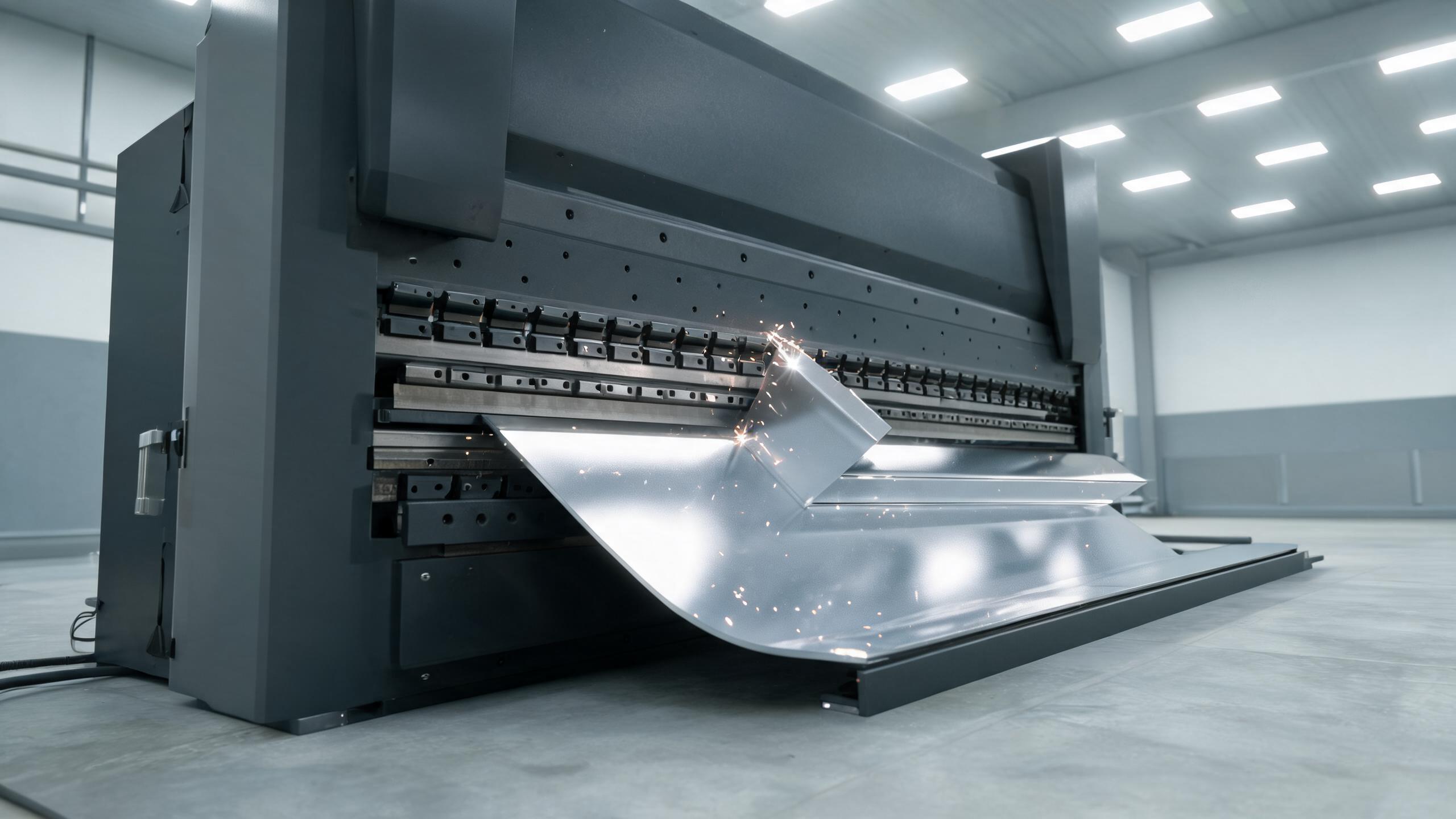
Press brake bending creates tensile stress on the outer surface and compressive stress on the inner surface. The minimum bend radius is a function of alloy, temper, and thickness. For 5052-H32, a typical minimum radius is 1× thickness; for 6061-T6, it jumps to 2–3× thickness. Grain direction also matters—bending parallel to the rolling direction increases cracking risk. A qualified sheet metal bending services provider should ask about your bend orientation and recommend a bend relief or a different alloy if the design is marginal.
What to Verify in a Custom Sheet Metal Bending Supplier
When you request quotes for custom sheet metal bending, do not assume the supplier will flag alloy issues. Build a verification checklist:
- Material certification – Ask for mill test reports that confirm alloy, temper, and mechanical properties for your specific lot. Do not accept “equivalent” grades without written approval.
- Bend radius capability – Request a bend test on your actual material and thickness. The supplier should provide a bend allowance or K-factor for your part.
- Tooling condition – Worn or incorrect punch/die radii cause surface marks and cracking. Ask about tooling maintenance and whether they use air bending, bottoming, or coining.
- Surface protection – Aluminum is soft; scratches and die marks are common. Ask about protective film, clean handling, and packaging for anodized parts.
- Quality system – If you buy for automotive or industrial machinery, ask about IATF 16949 or ISO 9001 certification. Note that a certification claim must be verified with a certificate number and issuing body.
Supplier Example: What a Catalog Claim Means for You
ChunTian Machine publishes Custom Sheet Metal Bending Services under its Sheet Metal Fabrication Services category. The catalog entry states the facility is IATF 16949 certified and serves global machinery buyers. This is a supplier claim—not proof. Before placing an order, you must independently verify that certification for the specific plant that will produce your parts, request material certificates, and run a sample bend test. Catalog detail is a starting point for due diligence, not a quality benchmark.
Common Failure Modes in Aluminum Bending
Even with the right alloy, parts fail when the process is not controlled. Watch for these issues:
- Cracking at the bend line – Caused by wrong temper, sharp radius, or bending across grain. Mitigate by switching to 5052-H32 or annealing before forming.
- Springback variation – Aluminum springs back more than steel. If the supplier does not compensate with over-bending or coining, your angles will be inconsistent.
- Surface galling – Aluminum adheres to steel tooling. Use polyurethane or coated dies, and lubricants designed for aluminum.
- Distortion after welding – If you weld after bending, heat-affected zones lose strength. Design for weld location away from bends, or use 5083 for welded assemblies.
Actionable Evaluation Checklist for Buyers
Use this checklist when comparing precision sheet metal bending suppliers:
- Confirm the alloy and temper on the drawing; do not leave it to the shop.
- Request a bend test on your material and thickness; ask for photos of the bend line.
- Ask for the minimum bend radius and K-factor used in their quoting software.
- Verify certifications by asking for the certificate number and the issuing body; cross-check with the registrar.
- Inspect a first article before full production; measure angles and check for cracks.
- Clarify how they handle springback—do they use air bending with angle compensation or bottoming?
- Ask about protective film and packaging if you plan to anodize or paint after bending.
- Get a written material certificate for each lot, not just a general claim of “aluminum.”
Frequently Asked Questions
What is the best aluminum alloy for tight-radius bends?
5052-H32 is the most reliable for tight radii (down to 1× thickness) with good strength. 3003-H14 is even more formable but softer.
Can 6061-T6 be bent without cracking?
Yes, but only with a larger radius (2–3× thickness) and careful tooling. For complex parts, consider 6061-T4 and post-form aging.
Why do my bent aluminum parts show surface marks?
Aluminum is prone to galling. Ask your supplier to use coated dies, protective film, or specialized lubricants.
How do I verify a supplier’s IATF 16949 claim?
Request the certificate number and the certifying body, then look up the certificate on the registrar’s public database.
Final Advice for Global Machinery Buyers
Choosing the best aluminum for sheet metal bending is a design decision, not a supplier promise. Lock the alloy and temper in your drawing, verify material certificates for every lot, and run a bend test before mass production. Use the checklist above to compare suppliers objectively. A supplier that asks about bend radius, grain direction, and springback is more likely to deliver consistent parts than one that quotes blindly. Remember that catalog claims—including certifications—must be independently verified for your specific order.