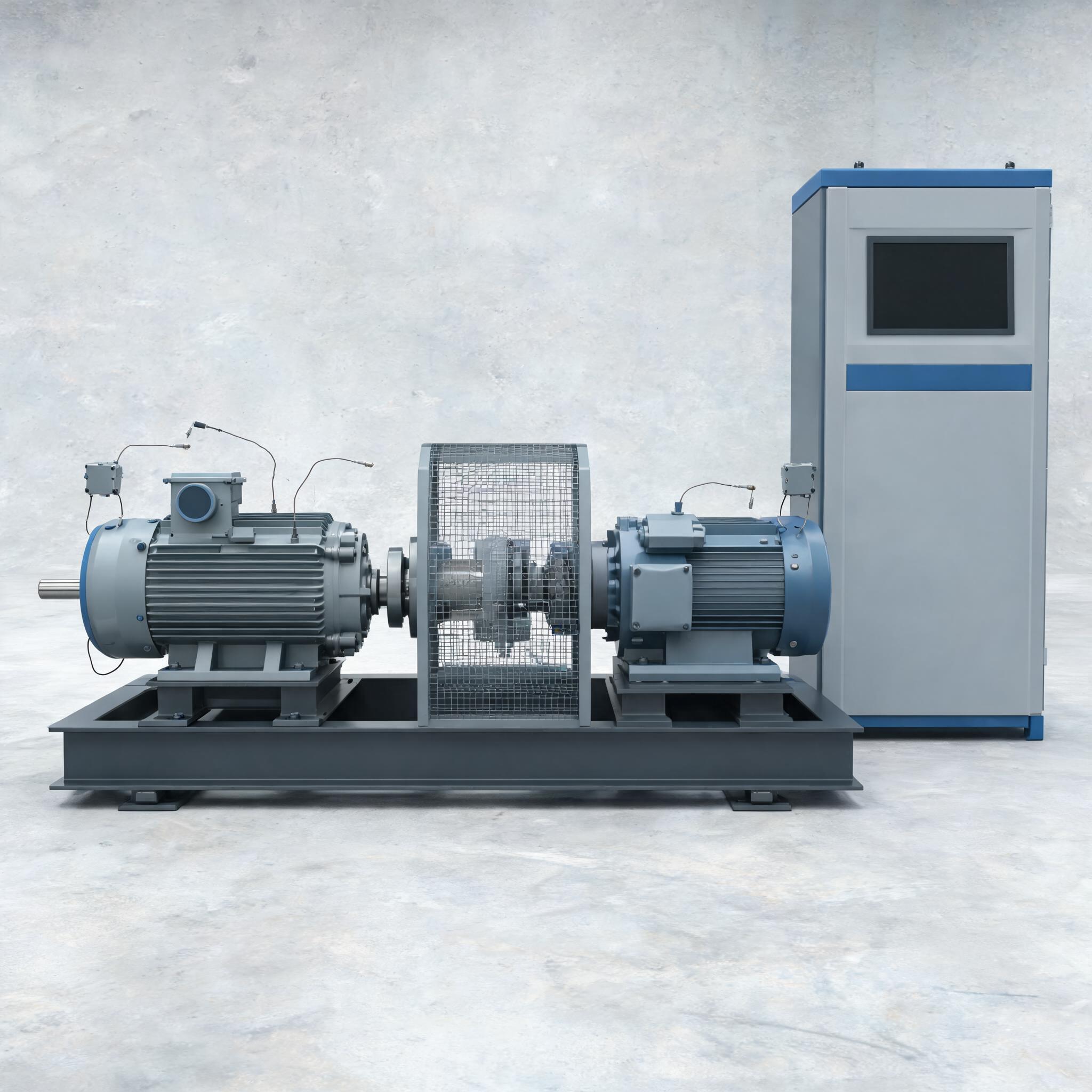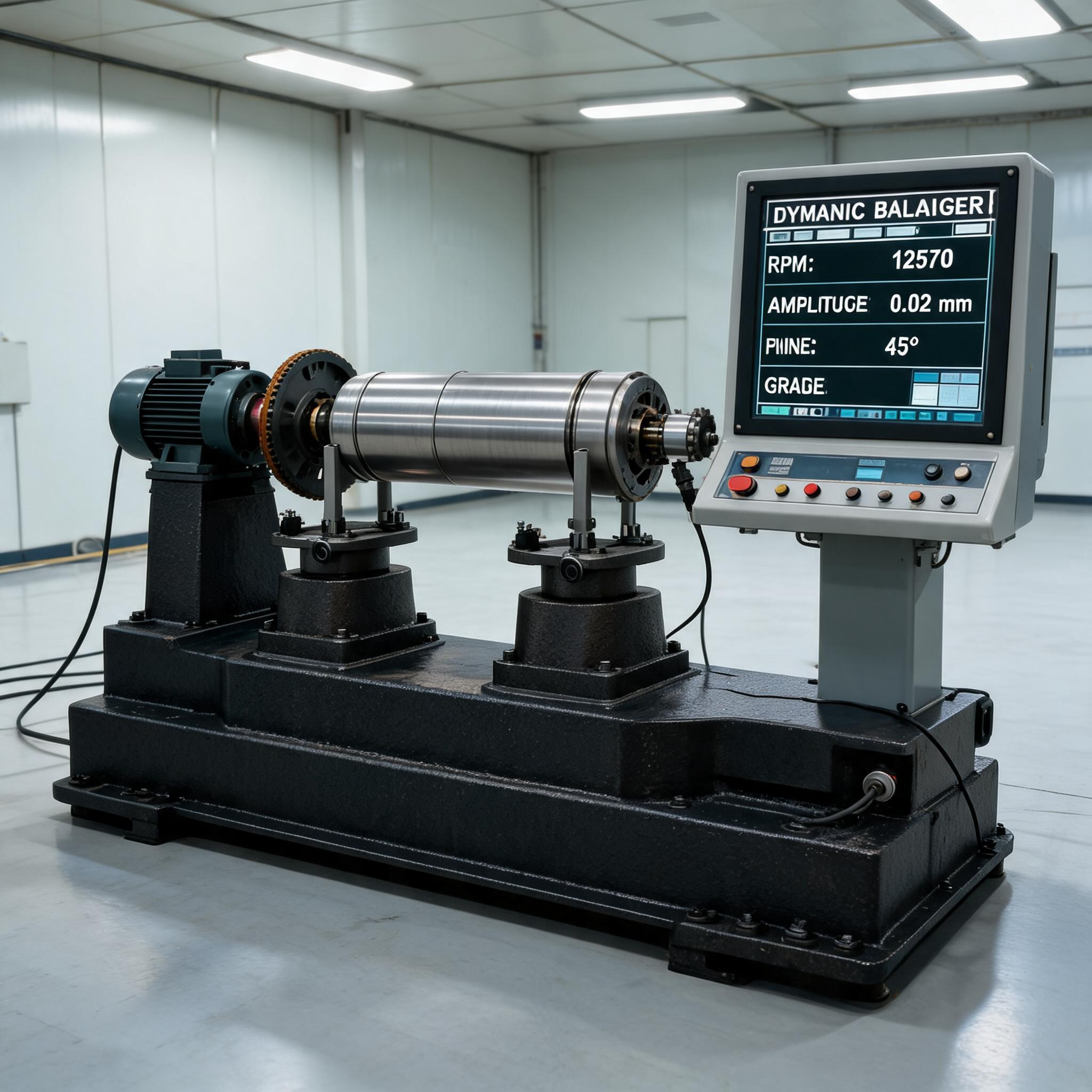
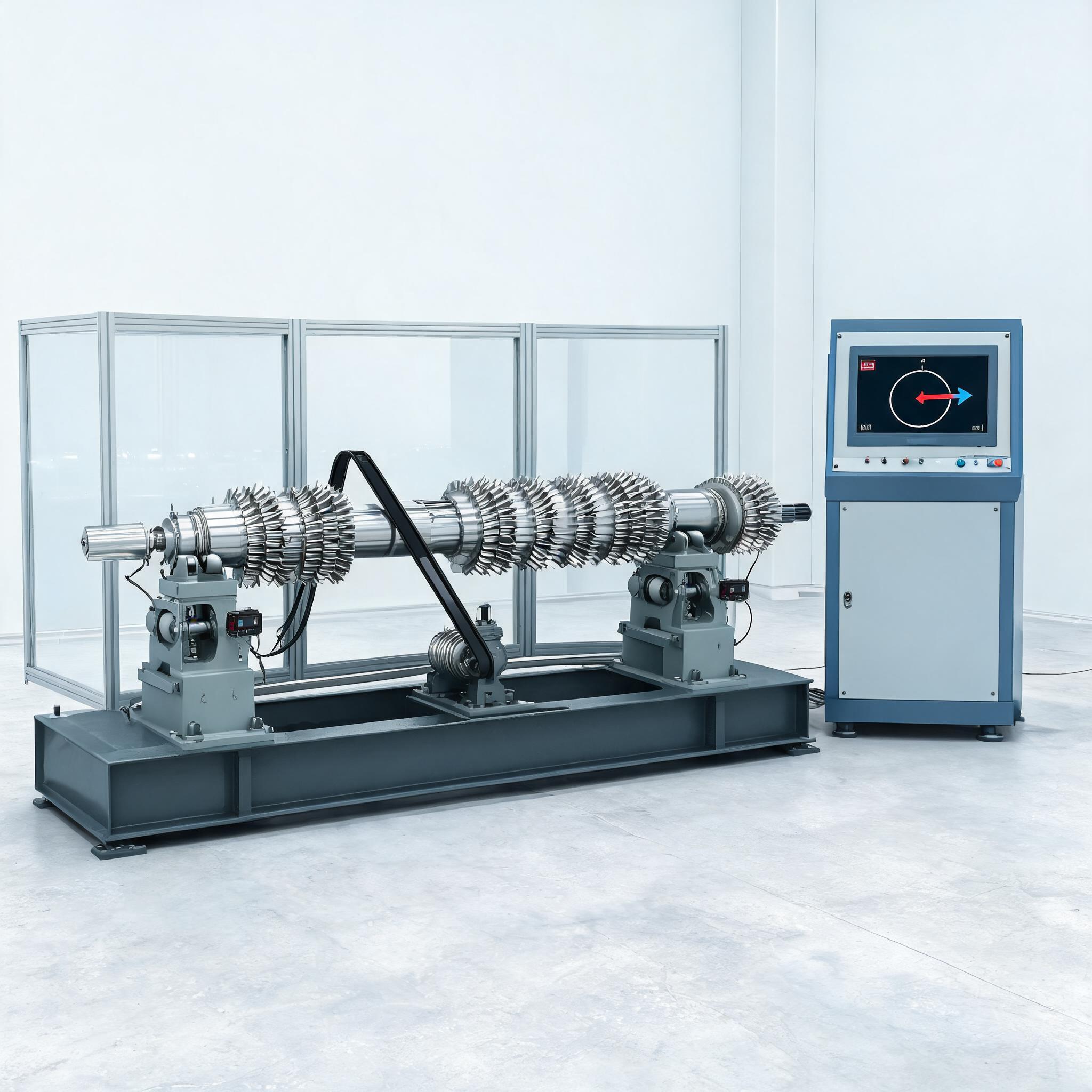
Turbine Rotor Balancing System
A precision hard-bearing balancing system engineered for multi-stage turbine rotors, expander rotors and large rotating assemblies. Measures unbalance in single-plane or two-plane correction runs, calculates correction mass and angle, and outputs a traceable ISO 1940-compliant balancing protocol for EPC and end-user acceptance.
Send RFQ FileProduct Detail
Turbine Rotor Balancing System for Precision Rotating Equipment
A hard-bearing dynamic balancing system specifically configured for multi-stage turbine rotors, expander rotors, generator rotors and large rotating assemblies where residual unbalance directly impacts vibration, bearing life and operational safety. The system measures initial unbalance in a single-plane or two-plane correction run, calculates the required correction mass and angular position, and verifies residual unbalance after correction — all documented in a traceable ISO 1940-1 balancing protocol.
For machinery importers, distributors and EPC buyers sourcing turbine packages, expander skids or generator sets, documented rotor balancing is a frequent end-user acceptance requirement. This system delivers the measurement data and certification format that international buyers need for qualification and commissioning.
Technical Specifications
| Parameter | Specification |
|---|---|
| Rotor weight range | 5–1,500 kg (configurable with interchangeable roller carriages) |
| Maximum rotor length | 2,500 mm between centers |
| Maximum rotor diameter | Ø1,200 mm (over bed) |
| Balance speed range | 120–3,000 RPM, stepless adjustable |
| Minimum achievable unbalance | 0.1 g·mm/kg (sensitivity dependent on rotor geometry) |
| Balance quality grades | ISO 1940-1 G2.5 / G1.0 / G0.4 selectable per application |
| Measurement planes | Single-plane (static) and two-plane (dynamic) |
| Drive system | Belt drive with adjustable tensioner — eliminates motor unbalance interference |
| Bearing support | Hard-bearing (hard-mounted) pedestals with integrated piezoelectric force sensors |
| Control system | Industrial PC with 15-inch touch HMI, real-time vector display |
| Data output | PDF balancing protocol: before/after unbalance values, correction mass/angle, achieved grade, operator, date |
| Safety enclosure | Polycarbonate guard with interlock, rotor containment rated for max test speed |
| Power supply | 3-phase 380V / 50Hz (configurable to 60Hz / regional voltage) |
Key Features
- Hard-bearing measurement principle: Force sensors in the support pedestals detect unbalance forces directly, independent of rotor mass distribution. This provides stable, repeatable readings without the soft-bearing calibration sensitivity to floor vibration.
- Belt-drive isolation: The rotor is driven by a belt and tensioner system, completely isolating the drive motor's own unbalance from the measurement. This is critical for achieving G1.0 and G0.4 grades on high-speed turbine rotors.ors.
- Two-plane vector analysis: The system separates unbalance into two correction planes and displays each as a magnitude-and-angle vector on the HMI. Operators can immediately see where material needs to be added or removed.
- Real-time residual verification: After applying corrections, a single re-spin confirms residual unbalance against the target grade. The protocol records both the initial and final states.
- Traceable documentation: Every balancing run produces a PDF protocol with instrument identification, calibration reference, unbalance values, correction details and achieved ISO 1940 grade — ready for buyer acceptance and third-party review.
Advantages for Export Buyers
- Reduces warranty exposure: Unbalanced turbine rotors cause excessive vibration that damages bearings, seals and couplings in the field. Pre-shipment balancing with documented residual values catches issues before the rotor leaves the facility.
- Meets EPC specification requirements: Engineering, procurement and construction contractors increasingly require balancing certificates as part of the equipment documentation package — not just a pass/fail stamp, but a full measurement protocol.
- Supports third-party witness: Buyers or independent inspectors (SGS, BV, TÜV) can witness the balancing run, review real-time data on the HMI, and verify the final protocol on-site or via live video link.
- Company-level quality system: Our facility operates under IATF 16949:2016 certification. Balancing procedures follow documented work instructions with calibration-traceable instrumentation.
Applications
- Steam turbine and gas turbine rotors
- Expander rotors for cryogenic and energy recovery plants
- Generator rotors (cylindrical and salient pole)
- Centrifugal compressor impellers and shaft assemblies
- Large pump impellers and multistage pump rotors
- Industrial fan and blower wheels
- Automotive turbocharger rotors (with appropriate tooling)
Purchasing FAQ
Can you balance our specific turbine rotor? Send us the rotor drawing with total weight, journal diameters, correction plane locations, operating speed and required balance grade. We will confirm fixture compatibility, achievable grade and test plan.
What documentation is included? Each balanced rotor receives a PDF balancing protocol showing initial unbalance, correction mass and angle applied, residual unbalance after correction, and achieved ISO 1940-1 grade. Calibration-traceable instrument data is included.
Can third-party inspectors witness the balancing? Yes. We welcome SGS, BV, TÜV or buyer-appointed inspectors to witness the balancing run. Live video streaming with real-time HMI data display is also available.
What correction methods are available? Material removal (drilling, milling, grinding) and mass addition (welding weights, threaded plugs) are both supported. The system calculates the exact correction mass and angular position for the chosen method.
Do you provide balancing for production batches or one-off repairs? Both. We handle individual rotor repairs as well as production batch balancing with consistent documentation for each unit. Share your quantity and schedule requirements for a tailored plan.
Request a Balancing Assessment
Share your rotor drawing, operating speed and required balance grade. We will confirm fixture compatibility, prepare a test plan, and provide a quotation.
Request product details