
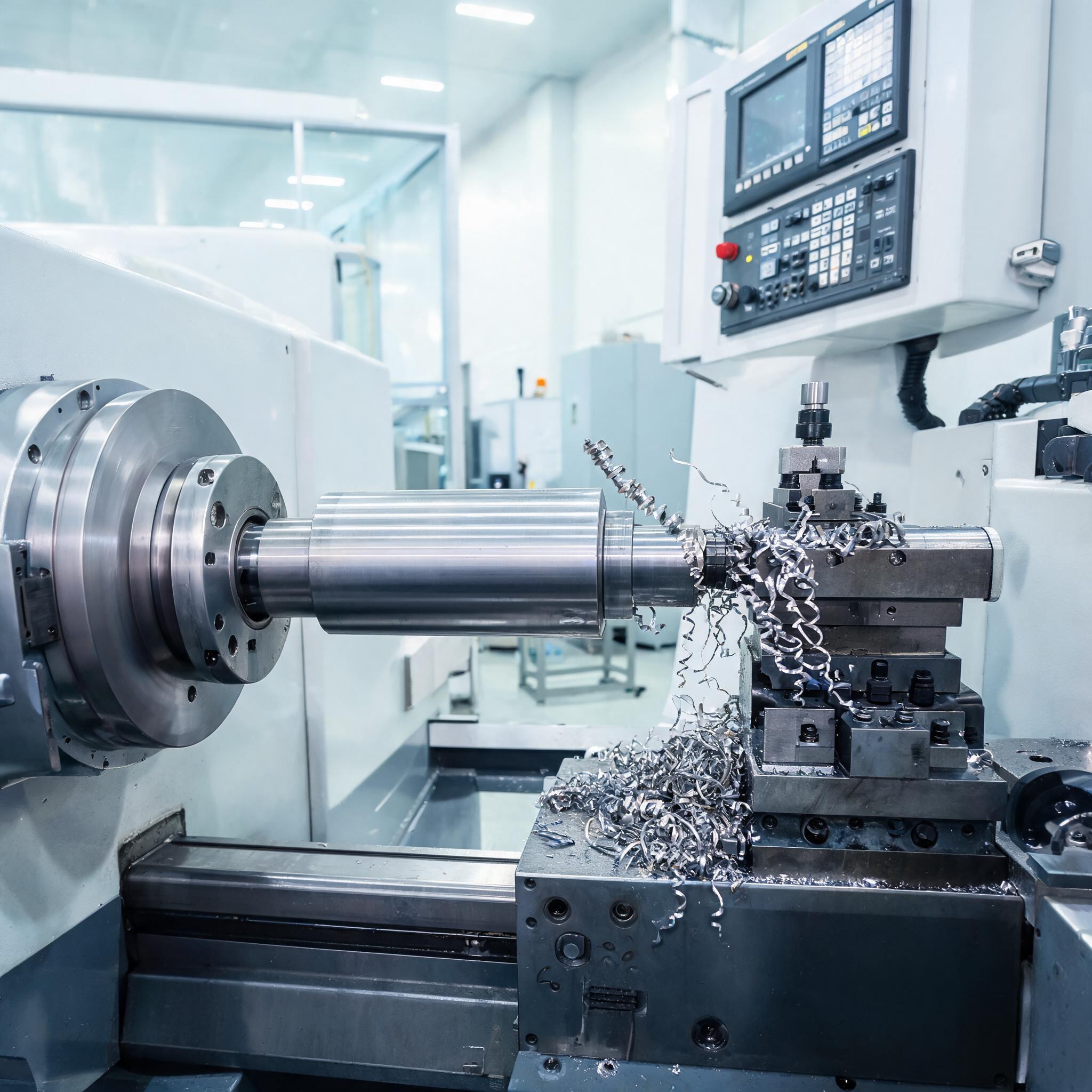
A practical guide to CNC machining cost factors - material selection, machine type, part complexity, quantity, tooling, and quality control - with strategies for reducing per-part cost without sacrificing quality.
What Determines CNC Machining Cost? A Buyer's Guide to Pricing Factors
When you request a quote for custom machined parts, the price you receive reflects a chain of decisions made by your supplier - from material selection to machine assignment to quality control. Understanding how CNC machining cost is structured helps you compare quotes objectively, identify where savings are possible, and avoid surprises during production runs.
This guide breaks down the primary cost drivers in CNC machining, explains how each factor influences the final unit price, and offers practical strategies for reducing costs without compromising part quality.
The 6 Core Factors That Drive CNC Machining Cost
1. Material Selection and Stock Size
Material typically accounts for a significant portion of your per-part cost, especially for low-volume runs where setup and programming are amortized across fewer pieces. The material you specify affects cost in three ways:
- Raw material price per kilogram: Aluminum 6061 is considerably less expensive than titanium Grade 5 or stainless steel 316. When performance allows, specifying a more common alloy grade can yield immediate savings.
- Stock form and dimensions: Bar stock, plate, and tube carry different pricing. Oversized stock increases both material waste and machining time. Designing to standard stock sizes reduces cutoff waste and material costs.
- Machinability rating: Free-machining alloys (such as 12L14 steel or 2007 aluminum) remove material faster and with less tool wear, reducing cycle time and tooling cost. Harder alloys require slower feeds, more frequent tool changes, and sometimes specialized tooling.
2. Machine Type and Setup Time
The machine your supplier assigns to your part directly impacts hourly cost. CNC turning centers, 3-axis milling machines, and 5-axis machining centers have different hourly rates reflecting their capability, depreciation, and operating cost.
- 3-axis milling: Suitable for simpler geometries. Lower hourly rate, but parts requiring multiple orientations need separate setups - each setup adds labor time and introduces tolerance stack-up risk.
- CNC turning: Efficient for rotational parts (shafts, pins, bushings). Turning centers with live tooling can handle cross-hole drilling and milling features in one setup, reducing total cost.
- 5-axis machining: Higher hourly rate, but complex parts that would need 3-4 setups on a 3-axis machine can be completed in a single setup. For geometries like turbine blades, impellers, or multi-angle brackets, the reduced setup time and improved accuracy often make 5-axis the more cost-effective choice.
Setup time is a fixed cost spread across your order quantity. A part that costs $200 each at quantity 10 might drop to $80 each at quantity 500 - not because the machining is faster, but because the one-time programming and setup cost is distributed across more units.
3. Part Complexity and Tolerance Requirements
Two parts made from the same material on the same machine can have dramatically different costs based on geometry and tolerance:
- Tight tolerances (±0.01 mm or finer): Require slower machining speeds, more frequent in-process inspection, and potentially multiple finishing passes. Tolerances of ±0.005 mm - achievable on precision 5-axis equipment - demand even greater cycle time and CMM verification.
- Complex features: Deep pockets, thin walls, undercuts, and internal channels require specialized tooling, longer cycle times, and sometimes multi-axis strategies. Each complex feature adds programming time and machining risk.
- Surface finish requirements: A standard milled finish (Ra 3.2) costs less than a polished or anodized finish. Specifying surface finish only where functionally required keeps costs controlled.
4. Quantity and Production Volume
Order quantity is one of the most significant levers in CNC machining cost. The relationship is not linear - it follows a step function:
- Prototypes (1–10 pieces): Highest per-unit cost. Full programming, setup, and tooling preparation are allocated to very few parts. Expect to pay a premium for speed and flexibility.
- Low volume (50–500 pieces): Setup costs are amortized, and bulk material pricing applies. Per-unit cost drops substantially.
- Production volume (1,000+ pieces): Suppliers can justify dedicated tooling, optimized fixtures, and batch processing. Unit cost stabilizes at the material-plus-cycle-time baseline.
When budgeting, ask your supplier for a price break analysis at multiple quantities - the difference between 100 and 300 pieces may be smaller than you expect, or large enough to justify ordering ahead.
5. Tooling and Fixtures
Custom fixtures, specialized cutting tools, and work-holding solutions are one-time investments that your supplier may pass through as a setup charge or amortize into the piece price:
- Soft jaws and custom fixtures: Required for parts that cannot be held in standard vise jaws. Well-designed fixtures improve repeatability and reduce scrap rates over the production run.
- Specialized tooling: Hard materials or complex features may require carbide or diamond-coated tools. These are more expensive but last longer - the cost is typically spread across the production quantity.
- Design for manufacturability (DFM): Rounded internal corners, standard hole sizes, and accessible features reduce tooling complexity. A pre-production DFM review with your supplier can identify cost-saving modifications before machining begins.
6. Quality Control and Documentation
Inspection requirements add cost but also reduce the risk of receiving non-conforming parts. Common quality control costs include:
- First Article Inspection (FAI): A full-dimensional inspection of the first part, documented in a report. Essential for new parts or after design changes.
- In-process inspection: Periodic checks during production using calipers, micrometers, or CMM. More frequent inspection increases labor time but catches issues earlier.
- Material certificates and traceability: Mill test reports (MTRs) and material certificates are standard for export-grade supply. Suppliers operating under IATF 16949 or ISO 9001 quality systems typically provide these as part of their standard documentation package.
How to Reduce CNC Machining Cost Without Sacrificing Quality
Standardize Where Possible
Using standard hole sizes, common thread profiles, and commercially available stock dimensions reduces both material waste and tooling requirements. Avoid specifying proprietary or hard-to-source materials when industry-standard equivalents meet your performance needs.
Optimize Tolerances
Not every dimension needs a tight tolerance. Apply precision tolerances only to functional surfaces - mating diameters, bearing seats, alignment features - and allow general tolerances (e.g., ±0.1 mm) on non-critical dimensions. This single practice can reduce machining time by 20–40% on complex parts.
Design for the Machine
Parts designed for 3-axis machining are less expensive than those requiring 5-axis. When possible, design features that are accessible from a single direction. If multi-axis machining is necessary, consolidate features to minimize setups - a part requiring two 5-axis setups costs nearly twice as much as one requiring a single setup.
Order at Price-Break Quantities
Discuss quantity breakpoints with your supplier before finalizing your order. The per-unit savings from ordering at the next price break often outweigh the inventory carrying cost, especially for consumable or recurring parts.
Provide Complete and Clear Documentation
Incomplete drawings - missing GD&T callouts, ambiguous surface finish symbols, or undefined thread standards - force suppliers to make assumptions or request clarification, which extends lead time and may result in rework. A complete drawing package with clear notes reduces quoting time and minimizes production errors.
What to Include in Your CNC Machining RFQ
To receive accurate and comparable quotes, provide the following in your RFQ:
- 3D CAD model (STEP or IGES format preferred)
- 2D drawing with complete GD&T, tolerances, and surface finish callouts
- Material specification (grade and condition/temper)
- Required quantity and any forecast for future volumes
- Applicable quality requirements (FAI, CMM inspection, material certificates)
- Any post-machining processes (anodizing, plating, heat treatment)
- Required delivery date and acceptable shipping terms
At Zhuhai ChunTian Machine Technology, every CNC machining project starts with a drawing review and manufacturability assessment. Our engineers evaluate your design for cost-saving opportunities, recommend material and process alternatives, and provide transparent quoting that itemizes material, machining, and quality control costs. With CNC turning (IT6–IT7 tolerance capability), 5-axis machining (0.005 mm accuracy), and an IATF 16949-certified quality system, we help machinery importers, distributors, and EPC buyers worldwide optimize both cost and quality.
Conclusion
CNC machining cost is not a single number - it is the sum of material, machine time, setup labor, tooling, and quality control decisions. By understanding these cost drivers and applying design-for-manufacturability principles, you can make informed decisions that reduce per-part cost without compromising the precision and reliability your application demands. The most effective cost reduction happens before machining begins: in the design, in the material selection, and in the clarity of your specifications.