
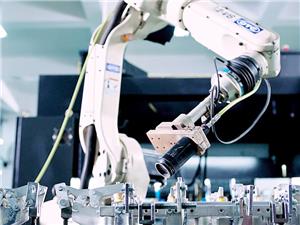
A process and specification guide for buyers who need burr-free edges before powder coating, anodizing, or assembly. Covers vibratory batch tumbling, manual deburring, edge breaking to drawing, and how to specify edge requirements so the coating line and the assembly station both get what they were promised.
Process & Specification Guide
Burrs and rolled edges cause the two failures that show up after parts leave your fabricator: coating defects that fail the salt-spray test, and assembly problems discovered on the line. Sheet metal deburring is not a cosmetic step bolted onto the end of fabrication. It is a pre-treatment gate — if it is skipped or loosely specified, powder coating and anodizing absorb the consequences downstream.
Key takeaways
- Powder coating and anodizing both need a mechanically sound edge; residual burrs become coating defects, not cosmetic ones.
- Vibratory batch tumbling handles consistent deburring on steel, stainless, and aluminum; manual deburring is reserved for geometry that batch media cannot reach.
- Edge requirements need to be on the drawing — a blanket note is not enough for high-visibility or safety-relevant edges.
- Where IATF 16949:2016 process control applies, deburring is a controlled operation with its own records, not an undocumented finishing step.
On this page
When you source deburred parts together with the coating or assembly steps, this work sits inside custom sheet metal deburring services or, where the finish is part of the same scope, custom powder coating services.
Why deburring is a pre-treatment gate
A laser-cut or punched edge is never a clean right angle at the microscopic level. It carries a burr on one side and a rounded, work-hardened edge on the other. For an unpainted assembly that may not matter. For a coated or anodized part, it decides whether the finish meets specification.
Three mechanisms explain why.
Coating cannot bridge a loose burr. A burr is a thin, weakly attached lip of material. Powder coating hangs onto it during spray, then the lip flexes, snaps off, or flakes after curing — leaving a bare metal spot in the middle of an otherwise intact film. This is one of the failure modes that turns up in salt-spray or adhesion testing rather than at incoming inspection.
Sharp edges thin the film. Powder coating is applied and cured as a film of finite thickness. Over a knife edge, the same nominal film builds unevenly; a corner that looks coated can measure below the specified thickness. Edge breaking — a defined radius or chamfer — gives the film a surface to hold.
Anodizing amplifies edge condition. Anodic coatings grow from the aluminum surface. A burr or a rough edge produces uneven growth, edge discoloration, and a boundary that can chip. Anodized parts need a smooth, burr-free edge before they enter the anodizing line, not after a rejected batch comes back.
The practical sequence is: deburr, then clean and pre-treat, then coat or anodize. Treating deburring as a cosmetic afterthought is what causes the rework.
Methods and when each fits
Two methods cover most sheet metal deburring, and they are chosen by geometry and volume rather than by preference.
Vibratory batch tumbling
Parts are loaded into a vibratory bowl or tub with abrasive media and a compound. The media works all accessible edges simultaneously, producing a consistent edge break across a batch. It is efficient for repeated parts and flat or simple-formed profiles, and it can be run on steel, stainless, and aluminum with media and chemistry adjusted to the material. Stainless and aluminum need attention because a medium that works for carbon steel can contaminate or discolor them.
Batch tumbling is a repeatable, documented process, which matters when the same part number runs across multiple orders. Its limitation is access: internal corners, deep pockets, tapped holes, and closely spaced features may not be reached uniformly by media.
Manual deburring
Manual deburring handles what batch media cannot — internal edges, hole intersections, weld-adjacent burrs, and localized edge breaks on complex geometry. A hand-held tool, file, or scraper reaches specific features. The trade-off is consistency: manual work depends on the operator and needs a defined standard and inspection, or the edge break varies from part to part. Specify the tool and edge target rather than saying "deburr" and expecting an identical result across a manual operation.
| Consideration | Vibratory batch tumbling | Manual deburring |
|---|---|---|
| Batch consistency | Uniform across the load | Operator-dependent; needs standard + inspection |
| Access | External, reachable edges and holes | Internal corners, pockets, weld edges, tight features |
| Materials | Steel, stainless, aluminum with matched media/compound | Any material |
| Best used for | Repeated parts, formed profiles, pre-coating batches | Complex geometry, low reachability, local edge breaks |
Specifying edge requirements on drawings
Most deburring disputes come from an underspecified drawing. "Deburr all edges" leaves the shop with discretion, and discretion varies. Where the edge matters to function — a coating line, a mating face, a handling edge, a safety-relevant corner — put the requirement on the drawing.
A workable edge specification answers three questions:
- Which edges are controlled? Name the edges that matter, or state clearly if all external edges are controlled.
- What is the target? An edge break to a defined radius or chamfer, rather than a generic "remove burrs."
- What is acceptable? The condition the edge must meet — visually burr-free to a stated standard, or verified by the method you accept.
Practical notes for drawing callouts:
- Check whether the edge break conflicts with a functional requirement. A controlled edge radius on a coating-visible face may need to be smaller than a press-fit or sealing edge break. Reconcile both before release.
- Keep the note consistent across the part's drawing, the assembly drawing, and the finish specification. A deburring callout that contradicts the coating note will be resolved by whoever reads it last.
- For anodized and powder-coated parts, reference the edge condition in the finish requirement so the coating house and the deburring operation work to the same target.
- Where the drawing references an edge standard, quote it exactly — do not paraphrase a standard name or number.
If the edges are functional and the geometry is tight, agree a sample with the supplier before the production run. Confirming the edge break on a first article resolves most specification ambiguity earlier than arguing over a rejected batch.
Quality control and traceability
Deburring quality is verified by inspection against the drawing requirement, plus the finishing result itself: coating adhesion and edge coverage after cure, or appearance and surface condition after anodizing. Where a customer's quality system calls for it, batch identification and inspection records connect the deburring operation to the parts that reached the coating line.
For automotive and similar programs, IATF 16949:2016 is the quality management framework many buyers ask suppliers to hold. It is a system-level standard, not a certificate for one part or one process, and it does not by itself guarantee a specific edge result. If your program requires it, confirm the supplier's current certificate and audit scope directly rather than assuming it from an ISO reference. Our related article, the IATF 16949 verification guide, covers what to check and how to read the certificate scope.
Two things buyers can control on their side: state the edge requirement on the drawing, and state the inspection method you accept. Both reduce the chance that "deburred" means two different things at the fabricator and at the coating shop.
FAQ
Why does deburring matter before powder coating?
Loose burrs become coating defects. A weakly attached burr can cause the cured film to flake or leave a bare spot, and a sharp edge can result in a film that is thinner than specified. Breaking the edge gives the powder a surface it can hold, which is why deburring precedes cleaning and coating.
Is deburring needed before anodizing too?
Yes. Anodizing grows from the aluminum surface, so a burr or rough edge produces uneven coating growth, edge discoloration, and a boundary prone to chipping. The edge should be smooth and burr-free before the part enters the anodizing line.
Can deburring be skipped on parts that will be assembled unpainted?
Only if the drawing allows it. Uncoated parts still raise handling-safety and fit concerns — a sharp edge can injure assembly staff, and a burr can interfere with mating faces. If the edge is not functional, say so on the drawing; if it is, specify the control.
How should a buyer specify edge requirements to get a consistent result?
Name the controlled edges, state the target as an edge break to a defined radius or chamfer rather than a generic instruction, and state the acceptable condition. Keep the note consistent with the coating or anodizing specification, and agree a sample on tight or functional edges before the production run.