
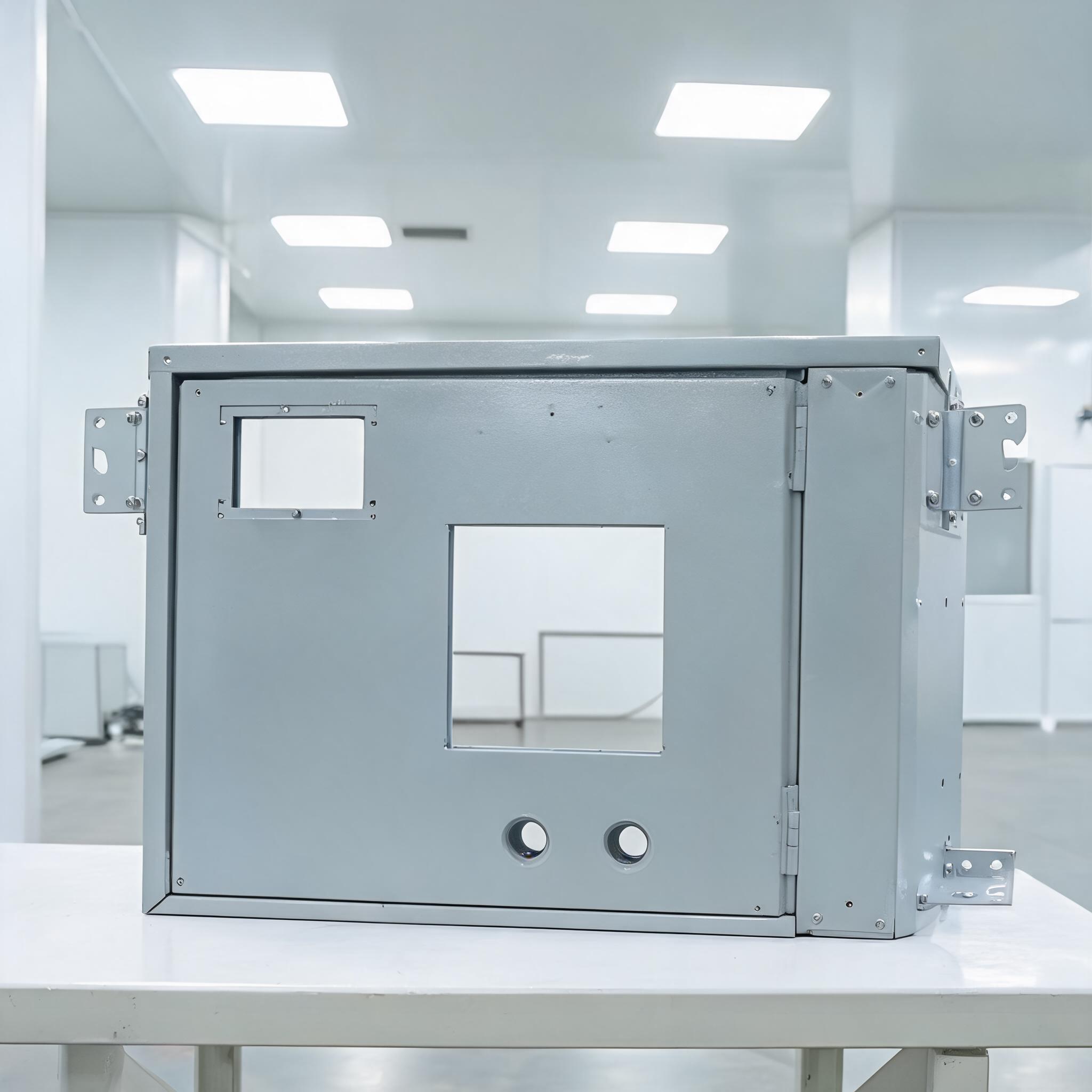
How the sample-to-volume path works for sheet metal boxes: what stays identical between first article and production (equipment, parameters), what changes at volume (batch inspection, hardware kitting, packaging), and which questions to raise before the sample is approved.
Scale-up planning
A sample proves the design can be built. A production run proves it can be built the same way, in quantity, with packaging and hardware that survive transit. The gap between the two is where most sheet metal box projects lose time.
Key takeaways
- Laser cutting, forming, and finishing equipment stays the same from first article to volume in most box programs; the parameters are locked once the sample is released.
- What changes at volume is inspection frequency, hardware kitting, and packaging — these are planning items, not production surprises.
- Raising batch inspection, kitting, and pack-out questions during drawing review costs nothing; raising them after tooling is cut can force a new sample.
- Ask any sheet metal boxes manufacturer for its sample-to-volume path in writing before you approve the first article.
On this page
What carries over from sample to volume
A sheet metal box is built from a flat pattern that gets cut, formed, and finished. The tooling and machine parameters that produce the sample are the same ones that produce the production run — that is the point of building a sample on production equipment rather than on a prototype bench.
In practice, the following items should stay fixed from the first article through the shipset, unless the drawing changes:
- Drawing revision. One released revision governs the sample and the run. If the revision changes, the sample typically has to be re-approved.
- Laser cutting program. Hole positions, cutouts, and bend reliefs come from the same nesting and cutting file. See Custom Laser Cutting Services for how cut geometry is controlled.
- Forming setup. Bending sequence, die selection, and bend deductions stay constant, so flange heights and box squareness repeat.
- Material and finish. Alloy, thickness, and surface treatment are fixed at sample release; substituting a grade at volume changes fit and corrosion behavior.
- Weld and assembly sequence. Any welded seams, rivet patterns, or inserted hardware follow the sequence proven on the sample.
This is the reassuring half of the story. If a manufacturer tells you the same parameters apply from sample to volume, that is normal for sheet metal boxes — the risk is not in the process, it is in everything wrapped around it.
What changes when the quantity increases
At one unit, a person inspects the whole box. At a thousand, inspection has to be sampled and documented, hardware has to be counted and kitted, and boxes have to be packed so they arrive without dents. None of these require different machinery, but each one needs a decision before the run starts.
Batch inspection
First article inspection (FAI) confirms the setup is correct on the first piece. From there, production typically moves to in-process checks and a sampling plan: critical dimensions inspected at defined intervals or batch sizes, with results recorded rather than remembered. For buyers in regulated supply chains, the manufacturer's quality system matters here. A plant certified to IATF 16949:2016 operates under a documented inspection and traceability discipline, which is what makes batch records meaningful. Certificates apply to the certified site and scope — confirm the specific facility and process coverage if your program requires it.
Decide with your supplier:
- Which dimensions are critical (mounting holes, mating faces, overall box depth) and get inspected every batch.
- What the sample size is, and who signs off if a dimension drifts.
- Whether you want a QC photo pack per batch — photos of the first article, hardware present, and pack-out — so remote approval is based on evidence rather than a phone call.
Hardware kitting
Boxes usually ship with fasteners, gaskets, standoffs, or mounting brackets. At sample stage these may be loose in the carton. At volume, kitting is a production step: hardware counted by weight or piece, bagged or inserted into the box, and verified against a bill of materials per unit. Left unplanned, kitting becomes the last-minute bottleneck that delays a shipment even when the metal is done.
Packaging
A single box can be wrapped by hand. A pallet of painted or powder-coated boxes needs a defined pack standard: corner protection, layer separation, carton count, and pallet labeling. If your finish is cosmetic, say so at drawing review — packaging rules for a visible face are stricter than for a hidden bracket. It is worth confirming the carton quantity per pallet and per shipset before the run, because that number flows directly into your freight calculation.
The sample release and first article gate
The path below is a normal sequence for custom box work, and it is the sequence to ask about when comparing manufacturers:
- Drawing review. The manufacturer reads your drawing for manufacturability: bend radii versus thickness, hole-to-bend distance, tolerances that the process can actually hold.
- Tolerance risk assessment. Dimensions with tight or stacked tolerances are flagged before cutting, not after parts fail.
- Sample build and release. The sample is produced, measured, and released against the drawing revision. Your approval — in writing — is the gate.
- FAI / FAT. The first article or first-article test confirms that released parameters reproduce the sample. This is the step that formally closes sample-to-production transfer.
- QC photo pack. Documentation of the inspected article and pack-out, retained for the record and shared with you for remote sign-off.
Custom box programs that run through Custom Sheet Metal Enclosure Fabrication follow this logic because the same equipment cuts and forms both the sample and the run. What the buyer controls is the documentation around it.
Sample stage vs. production stage
The table below separates what should remain identical from what is added at volume.
| Element | Sample / first article | Production run |
|---|---|---|
| Machines and parameters | Production equipment, locked setup | Same equipment, same locked parameters |
| Drawing control | One revision reviewed and released | Same revision; changes restart approval |
| Inspection | Full inspection of the article | Sampling plan, batch records, FAI/FAT reference |
| Documentation | Measurement report, approval sheet | Batch records, QC photo packs |
| Hardware | Often loose, checked by hand | Kitted and verified per unit against BOM |
| Packaging | Individual protection | Defined carton, pallet pattern, labeling |
| Timing focus | Design and tolerance approval | Batch rhythm and shipping schedule |
Read the table this way: the left column is what your supplier proves, the right column is what your supplier plans. Ask about both at the same meeting.
Questions to ask before approving the sample
These are the questions that surface tooling or process changes early, when they are still cheap to answer:
- Will the production run use the exact equipment and parameters used for this sample?
- If a drawing change is needed later, what triggers a new sample instead of a documented deviation?
- Which dimensions will be inspected every batch, and at what interval?
- Is hardware kitted per unit? Who counts and verifies it?
- What is the pack standard, and how many units per carton and per pallet?
- Will you provide a QC photo pack for the first production batch?
If a manufacturer cannot answer these before the sample is approved, that is the signal to slow down — not because the metal work is wrong, but because the surrounding steps have not been planned.
FAQ
Does the sample use the same tooling as the production run?
For most sheet metal boxes, yes — the sample is cut and formed on the same equipment with the same parameters, which is why a released sample can be repeated at volume. If a supplier proposes a prototype-only process for the sample, ask what changes at production and re-check the tolerances.
When does batch inspection start?
After FAI confirms the setup. The first article is typically inspected in full; subsequent batches follow a defined sampling plan with recorded results. The plan should be agreed before the run, not after the first suspect batch.
Why is hardware kitting a volume-stage issue?
At one unit, loose fasteners in a bag are acceptable. At volume, every unit needs the correct hardware in the correct quantity, which turns kitting into a countable, verifiable production step. Planning it early prevents a finished metal order from waiting on bagging.
Can packaging affect the approval of the metal part?
It can affect the delivered result. Dents and coating scratches often come from transit handling rather than forming. Agreeing the pack standard together with the drawing means the part that leaves the plant is the part that reaches your line.
Planning a box program beyond the sample?
Send the drawing revision, expected annual quantity, hardware list, and pack-out requirement. Those four items are usually enough to confirm whether your design runs on the same equipment from sample to shipset, and what changes at volume.
Request product details and a scale-up review through the fabrication team before approving the first article.