
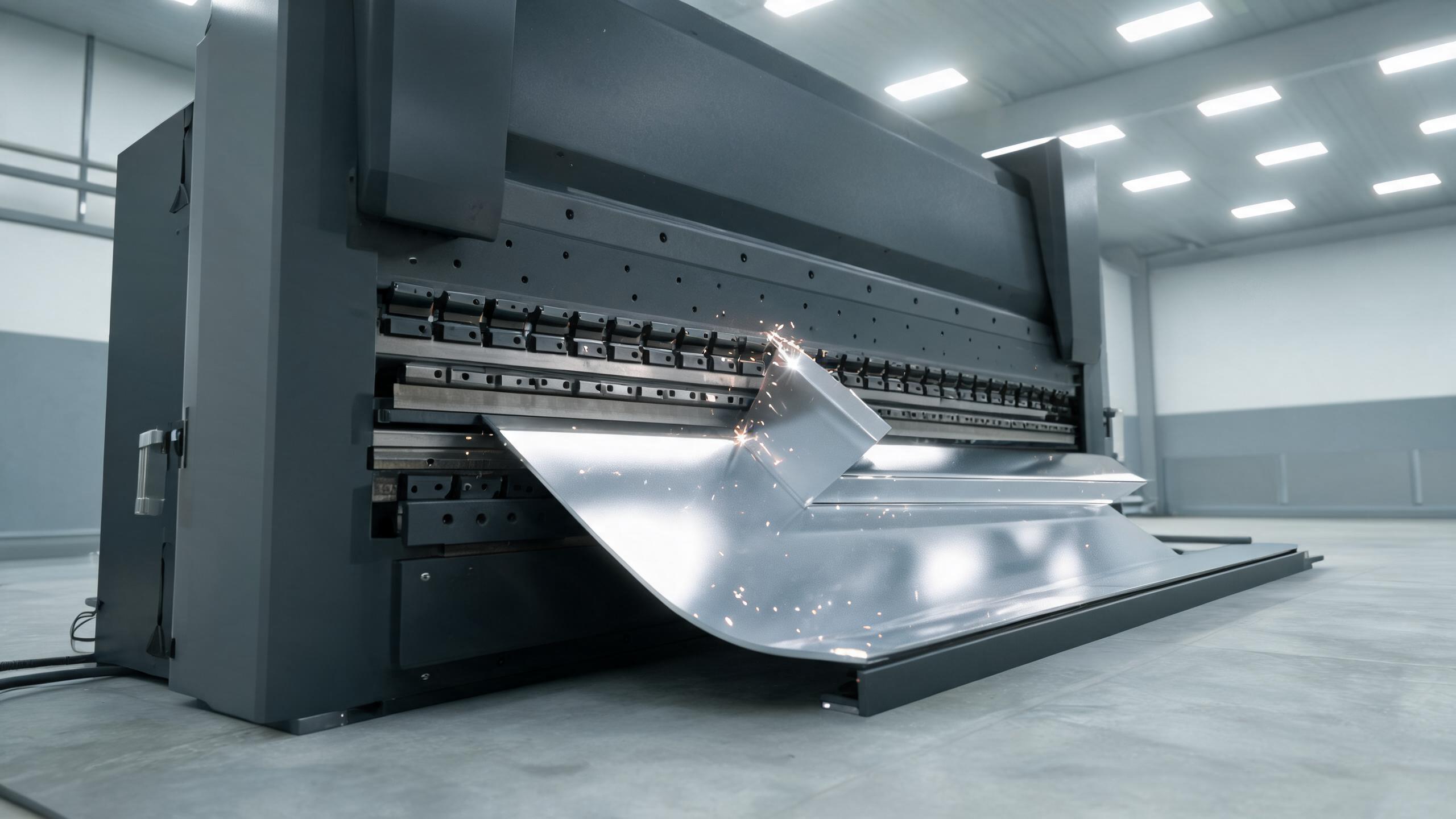
A practical vetting guide for buyers shortlisting metal bending services. Five questions on material and thickness range, bend angle capability, tolerance claims, springback handling, and first article evidence, with what each answer reveals about a supplier's process control.
Supplier Vetting Q&A
The quotations on your desk may look comparable. The difference between them usually sits in the answers to five questions you have not asked yet. Each answer tells you how much of the bending process a supplier actually controls, and where your risk will surface after the purchase order is issued.
Key takeaways
- Material and thickness range tells you whether your part is routine or an exception.
- Angle capability beyond 90° is a tooling and machine question, not a sales question.
- A tolerance claim should distinguish typical values from guaranteed ones on critical features.
- Springback handling shows whether the supplier adjusts the process or just measures the result.
- First article evidence is the cheapest way to test the whole system before production.
Why These Five Questions Matter
Metal bending is a process of controlled compensation. The press brake pushes a punch into a die, the material yields past its elastic limit, and it springs back as the load releases. Every variable a supplier controls, including material grade, thickness, grain direction, tooling, bend sequence, and angle measurement, feeds into whether the finished part matches your drawing. Ask about the variables, and you learn how the shop is run.
The questions below follow a logical order, from whether the shop can make your part at all to whether it can make it the same way next month. If you already understand the underlying mechanics, see bending techniques explained for the theory behind these checks.
Question 1: What Material Grades and Thickness Range Do You Bend?
What to ask
Request a written list of supported materials and the thickness band for each. Pay attention to the materials on your own drawing: CRS, HRS, 304 stainless, 316 stainless, 5052 aluminium, 6061 aluminium, and galvanized steel each behave differently in the press brake. Then ask what happens when your part falls outside the list.
What the answer reveals
A broad list without thickness bands is a sales answer. A capacity-based answer sounds like this: 0.5 to 6 mm is routine, and thicker material is quoted by review. That distinction matters because tooling, tonnage, and springback behaviour all change with thickness.
Grade matters as much as thickness. 304 and 316 stainless work-harden and spring back more than CRS, while 5052 and 6061 aluminium sit at different points on the formability scale. Galvanized steel adds a coating that can crack at tight radii, so ask how the supplier handles the coating at the bend line. A supplier who discusses these differences without prompting is telling you it has bent your material before.
Question 2: What Bend Angles Can You Hold, and How Do You Set Up for Them?
What to ask
Ask for the standard angle range and the point at which a bend becomes special. Ask what changes when a part needs more than the standard range.
What the answer reveals
Standard bending runs from 0° to 90°, with capability up to 135° by review. The important part of the answer is not the number itself but the setup behind it. Angles beyond the standard range usually require different punch geometry, die selection, or even a change of machine, and a supplier that can name those changes understands its own tooling. A supplier that simply says "we can do any angle" is describing intent, not capability.
Setup also drives cost. Ask whether the quoted price assumes standard tooling, because a non-standard angle may carry a tooling or setup charge that never appears on the initial quotation.
Question 3: Are Your Tolerances Typical or Guaranteed on My Critical Features?
What to ask
This is the question that separates a rough quote from a manufacturing plan. Ask the supplier to state which tolerances are typical and which are guaranteed, and to mark the guaranteed ones against the specific features on your drawing.
What the answer reveals
Typical values for sheet metal bending are around ±0.5° on bend angle, tightening to about ±0.25° on critical features. Bend-to-edge and bend-to-hole dimensions often run around ±0.1 mm. These are typical figures, not a blanket promise, and a supplier should be willing to say so.
A supplier that treats typical values as guaranteed is setting up a dispute. A supplier that distinguishes the two is telling you it inspects some features more closely than others, which is exactly how a controlled process works. Ask which features on your part would be treated as critical, and why.
Question 4: How Do You Handle Springback?
What to ask
Ask how springback is compensated, whether it is calculated, trialled, or corrected after the first bend, and how the approach changes with material and thickness.
What the answer reveals
Springback is the material's elastic recovery after the punch is released, and it is the single largest source of angle error in bending. A supplier with process control plans for it. That may mean adjusting the commanded angle to overbend slightly, choosing tooling with a different radius, or selecting a bend sequence that keeps the part stable through multiple operations.
The phrase "bend sequence planning" is worth listening for. On a part with several bends, the order of operations affects which surfaces are already formed when the next bend is made, and a sequence chosen poorly can make a good part impossible to hold. A supplier that talks about sequence is managing springback across the whole part, not just one bend at a time.
Question 5: Can I See First Article Inspection Evidence?
What to ask
Ask for a first article inspection (FAI) on your part before production, and ask to see the report format in advance. A formal FAI documents measured results against the drawing, including the critical dimensions and angles.
What the answer reveals
A supplier with a working quality system produces FAI reports as a matter of course. The report is the cheapest risk reduction available to you: a few parts measured before tooling and setup are locked in, and you learn whether the process can hold the drawing. If your programme requires automotive-grade discipline, ask whether the quality system is built to IATF 16949:2016. That is a specific and verifiable question, and the answer should be a straight yes or no rather than a general statement about quality.
A supplier that resists FAI, or only offers a final inspection, is telling you that verification happens after the fact. For a first order, that is a risk worth pricing.
How to Read the Answers Together
No single answer should decide the award. Read them as a set, and the pattern becomes clear.
| Question | What it tests | Weak signal |
|---|---|---|
| Material and thickness range | Whether your part is routine for the shop | A list with no thickness bands or grade notes |
| Bend angle capability | Tooling and machine depth | "Any angle" with no setup explanation |
| Tolerance claims | Inspection discipline | Typical values presented as guarantees |
| Springback handling | Process control | Correction only after measuring the first part |
| First article evidence | Verification before production | Final inspection offered instead of FAI |
A supplier that answers all five with specifics, including the limits of its own process, is easier to work with than one that promises everything. Limits are not a weakness; they are how a shop avoids overcommitting on a quotation.
If your part involves several bends, tight bend-to-hole dimensions, or stainless and aluminium grades, review the capability of custom sheet metal bending services before you send the drawing. For simpler profiles, press brake bending (basic) covers the standard approach. In both cases, the five questions above apply.
FAQ
What thickness range is considered standard for metal bending services?
Around 0.5 to 6 mm is a common working range, with thicker material quoted by review because tooling and tonnage requirements change. Confirm the band for your specific material, not just for sheet metal in general.
Is a ±0.5° angle tolerance normal?
That is a typical figure for standard bending. Critical features may need roughly ±0.25°. Ask the supplier to identify which features it can guarantee at the tighter figure before you accept the quotation.
What is the minimum inner radius for bending?
A common guideline is 1.0 times the material thickness. Radius limits change with material ductility, so test tighter radii on your specific grade rather than assuming the guideline holds everywhere.
Do I need a first article inspection for every order?
FAI is most valuable on a new part or after a tooling or process change. Once the process is proven and stable, periodic inspection can replace full FAI, but the decision should be based on your risk tolerance and the supplier's evidence.