
A validation-planning guide for buyers checking enclosure and bracket designs with sheet metal prototypes. What a sample should verify — fit, function, bend radii, hardware, coating appearance — and why the sample must run on the same equipment and parameters as volume production so the findings actually transfer.
Prototype Validation Guide
A sheet metal prototype is not a preview. It is the last cheap chance to find the problem before hard tooling and a full run lock in every mistake you missed.
Once a punch, die, or forming program is committed to volume, changing a hole location, an inside radius, or a powder-coat color means rework or a new tool. The prototype is where those decisions still cost hours instead of weeks. What matters is that the sample is built the way the production part will be built — same machine class, same tooling approach, same bend parameters, same finishing line. A prototype produced on different equipment only tells you what a different process does, not what your supplier's process will do.
What a prototype should prove
For an enclosure or a bracket, a prototype exists to answer specific physical questions that a drawing review cannot. Group them so nothing gets signed off by assumption.
Fit
Do the formed parts assemble with the mating components — PCB standoffs, hinges, gaskets, screws, or a second bracket — without forced alignment? Do hole center distances land on the mating hardware once the material has been bent? Flat-pattern dimensions and formed dimensions are not the same thing; the prototype is where bend allowance shows up as a real gap or a real interference.
Function
Does the part do its job in service? A bracket that mounts and holds a load; an enclosure that closes with the correct seam, clears internal components, and accepts the connector cutouts. Function testing does not need a full test lab, but it needs the correct materials and thickness — a prototype in a thinner gauge will flex differently and mislead you.
Bend radii and forming details
Inside radius relative to material thickness, minimum flange lengths, relief notches at the bend line, and the sequence of bends all determine whether the part can be formed at all. Sharp inside corners on thick material crack or require more tonnage than the part can tolerate. The prototype confirms which radii and bend order your supplier can actually form, rather than which ones look fine on the flat pattern.
Hardware and insert fit
If the design uses clinch nuts, standoffs, or press-fit inserts, the prototype should include them. Hole sizing for a self-clinching fastener depends on the material and the installation method; the sample shows whether the nut seats flush, spins under torque, or deforms the panel. Spot welding and other joining details also deserve representation — a welded joint behaves differently from a bolted joint, and a prototype that skips welding avoids the failure mode it should reveal.
Coating appearance and coverage
Powder coating is a visual and protective finish, and appearance is the hardest property to describe in a document. The sample shows the actual color and texture against the part's geometry; deep recesses, weld zones, and sharp edges coat differently from flat panels. If appearance matters for the end customer, validate the coated sample, not a bare one.
Why the sample must run on the volume process
A prototype is only evidence if it came off the same process as the parts you will buy. Sample and volume should share the equipment class and the parameters: the same press brake with the same tooling and bending sequence, the same laser or punch platform, the same welding method, and the same powder line and cure parameters. When they do, a finding on one sample transfers to the production run. When they do not, you have validated a different process and learned almost nothing about yours.
Practical examples:
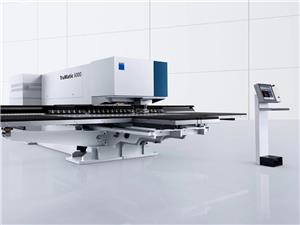
- A TruMatic 6000 punch-laser platform used for the sample should be the class of machine used for volume. Hole quality, slug removal, and edge condition transfer from that platform.
- A press brake program validated at trial should be the program used in production. Tonnage, tool selection, and bend sequence are what set the radii you approved.
- Coating parameters — powder type, film thickness, oven cure — are part of the finish you signed off. A sample coated with a different powder or a different cure is not the finish in your documentation.
Where a controlled process is involved, this becomes a documentation question, not just an engineering preference. Buyers validating automotive or industrial parts often ask the supplier to state, on the sample record or first article, which equipment and parameters produced the sample. Under a quality system such as IATF 16949:2016, the intent is that what was approved is what gets run. If the sample came off a machine that will never touch the production order, that assumption is not supported.
Both sides benefit. The supplier learns the forming limits of the job early, and you avoid a tool change or a coating re-run after the first shipment.
A validation checklist by feature
| Feature | What to check on the sample | Sign-off basis |
|---|---|---|
| Overall fit | Assembly with mating parts and hardware; no forced alignment | Physical assembly, not drawing check |
| Holes and cutouts | Center distances, clearance for fasteners, edge quality | Functional hardware inserted |
| Bend radii | Inside radius vs. material thickness; no cracking; uniformity | Visual and dimensional check |
| Flanges and reliefs | Minimum flange achieved; relief notches prevent tearing | Part forms without deforming |
| Hardware / inserts | Clinch nut seats flush; holds torque; no spin | Install and torque check |
| Welds and joints | Weld placement, distortion, strength on loaded joints | Load or functional test |
| Coating | Color/target match, texture, coverage in recesses | Coated sample reviewed against target |
| Function in service | Part performs its mounting or enclosure role | Fit into the actual assembly |
Run the sample through the same process chain the volume part will follow: cutting, forming, welding, and finishing. If finishing is part of the delivered part, validate a finished sample. A bare-metal prototype answers forming questions but leaves coating appearance and hardware-in-coating concerns unresolved.
Quality gates: from sample to volume
Validation is a sequence, not a single event. A workable gate structure for a sheet metal program:
- Design review gate. Flat pattern, bend sequence, material, and finish agreed before any metal is cut.
- Prototype gate. Physical sample tested against the checklist above; findings logged and design released for tooling. Document which equipment and parameters produced the sample.
- First article inspection (FAI) gate. The first parts off the production process are measured against the approved drawing and compared with the sample. FAI confirms the production process reproduces the approved geometry and finish — it is where a transfer gap becomes visible.
- Production gate. Ongoing dimensional checks and finish inspection against the approved reference.
The prototype and the FAI serve different purposes. The prototype proves the design can be made and works; the FAI proves the production process makes it the same way every time. Skipping either leaves a different class of risk open.
Questions to settle before you release the design
- Which machine and which bending program will run the production parts, and does the sample record name them?
- Are the material grade and thickness the same as the production release, or a substitute?
- If hardware or welding is part of the part, was it included in the sample?
- Was the sample coated on the same line, powder, and cure as the production parts?
- Which dimensions will be checked on the FAI, and against which drawing revision?
These are the items where a prototype program most often drifts from production. Answer them before the tool is committed.
FAQ
Does every enclosure or bracket need a physical prototype?
Not always. Simple flat parts with straightforward bends are often predictable from the drawing. Prototyping earns its cost where the part has tight assembly interfaces, multiple bends, hardware, welding, or a visible cosmetic finish — the areas where a drawing review cannot predict the physical result.
Can a prototype be made on a different machine to save time?
It can be made, but the findings will not transfer reliably. A sample from a different machine or process validates that machine, not your supplier's production capability. If speed matters, the better trade is to run the sample on the volume equipment with a smaller batch, not on substitute equipment.
What should be included in the prototype documentation?
At minimum: material grade and thickness, drawing revision, the equipment and parameters used to make the sample, the features tested, and any deviations found and their disposition. This record is what makes the prototype useful at the first article inspection stage.
How does the prototype relate to the FAI?
The prototype establishes that the design is manufacturable and functional against the agreed drawing. The FAI, run on production parts, confirms the production process reproduces that approved result. Both are needed because a sample can pass while a production process, run differently, does not.
Building the sample on the production process
If your project involves forming, welding, and finish work, the same-parameters rule shapes which services are involved from the start. Laser cutting and punching establish hole geometry on the sample; Custom Laser Cutting Services and the punching side of a punch-laser platform define what the production part will cut. Bending is where radii and assembly fit are set — Custom Sheet Metal Bending Services covers these forming steps. Where appearance and protection matter, Custom Powder Coating Services brings the sample through the same finish line as volume parts.
If you want the prototype to hold as evidence for production, ask for a sample made on the volume equipment and parameters, with the record to match. That is the version of “prototype approved” that survives contact with the first production run.
Validating a new enclosure or bracket?
Send the drawing revision and the interfaces the part must fit, and confirm which equipment and parameters will make the sample. We can quote a prototype and the production path as one sequence so the FAI checks against the same process that made the sample.