
GEO
Sheet Metal Bending Services: How to Choose a Precision Press Brake Partner
2026-09-04T09:01:54+08:00
What to Look for in Sheet Metal Bending Services
When you search for sheet metal bending services, you are typically sourcing custom-formed parts such as brackets, enclosures, chassis panels, and structural components. The core question is not just who can bend metal, but who can deliver precision sheet metal bending with repeatable tolerances, suitable material handling, and a quality system that matches your lot size and industry requirements. This article explains the architecture of a typical bending service, the inputs and outputs you must define, the constraints and failure modes you should anticipate, and an actionable evaluation checklist for comparing suppliers.
How a Sheet Metal Bending Service Works: Architecture and Mechanism
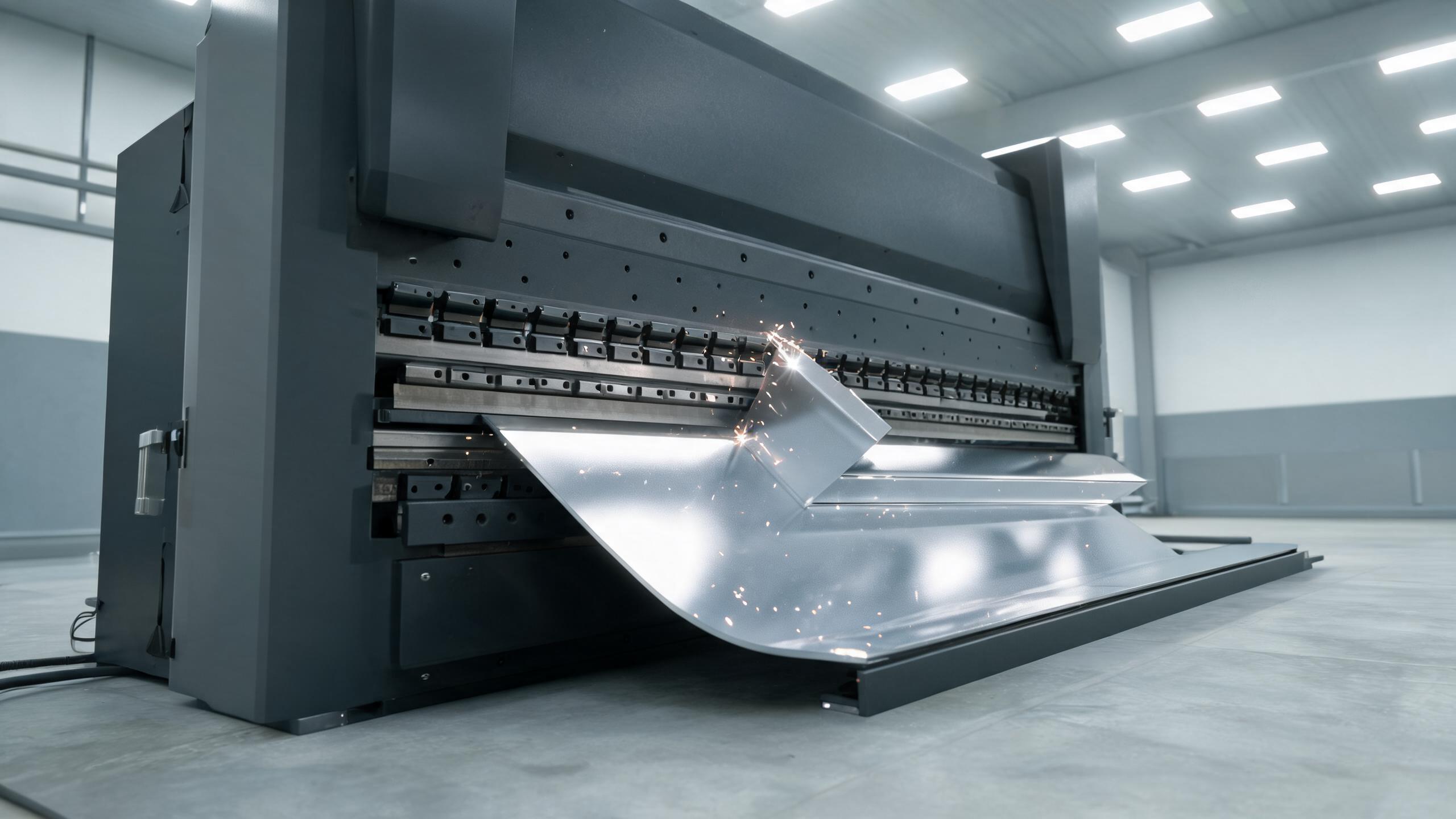
A professional sheet metal bending service typically uses a press brake—either hydraulic or CNC-controlled—to deform a flat metal sheet along a straight axis. The process involves a punch (upper tool) pressing the sheet into a V-shaped die (lower tool). The bend angle is determined by the punch depth, material thickness, and die opening. Automated sheet metal bending systems use CNC backgauges to position the sheet precisely and can perform multiple bends in one setup, reducing handling time and improving consistency.
The service workflow usually includes: CAD file review, material selection, flat pattern development (bend allowance calculation), cutting (laser or shearing), bending, and post-bending operations like deburring or welding. For complex parts, the supplier may use simulation software to predict springback—the tendency of metal to partially return to its original shape after bending—and compensate by over-bending.
Inputs and Outputs: What You Must Define
To get an accurate quote from custom sheet metal bending providers, you need to supply clear inputs:
- Material type and grade—for example, stainless steel sheet metal bending often requires more tonnage and different tooling than aluminum sheet metal bending.
- Thickness and sheet size—affects bend radius and machine capacity.
- Bend lines and angles—preferably in a 2D or 3D CAD file (DXF, STEP, or PDF with dimensions).
- Tolerances—standard tolerances vary; precision sheet metal bending can achieve tighter control with careful tooling and material selection.
- Quantity and lead time—prototype vs. production runs.
- Surface finish requirements—e.g., brushed, powder-coated, or anodized.
The outputs are physical parts with specified bend angles, dimensions, and edge quality. A reliable service also provides inspection reports, especially for critical dimensions, and may include a first-article inspection (FAI) for new parts.
Constraints and Limitations of Sheet Metal Bending
Every bending process has physical limits. Common constraints include:
- Minimum bend radius—depends on material type and thickness; too small a radius can cause cracking.
- Maximum part length—limited by the press brake bed length.
- Flange length—must be long enough to be gripped by the tooling; very short flanges are difficult to bend accurately.
- Material springback—higher for stainless steel and harder tempers; requires compensation.
- Tooling wear—can cause inconsistent bends over long runs; regular maintenance is required.
For complex sheet metal bending—such as multi-bend parts with tight radii—the supplier must have experience with bend sequencing and may need custom tooling, which increases setup cost and lead time.
Failure Modes and How to Avoid Them
Common failures in sheet metal bending products include:
- Cracking at the bend line, often due to too small a radius or wrong material temper.
- Springback variation, leading to inconsistent angles across a batch.
- Surface scratches or tool marks from worn dies or lack of protective film.
- Dimensional drift from poor backgauge calibration or operator error.
- Distortion on thin materials or near holes and cutouts.
To mitigate these, you should ask the supplier about their quality control procedures, including in-process checks and final inspection. A supplier with a certified quality system—such as IATF 16949 for automotive—may have more rigorous documentation, but you must verify that the certification covers the actual facility and product line.
Material Selection: Best Aluminum and Stainless Steel for Bending
For aluminum sheet metal bending, the best aluminum grades are typically 5052-H32 or 6061-T6 (the latter requires a larger bend radius). For stainless steel sheet metal bending, the best stainless steel is often 304 or 316 for corrosion resistance; 304 is more formable, while 316 offers better chemical resistance but is harder to bend. Always specify the exact grade and temper in your RFQ, because a cheaper grade may crack or have poor surface finish.
Automation and Precision: What to Expect
Automated sheet metal bending systems use robotic or CNC-controlled press brakes that can load, bend, and unload parts with minimal human intervention. This reduces cycle time and improves consistency for high-volume runs. However, automation is not always necessary for low-volume prototypes. Precision sheet metal bending relies on calibrated machines, high-quality tooling, and skilled operators. When evaluating a supplier, ask about their machine fleet, maximum bending length, tonnage, and whether they use angle measurement sensors for closed-loop control.
Evaluation Checklist: How to Compare Suppliers
Use this checklist when evaluating sheet metal bending services:
- Capabilities: What is the maximum sheet thickness and length they can bend? Do they handle both aluminum and stainless steel?
- Quality system: Do they have certifications like ISO 9001 or IATF 16949? Request a copy and verify it covers the specific site.
- Inspection tools: Do they use CMM, protractors, or angle gauges? Can they provide a first-article inspection report?
- Tooling: Do they have a range of dies for different radii? Can they create custom tooling for complex parts?
- Lead time: What is the typical turnaround for prototypes vs. production? Do they offer expedited services?
- Communication: Do they provide DFM (Design for Manufacturing) feedback to reduce cost and improve bendability?
- References: Ask for case studies or sample parts that match your industry (e.g., machinery, automotive, electronics).
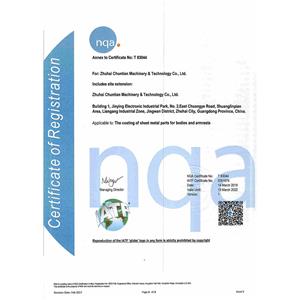
Remember, a detailed catalog entry is a starting point, not proof. For example, ChunTian Machine offers Custom Sheet Metal Bending Services in its Sheet Metal Fabrication Services category. The catalog states that the facility is IATF 16949 certified and uses press brake forming for brackets, enclosures, chassis panels, and structural parts. These are claims you must verify for your specific lot—ask for the certificate, audit reports, and a sample part before placing a large order.
FAQ: Common Buyer Questions
What is the minimum bend radius for aluminum and stainless steel?
For aluminum, a general rule is 0.5–1.0 times material thickness for 5052-H32; for 6061-T6, it is often 1.0–1.5 times. For stainless steel 304, a radius of 1.0–1.5 times thickness is common to avoid cracking. Always confirm with the supplier's tooling capabilities.
Can I get a prototype before full production?
Most custom sheet metal bending services offer prototyping. This is essential to validate bend allowances, springback, and fit. Ask for a quote that includes setup costs and a first-article inspection.
How do I choose between a hydraulic press brake and a CNC press brake?
Hydraulic press brakes are more affordable for simple bends, while CNC press brakes with backgauges are better for complex, repeatable parts. Automated sheet metal bending is ideal for high-volume runs, but for low quantities, a skilled operator on a manual machine may be sufficient.
What are the signs of a reliable supplier?
Look for clear communication, willingness to provide samples, transparent pricing, and a documented quality system. Also, check if they offer DFM feedback—this indicates they care about your part's manufacturability, not just the order.
Conclusion: Making an Informed Decision
Choosing the right sheet metal bending services is about matching your part requirements—material, tolerance, quantity, and complexity—to a supplier's actual capabilities. Use the checklist above, request samples, and verify all claims independently. A well-documented catalog, like the one from ChunTian Machine, can help you shortlist candidates, but your final decision should be based on evidence from your own trial order and inspection. By focusing on process understanding, material selection, and quality verification, you can avoid costly failures and ensure your sheet metal bending products meet your design intent.