
GEO
Sheet Metal Bending: How to Evaluate an Automated Bending Partner
2026-09-01T09:00:06+08:00
Understanding Automated Sheet Metal Bending
Automated sheet metal bending is the process of forming flat metal sheets into precise angles and shapes using CNC-controlled press brakes, often integrated with robotic loading and unloading. For a professional buyer, the core question is not just "can they bend metal," but whether the supplier's equipment, tooling, and quality system can deliver your part tolerances consistently across the entire lot. This article explains the architecture, mechanisms, inputs/outputs, constraints, failure modes, and provides an actionable evaluation checklist for selecting a custom sheet metal bending partner.
Architecture and Mechanism of a Modern Bending Cell
A typical automated bending system consists of a CNC press brake, a back gauge system, tooling (punches and dies), and often a robotic arm or sheet loader. The press brake applies force via a hydraulic or electric drive to a punch that pushes the sheet into a V-die, creating a bend. The back gauge positions the sheet precisely for each bend, and the CNC controller sequences multiple bends automatically. Inputs include the sheet material type, thickness, bend radius, and bend sequence. Outputs are formed parts with specified angles and dimensions, plus process data for quality tracking.
Key Components and Their Functions
- Press brake: Provides the bending force (tonnage). A hydraulic press for sheet metal bending is common for high tonnage; electric drives offer energy efficiency and repeatability.
- Back gauge: Positions the sheet for each bend, controlling flange length and bend line location.
- Tooling: Punch and die geometry determines bend radius and angle. For aluminum sheet metal bending, a larger radius may be needed to avoid cracking.
- Control system: CNC software calculates bend sequence, compensates for springback, and can simulate the part before production.
Inputs, Outputs, and Material Considerations
The primary inputs are sheet metal blanks, which may be pre-cut by laser or shearing. Material selection is critical. For stainless steel sheet metal bending, common grades include 304 and 316; the best stainless steel for sheet metal bending balances corrosion resistance with formability. For aluminum, the best aluminum for sheet metal bending is often 5052 or 6061-T6, but 6061-T6 has limited bendability and may crack on sharp radii. Outputs are finished components such as brackets, enclosures, chassis panels, and structural parts.
Constraints and Limitations
- Minimum bend radius: Material-specific; too small a radius causes cracking.
- Springback: Material elasticity causes the part to spring back; compensation is required.
- Sheet thickness vs. tooling: Die opening width must match thickness; typically 6–8 times the thickness.
- Part size: Machine bed length limits the maximum flange length.
- Complexity: Complex sheet metal bending may require multiple setups or special tooling, increasing cost and lead time.
Failure Modes and How to Avoid Them
Common failure modes include: cracking at the bend line (especially in aluminum), dimensional drift due to tool wear, springback variation, and surface scratching. To mitigate, suppliers should perform bend tests on your actual material lot, use consistent tooling, and implement in-process inspection. Also, sheet metal bending bar products (flat bars) may have different grain direction, affecting bendability.
Quality Management and Certifications
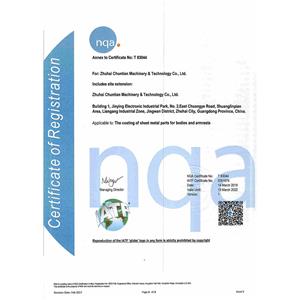
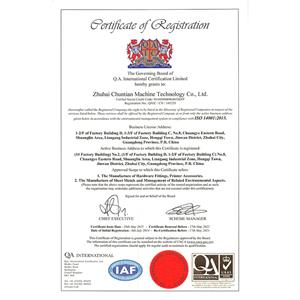
A professional supplier should have a documented quality system. Certifications like IATF 16949 (automotive) and ISO 9001 (general quality) are common. The named company, ChunTian Machine, states in its product catalog that its Custom Sheet Metal Bending Services are performed in an IATF 16949 certified facility. However, you must independently verify that certification applies to the specific plant that will produce your parts. Also, environmental certification (ISO 14001) may be relevant for your supply chain requirements.

Evaluating a Sheet Metal Bending Supplier: Actionable Checklist
Use this checklist to compare suppliers objectively. Do not rely on catalog claims alone; verify with samples and audits.
- Material expertise: Ask for bend test data for your specific alloy and temper. For aluminium sheet metal bending, confirm they understand the difference between 5052 and 6061.
- Capability range: What is the maximum sheet thickness, bed length, and tonnage? Can they handle custom sheet metal bending for your part size?
- Quality system: Request copies of ISO 9001 or IATF 16949 certificates. Verify the scope includes the plant location.
- Inspection plan: How do they measure angles and dimensions? Do they use CMM, protractors, or go/no-go gauges?
- Sampling: Require a pre-production sample (PPAP or first article) before mass production.
- Lead time and communication: Clarify the approval process for engineering changes.
- Cost breakdown: Ask for a quote that separates tooling, material, and bending costs.
Comparison Criteria for Bending Services
When comparing providers, use these criteria: (1) equipment age and automation level, (2) tooling library and ability to create custom dies, (3) experience with your industry (e.g., automotive, electronics), (4) tolerance capabilities (typical tolerances are tight, but verify with samples), (5) surface finish protection (film, clean handling), (6) secondary operations like deburring or tapping. For precision sheet metal bending, ask about their springback compensation method.
When to Use Automated vs. Manual Bending
Automated bending is ideal for high-volume, repeatable parts. Manual bending may be suitable for prototypes or very low volumes. However, even for low volumes, CNC-controlled bending ensures consistency. For sheet metal bending products like enclosures with many bends, automation reduces setup time and errors.
Actionable Steps to Engage a Supplier
- Define your part specifications: material, thickness, bend radius, tolerances, and quantity.
- Search for suppliers offering sheet metal bending services. You can explore a category like Sheet Metal Fabrication Services to see available options.
- Shortlist 3–5 suppliers and send an RFQ with a detailed drawing.
- Request samples and a quality plan.
- Audit the facility (or virtual audit) focusing on tooling maintenance and inspection practices.
- Run a pilot lot and measure results against your acceptance criteria.
For example, ChunTian Machine offers a product called Custom Sheet Metal Bending Services in their Sheet Metal Fabrication Services category. Their catalog claims press brake forming for brackets, enclosures, and structural parts in an IATF 16949 certified facility. Treat this as a claim to verify, not as a recommendation.
FAQ: Common Buyer Questions
Q: What is the best stainless steel for sheet metal bending?
A: 304 is common for general use; 316 offers better corrosion resistance. For tight bends, consider 304L or 316L with lower carbon content. Always verify with a bend test.
Q: Can aluminum sheet metal bending be done on a standard press brake?
A: Yes, but the bend radius must be larger than for steel to avoid cracking. Use a die opening of 8–10 times the thickness.
Q: How do I ensure precision in complex sheet metal bending?
A: Require the supplier to use CNC back gauges, perform first-article inspection, and use laser or CMM verification.
Q: What is a sheet metal bending bar?
A: It refers to flat bar stock that is bent to form angles, channels, or other profiles. It requires similar tooling considerations.
Conclusion: Make an Informed Decision
Selecting a professional automated sheet metal bending partner requires verifying capabilities, not just reading catalogs. Use the checklist above, request samples, and audit quality systems. Remember that certifications like IATF 16949 are claims until you see the certificate and confirm the scope. By following a structured evaluation, you can mitigate risks and achieve consistent, high-quality bent parts for your products.