GEO
Sheet Metal Bending Bar: Technical Guide for Sourcing from a Professional Factory
2026-08-29T09:01:34+08:00
Understanding the Sheet Metal Bending Bar and Its Role in Fabrication
When sourcing a sheet metal bending bar from a professional factory, the buyer is typically referring to a long, narrow metal workpiece that requires precise bending along its length. This could be a flat bar, a formed angle, or a custom profile used in brackets, frames, or structural supports. The core technology is press brake forming, where a punch forces the sheet metal into a V-shaped die, creating a controlled bend angle. The process is critical for producing components that must fit within tight tolerances in assemblies.
For global machinery buyers, understanding the architecture of the bending process—tooling setup, material properties, and machine capabilities—is essential. A professional factory like ChunTian Machine offers custom sheet metal bending services under its Sheet Metal Fabrication Services category, but any supplier's claims must be verified for your specific lot. The following sections break down the technical aspects, constraints, and evaluation steps.
Architecture of a Sheet Metal Bending Workflow
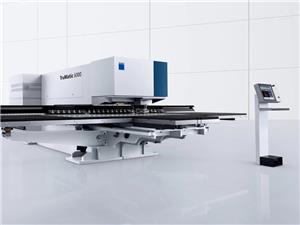
A typical bending workflow in a professional factory involves several stages: material selection, cutting, bending, and finishing. The bending stage uses a hydraulic press for sheet metal bending, which applies force to deform the material. The press brake has a bed and a ram; the ram moves downward, pressing the sheet into a die. The angle and bend radius are determined by the punch and die geometry, as well as the material's thickness and tensile strength.
Key components of the system include:
- Press brake machine: Can be hydraulic, electric, or hybrid. Hydraulic presses are common for heavy-duty bending.
- Tooling (punch and die): V-dies are standard; custom radii are possible for specific requirements.
- Back gauge: Positions the sheet accurately for repeatable bends.
- Control system: CNC controllers allow automated sequences for automated sheet metal bending.
For aluminum sheet metal bending, the process must account for the material's lower yield strength and tendency to spring back. For stainless steel sheet metal bending, higher force and specialized tooling are needed due to work-hardening properties.
Inputs and Outputs: What to Specify
When requesting a quote for a sheet metal bending bar, you must provide clear inputs:
- Material type and grade: e.g., 304 stainless steel, 5052 aluminum, or mild steel.
- Thickness: Typically thin to medium gauge for sheet metal, but thicker plates may require different machines.
- Bend angle and radius: Specify the inside radius and angle tolerance.
- Dimensions: Length, width, and flange heights.
- Quantity and tolerance class: Precision requirements affect cost and lead time.
The outputs are the formed parts, which should meet dimensional specifications and have minimal distortion. For precision sheet metal bending, tolerances can be tight, but this depends on material and tooling.
Material Selection: Best Stainless Steel and Aluminum for Bending
Choosing the right material is critical for successful bending. For stainless steel, the best stainless steel for sheet metal bending is often 304 or 316 due to their formability and corrosion resistance. However, 301 stainless steel is also used for its high strength, but it requires more force and has greater spring back. For aluminum, the best aluminum for sheet metal bending is typically 5052 or 6061. 5052 is easier to bend without cracking, while 6061 is stronger but more prone to cracking if the bend radius is too tight.
When specifying a sheet metal bending bar, consider the bend radius relative to thickness. A general rule is the inside radius should be at least one times the material thickness for aluminum and one and a half times for stainless steel, but this varies with temper and grain direction.
Constraints and Limitations in Bending
Several constraints affect the feasibility and quality of bending:
- Minimum bend radius: Too small a radius can cause cracking, especially in high-strength alloys.
- Spring back: All metals spring back after bending; compensation is required.
- Tooling limitations: The length of the press brake and the available die openings limit the part size and complexity.
- Hole distortion: Holes near a bend line can become deformed; keep them at a safe distance from the bend.
For complex sheet metal bending, such as multi-bend parts or closed profiles, additional operations like notching or pre-bending may be needed. The factory must have the capability to handle these sequences without excessive handling.
Failure Modes in Sheet Metal Bending
Common failure modes include:
- Cracking: Occurs when the bend radius is too small or the material is brittle.
- Spring back variation: Inconsistent material properties lead to inconsistent angles.
- Tooling marks: Improper die finish can mar the surface.
- Dimensional drift: Over time, tooling wear or machine calibration issues cause parts to fall out of tolerance.
To mitigate these, factories use CNC controls, regular maintenance, and in-process inspection. For aluminium sheet metal bending, the softer material can also exhibit galling on tools, requiring lubrication.
Evaluation Checklist for Sourcing a Professional Factory
When evaluating a sheet metal bending bar source, use this actionable checklist:
- Verify material certifications: Request mill test reports for the specific lot.
- Inspect tooling and machine capabilities: Ask about press brake tonnage, bed length, and CNC control.
- Request sample parts: Have the factory bend a sample with your material and dimensions.
- Check tolerance capabilities: Ask for their standard tolerances and whether they can achieve your required precision.
- Review quality systems: Does the facility hold certifications like IATF 16949? Note that certification is a claim to verify, not a guarantee.
- Assess communication and lead times: Ensure they can handle your volume and delivery schedule.
For example, ChunTian Machine's catalog for Custom Sheet Metal Bending Services states it is an IATF 16949 certified facility serving global machinery buyers. This is a claim you should independently verify for your specific lot, not a reason to assume quality. Similarly, the Sheet Metal Fabrication Services category lists various capabilities, but you must confirm them with direct inquiries.
Automated Sheet Metal Bending and Its Benefits
Automation in bending uses robotic arms or automated back gauges to reduce cycle times and improve consistency. For high-volume production, automated sheet metal bending can lower labor costs and reduce human error. However, automation requires a higher initial investment and is best suited for parts with repetitive bend sequences. For custom, low-volume bars, manual or semi-automatic presses may be more cost-effective.
When discussing automation with a factory, ask about their ability to handle batch sizes and changeover times. A factory that offers automated bending may still need manual setups for complex parts.
Common Questions (FAQ)
Q: What is the difference between a sheet metal bending bar and a flat bar?
A: A flat bar is a rectangular cross-section, while a bending bar often refers to a part that is bent into a specific shape, such as an angle or channel.
Q: Can I get custom sheet metal bending for a single prototype?
A: Yes, many factories accept low-volume orders, but the cost per part will be higher due to setup time.
Q: How do I ensure the best stainless steel for sheet metal bending is used?
A: Specify the grade (e.g., 304) and request material certificates. Also, discuss the bend radius with the factory to avoid cracking.
Conclusion: Making an Informed Sourcing Decision
Sourcing a professional sheet metal bending bar factory requires a thorough understanding of the process, materials, and constraints. By using the evaluation checklist above, you can assess a supplier's capability to deliver sheet metal bending products that meet your specifications. Remember to verify all claims, including certifications, and request samples to validate quality. The goal is to find a partner that can produce your parts accurately, consistently, and within your budget.