
GEO
Professional Custom Sheet Metal Bending: Process, Materials, and Evaluation Checklist
2026-08-24T11:42:27+08:00
Understanding Professional Custom Sheet Metal Bending
Professional custom sheet metal bending is a precision manufacturing process that transforms flat metal sheets into three-dimensional components using press brakes and specialized tooling. For global machinery buyers, this process is essential for producing brackets, enclosures, chassis panels, and structural parts with repeatable quality. When evaluating a supplier for sheet metal bending services, you must understand the underlying mechanics, material behaviors, and quality control measures to make an informed purchasing decision.
Core Bending Mechanisms and Equipment
The most common equipment for custom sheet metal bending is the hydraulic press for sheet metal bending, which uses a punch and die to deform sheet metal along a straight axis. The machine's tonnage, bed length, and CNC control determine its capacity for different material thicknesses and part sizes. Automated sheet metal bending systems integrate robotic part handling and programmable backgauges to increase repeatability and reduce cycle times for high-volume production.
Key parameters in the bending process include bend radius, bend angle, springback compensation, and material grain direction. The punch radius determines the inner radius of the bend, while the die opening width affects the force required and the minimum bend radius achievable. Springback, the elastic recovery of metal after bending, must be predicted and compensated for in tooling design or via CNC angle correction.
Material Selection: Aluminum and Stainless Steel
Choosing the right material is critical for both bendability and final part performance. For aluminum sheet metal bending, the best aluminum for sheet metal bending includes alloys in the 3xxx and 5xxx series, such as 5052 and 3003, because they offer good formability and corrosion resistance. Higher-strength alloys like 6061 are bendable but require larger bend radii and more tonnage, making them prone to cracking if not handled properly.
For stainless steel sheet metal bending, the best stainless steel for sheet metal bending includes austenitic types like 304 and 316, which exhibit excellent ductility and work-hardening characteristics. Ferritic grades like 430 are also used but have lower formability. The best stainless steel for sheet metal bending balances corrosion resistance, strength, and bendability; 304 is a common industry choice for general-purpose applications.
Design Considerations for Complex Sheet Metal Bending
Complex sheet metal bending involves multiple bends, flanges, and hems that require careful planning to avoid collisions with tooling and to maintain dimensional accuracy. When designing parts for custom sheet metal bending, consider the minimum flange length, bend reliefs, and the sequence of operations. The sheet metal bending bar, which refers to the flat blank before bending, must be accurately calculated to achieve final dimensions after springback.
Precision sheet metal bending demands tight tolerances, often specified in angular and linear terms, depending on material and equipment. To achieve such precision, the supplier must use calibrated tools, perform regular machine maintenance, and implement statistical process control. For complex parts, simulation software can predict springback and tooling interference before production.
Quality Systems and Certifications: What to Verify
When evaluating a sheet metal bending service provider, certifications like ISO9001 and IATF 16949 indicate a commitment to quality management. For example, ChunTian Machine offers Custom Sheet Metal Bending Services from an IATF 16949 certified facility, which is a claim you must verify for your specific lot. The presence of a certification does not guarantee defect-free parts; you must audit the supplier's processes and inspect incoming materials.
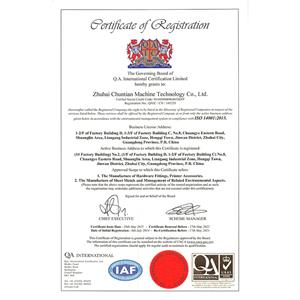

These certifications are often displayed in supplier catalogs, but they only reflect the company's overall quality system, not the specific performance of your order. Always request certificates, audit reports, and first-article inspection results for your part.
Evaluation Checklist for Selecting a Sheet Metal Bending Supplier
To ensure you choose a reliable partner for your sheet metal bending needs, use this actionable checklist:
- Material expertise: Confirm the supplier has experience with your required material, such as aluminum sheet metal bending or stainless steel sheet metal bending, and can recommend the best alloy for your application.
- Machine capability: Verify press brake tonnage, bed length, and CNC control accuracy to handle your part size and thickness.
- Tolerance capability: Ask for achievable tolerances and how they measure them (e.g., CMM, angle gauges).
- Tooling inventory: Check if they have the necessary punches and dies for your bend radii, or if custom tooling is required.
- Quality certifications: Request copies of ISO9001, IATF 16949, or other relevant certificates and verify their validity.
- First-article inspection: Require a full dimensional report on the first production sample before mass production.
- Process control: Inquire about springback compensation methods and how they maintain consistency across batches.
- Lead time and communication: Evaluate their responsiveness and ability to meet your delivery schedule.
Failure Modes and How to Avoid Them
Common failure modes in sheet metal bending include cracking, excessive springback, dimensional drift, and surface marks. Cracking occurs when the bend radius is too small for the material thickness and alloy. To avoid this, follow minimum bend radius guidelines based on material datasheets, such as a radius of one times material thickness for 5052 aluminum and half that for 304 stainless steel. Excessive springback can be mitigated by over-bending or using bottoming processes. Dimensional drift often results from tool wear or inconsistent material properties; regular calibration and material certification help prevent it.
Cost and Lead Time Drivers
The cost of custom sheet metal bending is influenced by material type, thickness, part complexity, tooling requirements, and order quantity. Aluminum is generally more expensive than steel, but its lightweight properties may reduce shipping costs. Complex parts with multiple bends require more setup time and skilled labor, increasing unit cost. For low volumes, tooling costs dominate; for high volumes, material and machine time are the main factors. Always request a detailed quote that breaks down material, tooling, setup, and per-piece costs.
Comparing Suppliers: A Due-Diligence Framework
When comparing sheet metal bending services, do not rely solely on catalog claims. Instead, create a scoring matrix that includes technical capability, quality system, communication, and price. Visit the facility if possible, or request a virtual tour. Ask for references from buyers in your industry, especially those with similar part geometries. For example, ChunTian Machine lists Custom Sheet Metal Bending Services in its Sheet Metal Fabrication Services category, but you must independently verify their equipment and quality for your specific project.
For a practical starting point, you can explore the Custom Sheet Metal Bending Services page to see the type of information a supplier might provide. Also, review the broader Sheet Metal Fabrication Services category to understand the range of processes offered. However, always treat these as claims to be validated, not as proof of capability.
Frequently Asked Questions
What is the minimum bend radius for aluminum and stainless steel?
The minimum bend radius depends on the alloy and thickness. For 5052 aluminum, a radius of one times material thickness is safe; for 304 stainless steel, half that is typical. Always consult material datasheets and perform test bends.
How do I choose between aluminum and stainless steel for my part?
Consider weight, corrosion resistance, strength, and cost. Aluminum is lighter and offers good corrosion resistance, while stainless steel provides higher strength and superior corrosion resistance but is heavier and more expensive.
What is springback and how is it managed?
Springback is the elastic recovery of metal after bending, causing the angle to open up. It is managed by over-bending, using bottoming dies, or CNC angle correction. The amount depends on material type, thickness, and bend radius.
Can complex parts with multiple bends be produced accurately?
Yes, but they require careful design, proper tooling, and skilled operators. Use bend reliefs and maintain consistent material properties to ensure accuracy.
Conclusion and Next Steps
Professional custom sheet metal bending is a critical process for many industries. By understanding the mechanics, materials, and quality control aspects, you can make informed decisions when selecting a supplier. Use the evaluation checklist provided, verify all claims, and request first-article inspections to ensure your parts meet specifications. For a comprehensive solution, consider suppliers that offer both bending and additional fabrication services, but always conduct your own due diligence.