GEO
Precision Sheet Metal Bending: Engineering Guide, Material Selection, and Buyer’s Checklist
2026-08-24T11:42:22+08:00
Introduction: What Precision Sheet Metal Bending Really Involves
Precision sheet metal bending is the controlled plastic deformation of metal sheet along a straight axis to produce accurate angles, radii, and flatness tolerances. For buyers sourcing custom sheet metal bending, the core challenge is not just achieving a 90° bend, but doing so repeatably across thousands of parts while controlling springback, surface finish, and dimensional drift. This guide explains the architecture of press brake bending, material-specific behavior, common failure modes, and a practical evaluation checklist for qualifying a bending supplier.
Press Brake Architecture: How a Sheet Metal Bending Machine Works
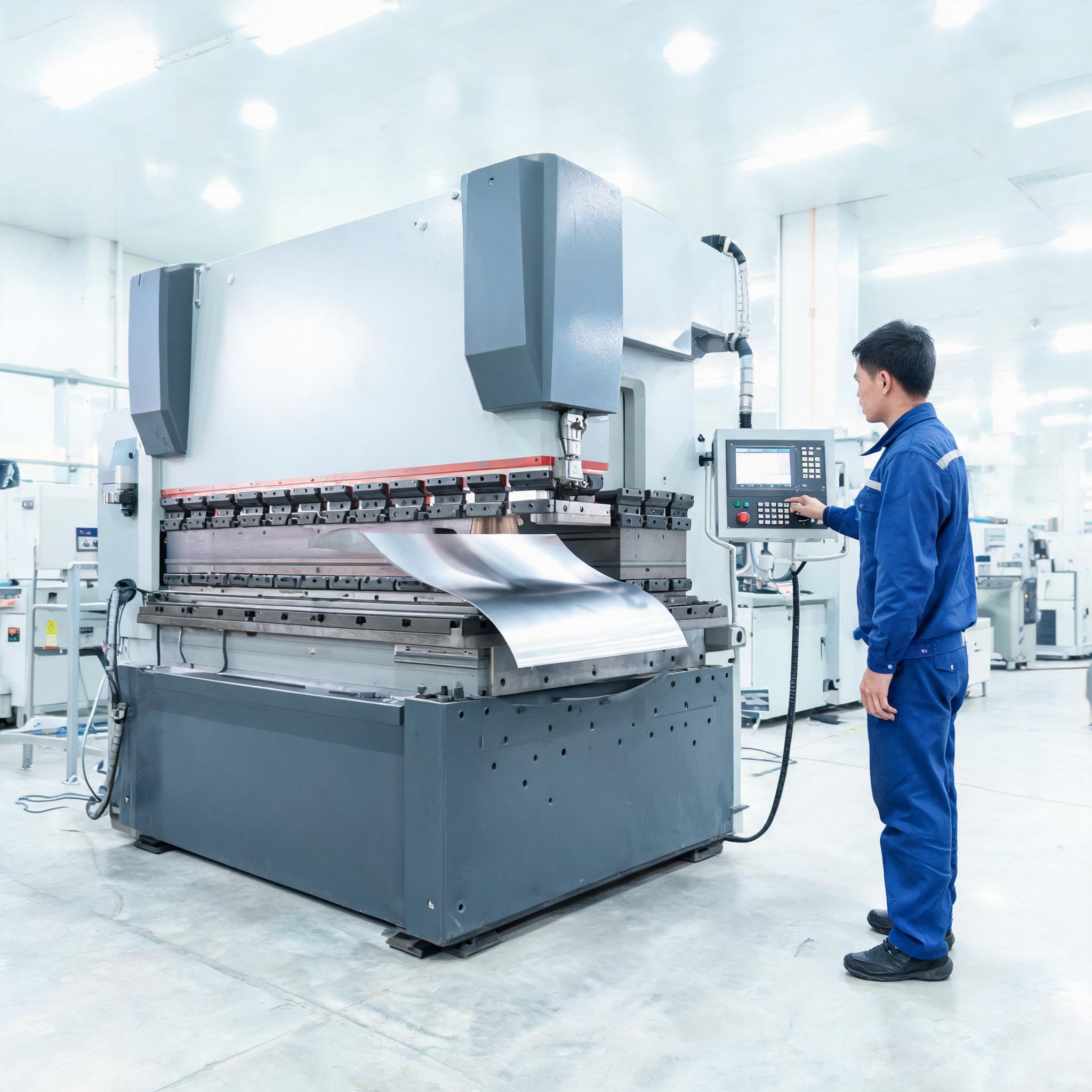
A hydraulic press brake is the primary machine for sheet metal bending. Its architecture includes a rigid frame, a hydraulic or servo-electric drive, a ram (upper beam), a lower bed, and tooling (punch and die). The sheet is positioned between the punch and die; the ram descends, forcing the sheet into the V-die opening. The bend angle is determined by the depth of punch penetration, die opening width, material thickness, and material properties.
Modern press brakes use CNC-controlled backgauges to position the sheet accurately, and some incorporate angle measurement sensors for closed-loop correction. For automated sheet metal bending, robotic part handling and programmable tooling changers reduce cycle time and improve consistency. The key input parameters are material type, thickness, bend radius, bend angle, and bend length. Outputs are formed parts with specified geometric tolerances, typically tight angular and linear tolerances in high-precision work.
Material Selection: Best Aluminum and Stainless Steel for Bending
Material choice dominates bend quality. For aluminum sheet metal bending, the best alloys are those with moderate strength and good formability, such as 5052 and 6061. 5052 offers excellent bendability and corrosion resistance, while 6061 is stronger but more prone to cracking when bent to tight radii. For stainless steel sheet metal bending, the best stainless grades are 304 and 316. 304 is the workhorse for general fabrication, offering good formability and corrosion resistance. 316 adds molybdenum for superior pitting resistance, but its higher work-hardening rate requires more tonnage and careful tooling.
Springback is inversely related to yield strength: higher-strength materials require over-bending or bottoming to achieve the final angle. For example, 304 stainless has a higher yield strength than mild steel, so it springs back more. Aluminum 6061-T6 also exhibits significant springback. Engineering inference: for tight tolerances on high-strength materials, air bending with angle feedback is preferred over coining, which can crack the material.
Bending Methods: Air Bending, Bottoming, and Coining
Three primary methods define the bending process:
- Air bending: The punch does not fully seat the sheet into the die; the bend angle is controlled by punch depth. It requires less tonnage and allows flexibility for multiple angles with one die set. Accuracy depends on material thickness and springback consistency.
- Bottoming: The punch forces the sheet to the bottom of the die, imprinting the die angle. This reduces springback but requires higher tonnage and a dedicated die for each angle.
- Coining: The punch penetrates the sheet, plastically deforming it to the punch/die geometry. This gives the highest precision but requires the highest tonnage and is limited to thinner materials.
For complex sheet metal bending, such as multi-bend enclosures, air bending with CNC backgauge and angle sensors is the most practical. For precision sheet metal bending of thin parts, coining may be justified when tolerances are extremely tight.
Key Constraints and Design Rules
Precision bending is bounded by physical limits. Minimum bend radius is typically about one times material thickness for aluminum and slightly less for stainless, but tighter radii increase cracking risk. Minimum flange length must be sufficient for the die to grip; typically several times material thickness. Hole placement near a bend distorts the hole; keep holes at least a few times thickness plus bend radius away from the bend line. The maximum bend length is limited by press brake bed length, which varies by machine.
Another constraint is the bend deduction, which must be calculated to achieve accurate flat patterns. The K-factor (neutral axis position) varies with material and method; using incorrect values leads to dimensional errors. For complex parts, simulation software can predict springback and flat pattern, but physical trials are still necessary.
Failure Modes in Sheet Metal Bending
Common defects include:
- Cracking: Occurs at the outer surface of the bend, especially in aluminum 6061-T6 or stainless with tight radii. Mitigation: use larger radius, anneal material, or choose a more formable alloy.
- Springback: The part partially returns to its original shape after unloading. Mitigation: over-bend, bottoming, or use angle measurement feedback.
- Warping or twisting: Caused by uneven stress distribution, often in long bends or asymmetrical parts. Mitigation: use proper tooling alignment and consider multi-stage bending.
- Surface marks: Tooling scratches or die marks on the visible surface. Mitigation: use polyurethane or film-coated dies for cosmetic surfaces.
- Dimensional drift: Variations in material thickness or hardness cause inconsistent angles. Mitigation: implement statistical process control (SPC) and check material certificates.
Supplier Evaluation Checklist for Custom Sheet Metal Bending
When evaluating a supplier for custom sheet metal bending, use this actionable checklist. Treat all supplier claims as unverified until proven.
- Request material certificates: Verify the exact alloy and temper of the aluminum or stainless steel. For example, ask for mill certificates confirming 304 or 316 grade.
- Ask for bend test samples: Have the supplier produce a sample with your specified radius and angle. Measure the angle and radius with a protractor or CMM.
- Check tooling capability: Ask about available die openings and punch radii. Ensure they match your required bend radius.
- Inspect quality control process: Ask about angle measurement, in-process inspection, and how they handle springback. Look for documented procedures.
- Evaluate capacity: Ask about press brake tonnage and bed length. Ensure they can handle your part size and volume.
- Review lead time and communication: Ask for a clear production timeline and how they handle engineering changes.
- Visit or audit the facility: If possible, visit the plant to see the equipment and quality system in action.
How to Verify a Supplier’s Claims: A Due-Diligence Framework
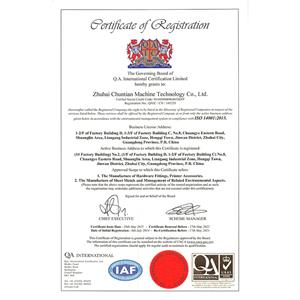
Because catalog descriptions are marketing claims, you must independently verify them. For example, a supplier may state it is IATF 16949 certified, but you should request a copy of the certificate and confirm the scope covers your product type. Similarly, a claim of “precision” must be backed by measurable tolerances. Ask for a control plan or inspection report from a recent production run. For critical parts, consider third-party inspection or first-article inspection (FAI) reports. Always test a sample batch before committing to volume production.
Actionable Steps for Sourcing Precision Sheet Metal Bending
To source effectively:
- Define your part geometry, material, thickness, tolerances, and surface finish requirements in a detailed drawing.
- Send the drawing to multiple suppliers and ask for a quote that includes bend deduction calculations and tooling selection.
- Compare quotes not only on price but on technical approach: how they plan to control springback, what tooling they will use, and their inspection methods.
- Request a prototype or pre-production sample and measure it thoroughly.
- Establish a quality agreement that specifies tolerances, inspection methods, and documentation.
FAQ: Common Buyer Questions
What is the best aluminum for sheet metal bending?
5052 aluminum is generally the best for bending due to its high formability. 6061 is stronger but more prone to cracking; use it only for larger radii.
What is the best stainless steel for sheet metal bending?
304 stainless steel is the most common for bending due to its balance of strength and formability. 316 is more corrosion-resistant but harder to bend.
How tight a bend radius can I achieve?
For most materials, the minimum bend radius is about one times material thickness. Tighter radii increase the risk of cracking, especially in aluminum 6061-T6.
How do I prevent springback?
Springback can be minimized by over-bending, using bottoming or coining, or using a press brake with angle measurement feedback.
Conclusion: Making an Informed Decision
Precision sheet metal bending is a mature but nuanced process. By understanding the machine architecture, material behavior, and failure modes, you can ask the right questions and evaluate suppliers objectively. Remember that catalog claims are not proof; always verify with samples and documentation. For a specific example of a supplier offering custom sheet metal bending, you may review the Custom Sheet Metal Bending Services page from ChunTian Machine, which states it provides press brake forming for brackets, enclosures, chassis panels, and structural parts in an IATF 16949 certified facility. However, you must independently verify these claims for your actual lot. To see the full range of related offerings, browse the Sheet Metal Fabrication Services category. Always apply the checklist above to ensure your chosen supplier meets your precision and quality requirements.