
GEO
High-Quality Sheet Metal Bending: A Technical Ranking & Evaluation Guide
2026-08-31T09:00:36+08:00
What Defines High-Quality Sheet Metal Bending?
When buyers search for sheet metal bending products, they are not looking for a generic list of suppliers. They need a defensible method to rank bending quality across custom sheet metal bending jobs, whether for brackets, enclosures, chassis panels, or structural parts. High-quality bending is defined by dimensional accuracy, consistent bend angles, minimal springback, and surface integrity. The ranking question is not about brand names but about measurable process capability and quality control. This guide provides a technical architecture for evaluating suppliers, including inputs, outputs, constraints, failure modes, and an actionable checklist.
Architecture of a Precision Bending Operation
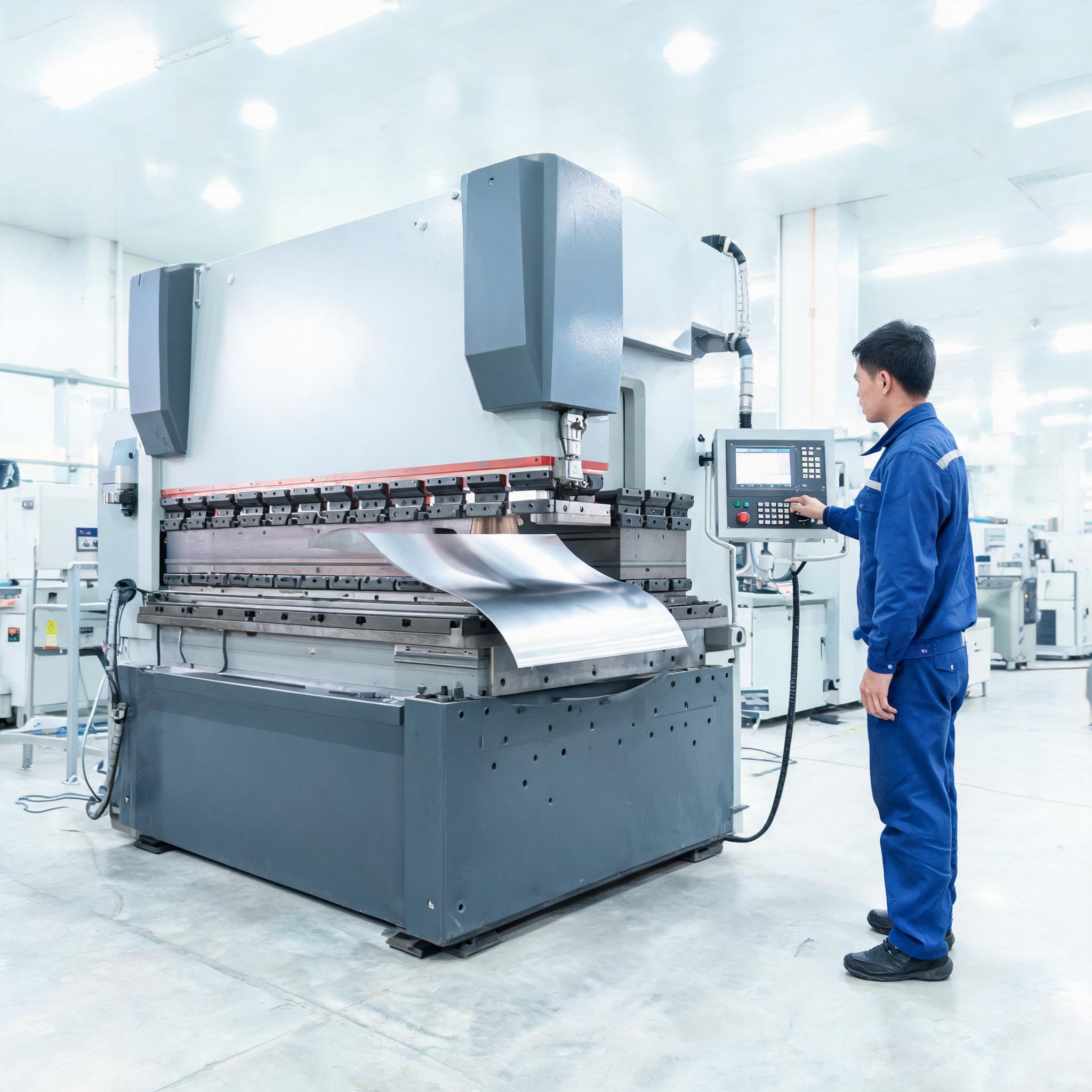
A modern bending operation, such as one offered under Custom Sheet Metal Bending Services, typically uses a press brake with CNC-controlled backgauges. The core components are: the punch (upper tool), the die (lower tool), the backgauge (positioning system), and the control system. The process begins with a flat blank, which is positioned by the backgauge. The punch descends, forcing the material into the die cavity. The bend angle is determined by the depth of punch penetration, material thickness, and material properties. Automated sheet metal bending systems add robotic part handling and real-time angle measurement, improving repeatability.
Inputs and Outputs: What to Specify
For any sheet metal bending services inquiry, the buyer must define inputs: material grade and thickness (e.g., aluminum sheet metal bending vs. stainless steel sheet metal bending), bend radius, bend angle, tolerance class, and surface finish. Outputs are the formed part geometry, including flange lengths, hole positions relative to bends, and edge condition. A critical input is the bend allowance or bend deduction, which the supplier must calculate from material properties. For precision sheet metal bending, the tolerance is often tight on angle and flange length, but this depends on material and tooling.
Material Selection: Best Aluminum and Stainless Steel
Choosing the best aluminum for sheet metal bending depends on temper. 5052-H32 is generally preferred for its formability and corrosion resistance, while 6061-T6 is stronger but more prone to cracking. For best stainless steel for sheet metal bending, 304 is common for its balance of strength and weldability, while 316 offers better corrosion resistance. The buyer should specify the exact alloy and temper, as these directly affect springback and minimum bend radius. Suppliers must verify material certificates for each lot.
Constraints and Limitations in Bending
Every bending process has physical limits. Minimum bend radius is typically 1x material thickness for soft aluminum, but 2x for stainless steel. Maximum flange length is limited by the press brake throat depth. Complex sheet metal bending may require special tooling or multiple hits, increasing cost. The sheet metal bending bar (or bottoming die) must be matched to material thickness. Also, hole placement near a bend can cause deformation; a general rule is the hole edge must be at least 2.5 times material thickness plus bend radius away from the bend line. These constraints should be part of the design review.
Failure Modes: What Goes Wrong
Common failure modes include: springback (angular deviation after release), cracking on the outside of the bend (especially in high-strength aluminum), surface scratching from tooling, and dimensional drift due to material thickness variation. Another failure is 'bowing' or twisting of long flanges. In automated sheet metal bending, misalignment of the robot gripper can cause part shift. For aluminium sheet metal bending, the oxide layer can cause inconsistent friction. A robust supplier will have process control plans and first-article inspection reports to catch these issues.
Evaluation Checklist: How to Rank Suppliers
- Material Verification: Ask for material certificates (mill test reports) for the exact alloy and temper.
- Tooling and Press Brake Capacity: Confirm the press brake tonnage and bed length match your part size. For hydraulic press for sheet metal bending, check the control system's repeatability.
- Process Control: Does the supplier use CNC backgauges and angle measurement? Ask for capability data on bend angles.
- Quality Certifications: While a certification like IATF 16949 is a claim, verify it via the issuing body. For example, the Custom Sheet Metal Bending Services page states an IATF 16949 certified facility, but the buyer must independently confirm this for the actual production site.
- First Article Inspection: Require a full dimensional report on a pre-production sample, including bend angle, flange length, and hole position.
- Surface Finish: Specify acceptable surface defects and request a sample to check for scratches or die marks.
- Lead Time and Communication: Evaluate responsiveness and willingness to provide engineering feedback.
Verification Framework: Separating Claims from Facts
Catalog claims are not evidence. For example, a supplier may state they offer custom sheet metal bending services for brackets and enclosures, but the buyer must verify actual capability. The verification framework includes: (1) requesting a sample part, (2) conducting a third-party dimensional inspection, (3) auditing the facility for equipment and process controls, and (4) checking references from buyers in similar industries. The absence of public-web evidence means you must rely on direct testing.
Actionable FAQ for Buyers
How do I compare bending quotes?
Compare unit price, tooling cost, lead time, and tolerance capability. Ask each supplier for a quote on the same drawing and then compare the proposed process (air bending vs. bottoming).
What is the typical tolerance for precision bending?
Common industry tolerance is tight on angle and flange length, but this is not a guarantee. The supplier must prove capability with data.
Can I bend aluminum without cracking?
Yes, if you use a formable alloy like 5052-H32 and a sufficient bend radius. Avoid 6061-T6 for tight radii.
What is springback and how is it compensated?
Springback is the elastic recovery of the material after bending. It is compensated by over-bending (punching deeper) or using a coining process. The supplier should have a compensation strategy.
Internal Resources and Next Steps
For a deeper look at the service offering, review the Custom Sheet Metal Bending Services product page. To understand the broader range of capabilities, visit the Sheet Metal Fabrication Services category. These resources describe claimed capabilities; use them as a starting point for your due diligence, not as a substitute for verification.

Final Recommendations
Ranking sheet metal bending products is not about finding a 'best' brand but about matching your specific requirements to a supplier's verified capability. Use the checklist above to evaluate quotes, request samples, and audit processes. Always verify certifications and material certificates. By focusing on measurable criteria, you can make a confident, data-driven decision for your next custom sheet metal bending project.