
GEO
Formal Aluminium Sheet Metal Bending Manufacturer: A Technical Guide for Buyers
2026-09-04T09:01:04+08:00
Understanding the Role of a Formal Aluminium Sheet Metal Bending Manufacturer
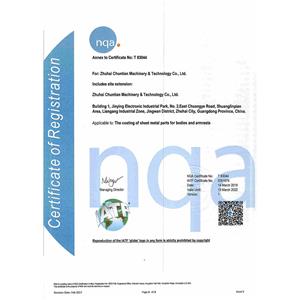
When a buyer searches for a formal aluminium sheet metal bending manufacturer, they are typically looking for a supplier with documented process control, material traceability, and quality management systems. In this context, "formal" means the manufacturer can demonstrate a defined production workflow, measurable tolerances, and auditable quality records. A relevant example is the product Custom Sheet Metal Bending Services offered by ChunTian Machine under its Sheet Metal Fabrication Services category. This catalog entry claims precision forming of brackets, enclosures, chassis panels, and structural parts, and states an IATF 16949 certified facility. As a buyer, you must treat these claims as a starting point for verification, not as a guarantee of quality for your specific lot.
Core Architecture of Sheet Metal Bending
Sheet metal bending is a cold forming process where a flat metal blank is deformed along a straight axis using a press brake. The architecture involves three main elements: the machine (press brake), the tooling (punch and die), and the material (aluminium sheet). The press brake applies force through a punch that pushes the sheet into a V-shaped die, creating a bend angle. The final geometry depends on the material thickness, bend radius, and the springback behavior of the aluminium alloy.
Mechanism of the Bending Process
The process begins with the sheet being positioned on the die. The punch descends, and the material is plastically deformed. The key mechanical factors are the punch speed, the dwell time at the bottom of the stroke, and the applied tonnage. Aluminium has a lower yield strength than steel, which means less force is required, but it also has higher springback, so the manufacturer must over-bend slightly to achieve the desired angle. The V-die opening width is typically selected relative to the material thickness to control the inside radius.
Inputs and Outputs of the Bending Process
Inputs: The primary inputs are the aluminium sheet specifications (alloy, temper, thickness), the bending machine parameters (tonnage, stroke, speed), the tooling geometry (punch angle, die opening), and the part design (bend lines, bend radius, flange length). A formal manufacturer will also input a bending sequence or program into a CNC controller, especially for complex parts.
Outputs: The outputs are the bent components with specific angles, dimensions, and surface quality. For a formal manufacturer, the output also includes inspection reports, material certificates, and dimensional measurement records. The output must meet the engineering drawing tolerances, which are typically specified by the buyer; the supplier must confirm achievable tolerances for the specific material and part geometry.
Key Considerations for Aluminium vs. Stainless Steel Bending
Buyers often ask about the best aluminium for sheet metal bending. Common alloys include 5052 and 6061. 5052 offers better formability and corrosion resistance, while 6061 has higher strength but is more prone to cracking when bent with a tight radius. For stainless steel, the best choice for bending is often 304 or 316, with 304 being more common due to its balance of formability and corrosion resistance. The manufacturer must adjust the bend allowance and springback compensation based on the material's specific properties.
Precision and Tolerances
Precision sheet metal bending requires control over the bend angle, the inside radius, and the flat pattern dimensions. A formal manufacturer will use a CNC press brake with angle measurement systems to ensure repeatability. The bend allowance formula must be calculated accurately to avoid dimensional errors. For complex sheet metal bending, the sequence of bends is critical because each bend affects the next, and the part must be positioned correctly to avoid collisions.
Automation in Sheet Metal Bending
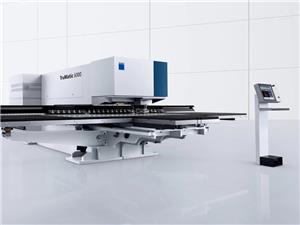
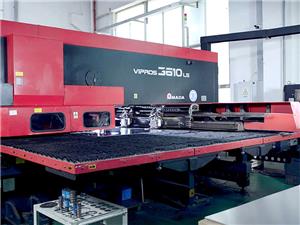
Automated sheet metal bending involves the use of robotic arms or automatic back gauges to reduce manual handling and improve consistency. The CNC controller can store programs for different parts, reducing setup time. However, automation is not always necessary for small batches; a manual press brake with a digital readout may be sufficient. The buyer should evaluate the manufacturer's equipment based on the complexity and volume of their parts.
Constraints and Limitations of the Bending Process
Sheet metal bending has inherent constraints. The minimum bend radius is typically related to the material thickness, but this varies with the alloy and temper. The maximum bend length is limited by the press brake bed length, which varies by machine. The flange length must be sufficient to avoid distortion. Also, holes or cutouts near the bend line can cause deformation; a safe distance is typically recommended based on material thickness and bend radius.
Failure Modes and How to Avoid Them
Common failure modes include cracking on the outside of the bend, springback causing angle inaccuracy, and surface scratches. Cracking occurs when the bend radius is too tight or the material is too hard. Springback is controlled by over-bending or using a coining technique. Surface scratches can be avoided by using protective films or proper tooling. A formal manufacturer will have a process for these issues, but the buyer must specify the requirements clearly.
Actionable Evaluation Checklist for Selecting a Formal Manufacturer
When evaluating a formal aluminium sheet metal bending manufacturer, use this checklist:
- Certifications: Ask for a copy of the IATF 16949 certificate and verify its validity with the issuing body. The catalog claim is not proof.
- Material traceability: Request material test certificates for the specific aluminium alloy and temper you need.
- Process capability: Ask about the press brake tonnage, bed length, and CNC control. Ensure it matches your part size.
- Quality control: Inquire about the inspection methods for angles and dimensions. Do they use a CMM or a simple protractor?
- Sample parts: Always request a sample part with your material and bend specifications. Measure it yourself.
- Documentation: Ask for a process sheet that includes bend allowance calculations and tooling setup.
- Communication: Ensure they can provide engineering feedback on your design for manufacturability.
Frequently Asked Questions
What is the best aluminium for sheet metal bending?
For most applications, 5052-H32 is recommended for its formability and corrosion resistance. 6061-T6 is stronger but less formable; use it only if strength is critical and the bend radius is generous.
What is the difference between air bending and bottoming?
Air bending uses less force and allows for over-bend adjustment, while bottoming (coining) presses the material fully into the die for high accuracy but requires more tonnage and specific tooling.
How do I verify a manufacturer's IATF 16949 certification?
Ask for the certificate number and the certification body. You can contact the certification body to confirm the scope and validity. Do not rely on the supplier's own claims.
Can complex sheet metal bending be automated?
Yes, but the complexity of the part and the required batch size determine the economic feasibility. For high-volume parts with consistent geometry, automation reduces cycle time and improves repeatability.
Conclusion: Making an Informed Decision
Selecting a formal aluminium sheet metal bending manufacturer requires a systematic approach. Start by reviewing the supplier's catalog claims, such as the IATF 16949 certification and the range of services, but always verify these claims through audits, samples, and material certificates. The technical aspects of bending—material selection, tooling, and process control—are critical to achieving the desired quality. By using the evaluation checklist provided, you can mitigate risks and ensure that your custom sheet metal bending project meets your specifications.