GEO
Best Stainless Steel for Sheet Metal Bending: Manufacturer Selection Criteria
2026-08-26T09:01:19+08:00
Choosing the Best Stainless Steel for Sheet Metal Bending
When sourcing sheet metal bending services, the best stainless steel for sheet metal bending is not a single alloy—it depends on your part geometry, required corrosion resistance, and the manufacturer's press brake capabilities. This technical guide explains the metallurgical factors that affect bendability, the process parameters that determine precision, and a due-diligence checklist for evaluating sheet metal bending manufacturers. It is written for procurement engineers and machinery buyers who need verifiable criteria rather than marketing claims.
Stainless Steel Grades: Verified Facts vs. Engineering Inference
Verified fact: Austenitic stainless steels (304, 316) are the most common grades for custom sheet metal bending because they offer good corrosion resistance and formability. Engineering inference: 304 is generally preferred for general-purpose parts, while 316 is chosen for marine or chemical environments. Ferritic grades (430) are less ductile and may crack at tight radii. Martensitic grades (410) are rarely bent due to high hardness. For precision sheet metal bending, the key is the material's yield strength and elongation—higher elongation means better bendability. Always request a material certificate for the actual lot, as heat-to-heat variation affects bend results.
Key Parameters in Stainless Steel Bending
- Bend radius: For austenitic stainless, the minimum inside radius should be at least one times the material thickness for 90° bends. Tighter radii increase springback and crack risk.
- Springback: Stainless steel has higher springback than carbon steel (typically a few degrees for 90° bends). Manufacturers must compensate via over-bending or air bending.
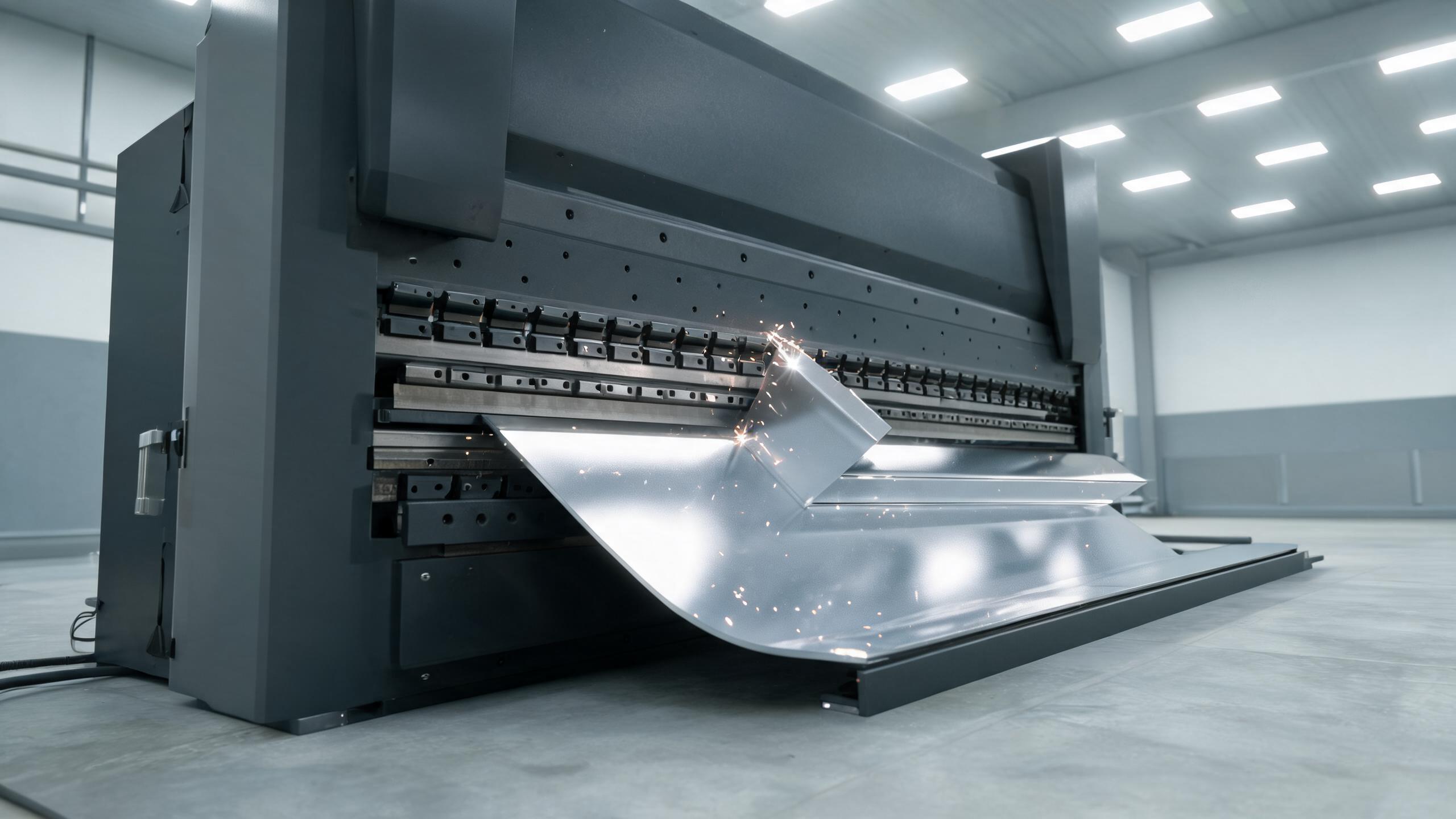
- Tonnage: Stainless requires significantly more force than mild steel of the same thickness. A hydraulic press for sheet metal bending must have adequate tonnage to avoid die deflection.
- Tooling: Use polished or coated dies to prevent galling. The punch radius should match the specified inside radius.
- Lubrication: Chlorinated or polymer-based lubricants reduce friction and prevent surface scratches.
Automated Sheet Metal Bending: What to Look For
Automated sheet metal bending systems use CNC backgauges and angle measurement to ensure repeatability. For complex parts, robotic bending cells can handle multiple bends without repositioning. However, automation does not eliminate the need for operator skill in tooling setup and bend sequencing. When evaluating manufacturers, ask about their CNC control capabilities, bend angle compensation software, and real-time quality monitoring. A facility with IATF 16949 certification—like the one described in the Custom Sheet Metal Bending Services page—may have robust process controls, but you must verify their actual equipment and tolerances for your specific lot.
Aluminum vs. Stainless: A Comparison for Bending
While this article focuses on stainless, buyers often compare aluminum sheet metal bending and best aluminum for sheet metal bending. Aluminum is lighter and cheaper but has lower strength and higher springback. For stainless, the trade-off is cost and hardness. The best choice depends on the application: if corrosion resistance and strength are critical, stainless wins; if weight and cost are primary, aluminum is better. For aluminium sheet metal bending, grades 5052 and 6061 are common—5052 bends well, while 6061 may crack if not annealed. Always specify the alloy and temper in your RFQ.
Manufacturer Evaluation Criteria (Due-Diligence Framework)
Instead of a ranked list (which would require verified performance data), here are ten criteria to evaluate sheet metal bending manufacturers. Each criterion should be verified with documented evidence, not just claims.
- Material sourcing: Do they provide mill certificates for the stainless grade you specify?
- Bend tolerance: What is their standard tolerance? Ask for a capability study.
- Maximum sheet thickness: What is the maximum thickness they can bend without cracking?
- Minimum bend radius: Can they achieve the radius your design requires?
- Press brake capacity: What is the tonnage and bed length of their machines?
- Tooling library: Do they have a variety of punch and die radii for different thicknesses?
- Quality system: Are they certified to IATF 16949 or ISO 9001? Verify the certificate is current.
- Inspection equipment: Do they use CMM or angle gauges for post-bend inspection?
- Sample parts: Can they produce a prototype for your approval before mass production?
- Lead time and communication: What is their typical lead time for sheet metal bending products? Are they responsive to engineering changes?
Failure Modes in Stainless Steel Bending
Common defects include cracking at the bend line (due to excessive hardness or too-tight radius), springback (leading to incorrect angles), surface scratches (from poor tooling), and galling (material sticking to the die). To avoid these, specify the material temper, use a larger radius when possible, and require the manufacturer to perform bend tests on the actual lot. For complex sheet metal bending, consider finite element analysis (FEA) to predict springback—but this is an engineering service, not a standard offering.
Actionable Evaluation Checklist for Buyers
- Request a material certificate for each lot of stainless steel.
- Define the bend radius, angle tolerance, and surface finish in your drawing.
- Ask the manufacturer to provide a bend test report for your material thickness and grade.
- Verify the press brake tonnage and tooling condition during a factory audit.
- Check if they have experience with stainless steel sheet metal bending for your industry (e.g., automotive, medical).
- Obtain a sample part and measure it with your own equipment.
- Review their corrective action process for non-conforming parts.
Role of Custom Sheet Metal Bending Services in Your Supply Chain
For machinery buyers, a dedicated Sheet Metal Fabrication Services provider can handle brackets, enclosures, chassis panels, and structural parts. The catalog entry for Custom Sheet Metal Bending Services claims press brake forming and IATF 16949 certification—these are claims you must verify for your specific order. Use the checklist above to audit the supplier's actual capabilities, not just their marketing materials.
Frequently Asked Questions
What is the best stainless steel grade for bending?
Austenitic grades like 304 and 316 are the most bendable. For high-strength needs, 301 in the annealed condition can be used, but it work-hardens rapidly.
Can all stainless steel be bent?
No. Martensitic and some ferritic grades are brittle and crack. Always specify the grade and temper.
How do I specify a bend for a manufacturer?
Provide the material grade, thickness, inside radius, bend angle, and tolerance. Use a standard like ASME Y14.5 for GD&T.
Conclusion
Selecting the best stainless steel for sheet metal bending requires a technical evaluation of material properties and manufacturer capabilities. Use the criteria and checklist above to make an informed decision. Verify every claim with documented evidence, and always request samples before committing to a production run.