A specification guide for buyers choosing between Type II sulfuric anodizing and Type III hard anodizing — covering wear and corrosion behavior, dimensional growth, color options, cost drivers, masking of threads and contact points, and how film thickness should appear on your drawing.
Type II sulfuric anodizing and Type III hard anodizing are both aluminum oxide conversion processes, but they differ in film thickness, hardness, dimensional consequence and cost. This guide sets out the decision criteria buyers usually apply, and the drawing details that determine whether a quote comes back correct.
The short answer
Choose Type II sulfuric anodizing when the part needs corrosion resistance and a cosmetic finish — natural, black or a dyed color — on machined aluminum where surface appearance matters and dimensional change should stay small. Choose Type III hard anodizing when the surface has to resist abrasion and wear, and the part can tolerate a thicker, darker, less reflective oxide layer.
If wear and color are both required at tight tolerances, the two are usually not interchangeable on the same surface, and the drawing has to state which surfaces get which treatment.
Side-by-side comparison of Type II and Type III
The table below reflects the general distinction between the two processes. Confirm the exact thickness, color and acceptance criteria for your part with the anodizer before release, since the drawing governs.
| Decision point | Type II sulfuric anodizing | Type III hard anodizing |
|---|---|---|
| Typical film thickness | Thinner oxide layer; stated on the drawing | Thicker oxide layer; stated on the drawing |
| Wear resistance | Moderate; suitable for handling and light abrasion | High surface hardness; the usual choice for sliding or abrasive contact |
| Corrosion protection | Good, and improved by sealing | Good, but the hard, dense layer changes the surface character |
| Dimensional growth | Smaller growth; often manageable for tight features | Larger growth; requires allowance on the drawing |
| Color options | Natural, black, and dyed colors | Limited color range; naturally dark grey to black, deep dye penetration is more difficult |
| Appearance | Clearer, more uniform cosmetic finish | Matte to dark finish; less suited to bright decorative surfaces |
| Typical cost drivers | Batch volume, dye color, masking, racking | Longer cycle time, thicker film, masking, sometimes secondary machining allowance |
Wear and corrosion: which one the part actually needs
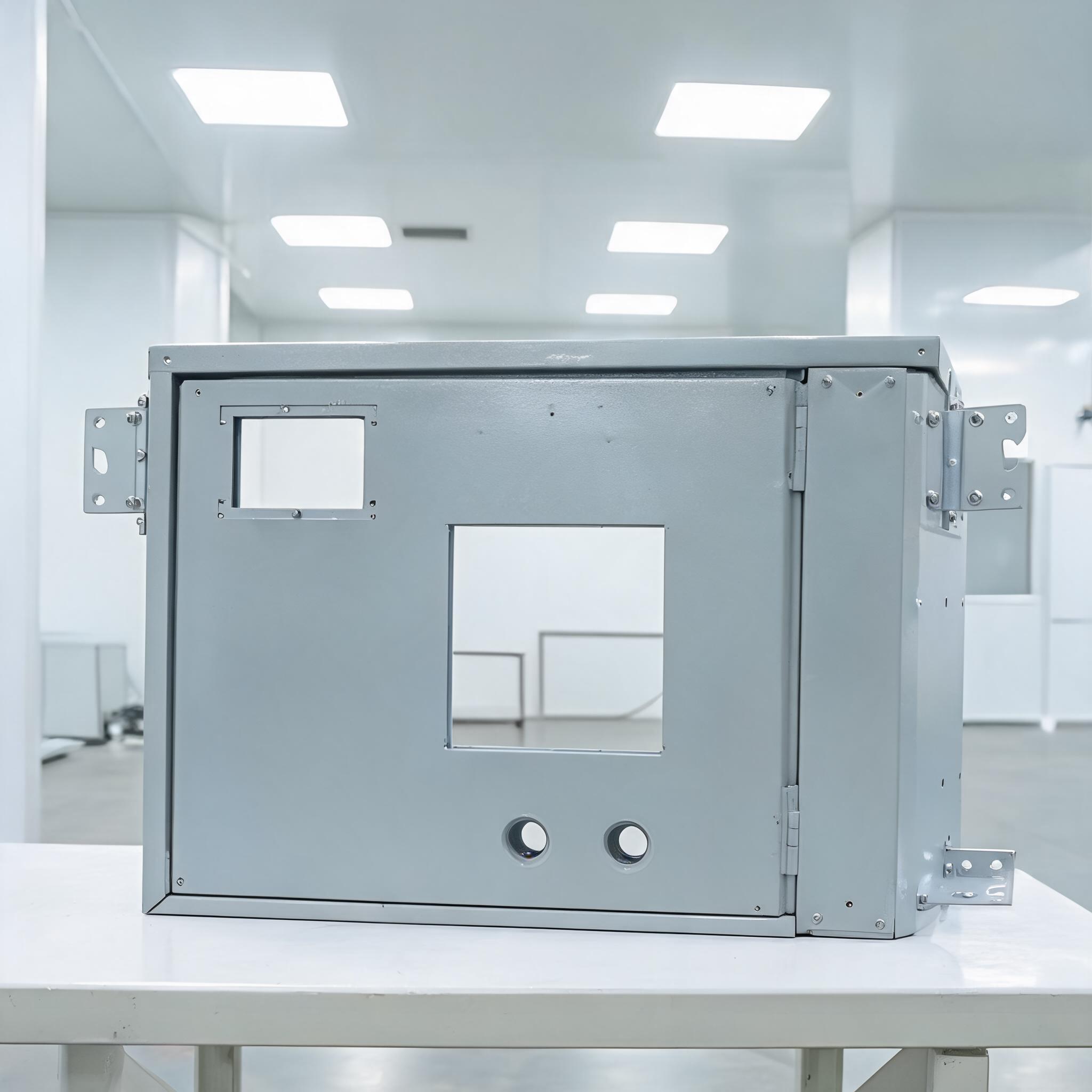
Type II protects aluminum from corrosion and gives a consistent surface color. It is a common specification for enclosures, housings and visible components where the buyer's priority is finish quality and the part is not subject to continuous abrasion. A sealed Type II film improves corrosion performance, and whether sealing is required belongs on the drawing.
Type III produces a substantially harder oxide layer, so it is the process specified for parts that rub, slide or are repeatedly handled — guides, wear plates, pistons and similar functional aluminum surfaces. The trade-off is that the harder, thicker film is less cosmetic and less colorable, so Type III parts are usually specified for function, not appearance.
Dimensional growth: the number that decides the process
Anodizing converts the outer surface of the aluminum into oxide, so the part grows. Oxide occupies more volume than the aluminum it replaced, which means the finished dimension is larger than the machined dimension — roughly half the film grows outward and half penetrates inward, so the net growth on any given surface is not simply the film thickness.
The practical consequence: do not anodize to a final dimensional tolerance without stating the pre-anodize dimension and the film thickness on the drawing. For a Type III part with a thick film, a bore can close enough to interfere with a mating pin, and a shaft can grow enough to exceed a press-fit allowance.
There are two workable routes:
- Pre-anodize dimensioning — the drawing gives the dimension before anodizing and the anodizer controls the film to reach the finished size.
- Anodize-with-allowance — the drawing gives the finished dimension and requires the machined part to be undersized by the expected growth, with the allowance stated.
Whichever route is used, the film thickness and the governing dimension must appear explicitly on the drawing. If they are not there, the quote will either be priced on an assumption or returned as a question.
Color options and appearance expectations
Type II covers natural clear, black and a range of dyed colors. Color consistency between batches is influenced by alloy and temper, so parts that must match each other cosmetically are usually best run as one batch, and the alloy should be stated when color is critical.
Type III is naturally dark grey to black and takes dye with more difficulty; a deep, bright color is generally not expected from hard anodizing. If a part needs both a hard surface and a specific color, the common approach is to hard anodize the wear surfaces and specify a separate finish, such as powder coating, on the cosmetic surfaces — see Custom Powder Coating Services.
Masking: threads and electrical contact points
Anodizing is a dielectric coating, so any surface that must conduct electricity or mate by thread engagement has to be protected, or it will not function after processing. Masking is not automatic — it is a drawing requirement.
Surfaces typically masked include:
- Threaded holes and studs, where a thick oxide layer would change the pitch diameter and prevent the fastener from engaging or torquing correctly.
- Electrical contact points and grounding surfaces, which must remain conductive.
- Bearing bores, press-fit diameters and sealing faces, where an oxide layer would change fit or interfere with a seal.
- Any datum or inspection surface that the drawing requires to remain bare aluminum.
On the drawing, masked areas should be identified individually — by callout, by hatching, or by a note such as "mask threads and contact pads, anodize all other surfaces." A general instruction such as "mask as required" leaves the decision to the anodizer, and different shops will interpret it differently. The masking method also affects cost: hand masking of many small contact points adds labor, while a simple plug on an open thread does not.
What drives the price of an anodizing job
Anodizing is priced per load more than per part, so unit cost is driven mostly by how efficiently the parts fill the rack:
- Batch quantity — a full rack lowers the unit cost; a single prototype part carries most of the setup and racking cost.
- Film thickness and process type — Type III runs a longer cycle and typically costs more than Type II for the same surface area.
- Masking complexity — the number and accessibility of masked features.
- Color and dyeing — dyed colors, especially black, add process steps compared with clear natural.
- Alloy and surface condition — some alloys anodize more evenly than others, and a poorly machined surface will show through the finish, sometimes requiring rework.
- Inspection requirements — appearance and film inspection, plus any additional measurement or documentation requested with the order.
Send the drawing, alloy, quantity and masking requirements together and the quote can be built on real conditions rather than assumptions.
Specifying film thickness on the drawing
Film thickness belongs on the drawing as an explicit requirement, not as a default. Two points follow from that:
- State the thickness range required for the process — a range, not a single target, because the anodizing bath produces a distribution across the rack.
- Match the thickness to the purpose — a corrosion-only surface and a wear surface on the same part usually need different thicknesses, and the drawing should say which is which.
Thickness is verified by film inspection on the finished parts. If measured values matter to your acceptance process, say so at the quotation stage so the inspection method and reporting can be agreed.
Quality documentation
Anodizing suppliers serving automotive and industrial programs are commonly asked to work under a quality management system such as IATF 16949:2016. If your program requires it, confirm the certification scope covers the anodizing process and the site performing the work, and request the certificate as part of supplier qualification rather than assuming it transfers from a related process.
Checklist before you send the drawing
- Type II or Type III stated, with the reason (corrosion, wear, or both).
- Film thickness range stated per surface where they differ.
- Pre-anodize or finished dimension identified, with growth allowance.
- Masking called out individually for threads, contacts and fit surfaces.
- Color specified, with alloy and batch-matching notes where color is critical.
- Inspection and documentation requirements stated at quotation, not after delivery.
Frequently asked questions
Can a part be both Type II and Type III?
Yes, in the sense that different surfaces can be specified differently, or a surface can be hard anodized while a cosmetic surface is finished another way. It requires the drawing to assign a process to each surface area; leaving it to the shop will produce a single process across the part.
Why does my threaded hole no longer accept the bolt after anodizing?
Because the thread was anodized instead of masked. The oxide layer changes the thread's effective dimensions. Specify masked threads on the drawing, or request a pre-anodize thread allowance if the thread must be coated.
Does hard anodizing always look black?
Type III films are naturally dark grey to black and are not usually dyed to bright colors. If a specific color is required, anodize for wear where needed and use a separate coating such as powder coating on visible surfaces.
How much thicker will my part be after Type III?
Growth depends on the film thickness specified and how much of the oxide forms outward versus inward. That is why the drawing should state the film thickness and the governing dimension together, so the anodizer can control the finished size.
Next step
Send the drawing, alloy, quantity, required type and masking details, and the anodizing specification can be quoted against your actual tolerances rather than a generic assumption. If the part also needs a colored or protective topcoat, review Custom Aluminum Anodizing Services alongside the coating option that fits the cosmetic surfaces.